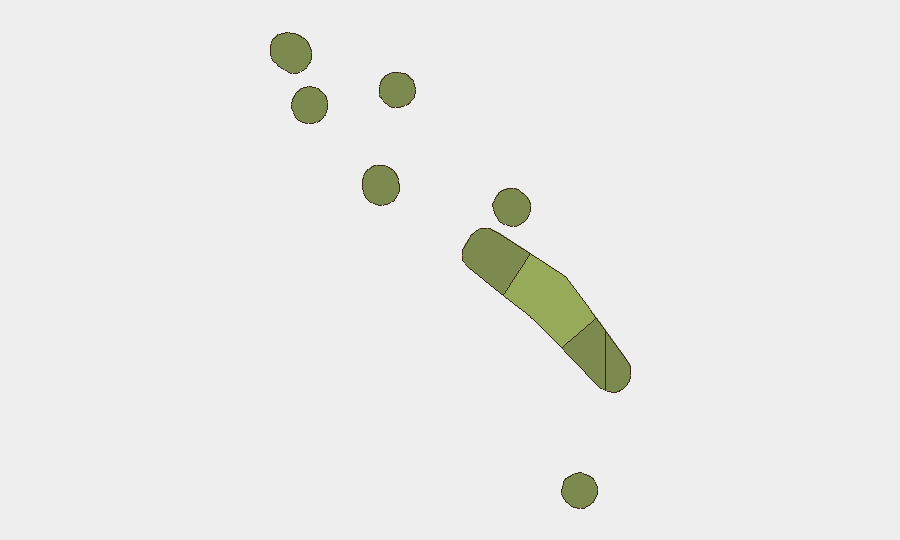
Situation Summary
Tuvalu remains a low-threat environment with a composite global threat rank of #191 and minimal active security incidents. No credible reports of civil unrest, crime, political instability, or infrastructure disruption have emerged in the last 24–48 hours. The security posture is stable, though the nation faces chronic exposure to climate and sea-level risks that, while not acute security events, drive long-term operational planning for entities with personnel or assets in-country.
Key Developments
- No time-verified security incidents reported in Tuvalu during 2026-06-12 to 2026-06-14. Open-source monitoring and social-media OSINT detected no new protests, violence, crime, or infrastructure failures affecting the islands.
- Climate and resilience financing dominate recent media mention. Web research identified World Bank and Asian Development Bank discussions of adaptation funding for Tuvalu, reflecting structural vulnerability to rising sea levels and storm surge rather than an acute triggering event.
- Regional Pacific developments do not extend to Tuvalu. Port security, energy, and infrastructure discussions affecting other Pacific states (notably Fiji) were noted in broader regional coverage but do not indicate new risk to Tuvalu specifically.
- Funafuti (capital, risk score 45) remains the highest-risk island within Tuvalu's sub-national hierarchy, likely reflecting concentration of government, port activity, and population; however, no current incidents in Funafuti are reported.
Highest-Risk Areas
Funafuti drives Tuvalu's internal risk profile (score 45), more than 50% above the second-ranked island, Vaitupu (28). This disparity reflects Funafuti's role as the administrative and economic hub, concentrating port operations, government facilities, and the bulk of the nation's ~12,000 population. Vaitupu, Nui, Nukufetau, and Niutao form a secondary tier (risk scores 20–28), likely influenced by isolation, limited infrastructure, and reduced emergency-response capacity. The outer islands (Nanumea, Nukulaelae) present lower relative risk but remain vulnerable to weather events and supply-chain disruption due to geography and limited connectivity. No current security-specific incidents differentiate these areas; ranking reflects structural vulnerability and operational fragility rather than active conflict or crime.
How GeoBit Would Assist
Security teams with duty-of-care obligations in Tuvalu should deploy AOI Monitoring & Early Warning on Funafuti and key outer islands to detect civil unrest, infrastructure failures, or weather disruptions in near-real time. Intel Sweep and multi-language OSINT (including social-media and local news feeds) will surface emerging political instability or crime trends before they escalate. Routing & Network Analysis capabilities support contingency planning for evacuation or supply logistics, critical given Tuvalu's isolation and limited transport links.
7-Day Outlook
No acute security triggers are anticipated in the next seven days. Tuvalu's threat environment is expected to remain stable and low-incident, with security focus shifting to long-term climate resilience and infrastructure adaptation rather than near-term crisis management. Duty-of-care teams should maintain standard operational security postures while monitoring persistent climate and maritime risks that could affect supply chains or operational continuity over longer horizons.
Highest-Risk Areas — Ranked
| # | State / Region | Risk |
|---|---|---|
| 1 | Funafuti | 45 |
| 2 | Vaitupu | 28 |
| 3 | Nui | 25 |
| 4 | Nukufetau | 22 |
| 5 | Niutao | 20 |
| 6 | Nanumanga | 18 |
| 7 | Nanumea | 15 |
| 8 | Nukulaelae | 12 |
Sources
Previous Daily Briefs
A new Tuvalu brief is written every day — each with its own risk map and downloadable CSV. Here's the last week; use the calendar to go further back.
📅 Browse every day by calendar →
Highlighted days have a brief. Tap a day for that day's map & analysis, or “csv” for that day's dataset ($5).