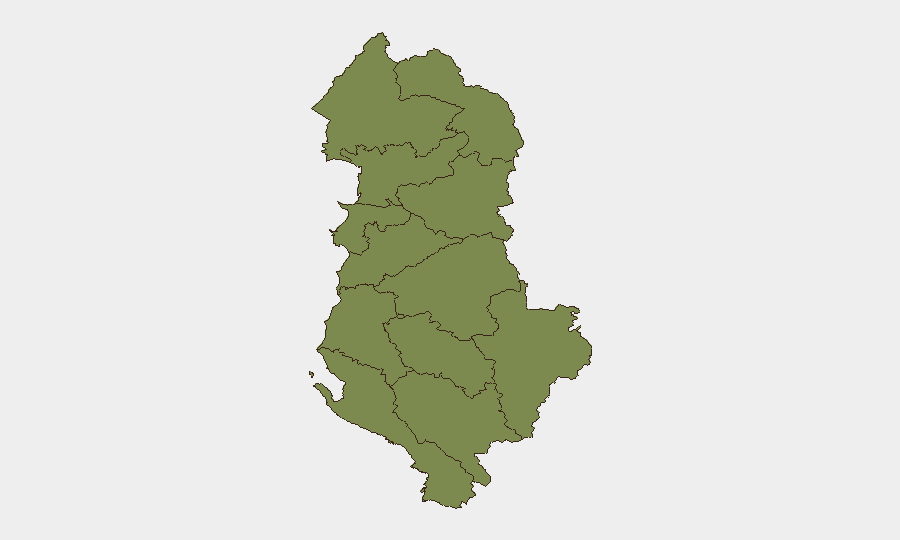
Situation Summary
Albania faces elevated near-term security risk driven by sustained anti-government protest activity in Tirana and multiple concurrent operational hazards including wildfires and a confirmed weapons interdiction. The "Flamingo Revolution" demonstrations have persisted through 31 July–1 August with sporadic violence, property damage, and police-protester confrontations, while authorities have coordinated enhanced security measures with U.S. Embassy counterparts. Concurrently, wildfire spread in Fier and Kavajë counties has disrupted transport routes and forced civilian evacuations, and a remote-controlled explosive device was seized in Shkodër County on 1 August, indicating active criminal-weapons activity. Overall trajectory remains volatile but contained to specific geographic nodes.
Key Developments
- Tirana, central axis (Skanderbeg Square to Interior Ministry), 31 July 2026 – Thousands of anti-government protesters under "Flamingo Revolution" banner continued demonstrations demanding PM Edi Rama's resignation; police maintained significant cordons with flares and crowd control, no major injuries.
- Tirana, Police Station No. 3 (Mine Peza Street), 31 July 2026 – A protest contingent turned violent, with demonstrators throwing objects and damaging property; one police officer injured as water cannons were deployed; incident recorded on multiple X posts and eyewitness video.
- Tirana, route to Tirana Court, 1 August 2026 – Smaller protest group marched during detention hearings for earlier arrestees; police reinforced barriers with brief pushing reported; march remained largely orderly.
- Fier County, village of Drizë (Qafa e Kosovicës–Cakran road), 1 August 2026 – Massive wildfire forced evacuation of 11 families and temporary road closure due to spread risk; flames documented near residential structures in local media and social posts.
- Fier & Kavajë districts, rural zones, 31 July–1 August 2026 – Fast-moving wildfires driven by strong winds spread across vegetation and infrastructure; firefighting and army assets deployed; authorities advised caution on travel due to visibility and road hazards.
- Vau i Dejës, Shkodër County, 1 August 2026 – Police intercepted 38-year-old driver from Durrës carrying a remote-controlled explosive device (mine); suspect arrested, device seized; authorities stated criminal incident likely prevented.
- Gërmenj, Divjakë–Tre Urat axis (Fier County), 1 August 2026 – Head-on collision between Audi and Toyota injured multiple people; emergency response initiated; temporary traffic disruption on internal road segment.
- Korçë city, 31 July–1 August 2026 – One person injured with an axe in residential area; alleged perpetrator arrested; police opened criminal investigation and categorized as serious assault.
- Nationwide security posture, 31 July–1 August 2026 – Interior Minister announced stepped-up security coordination with U.S. Embassy, counter-terrorism units placed in direct contact with embassy security office; reinforced police measures active in Tirana and at key infrastructure.
Highest-Risk Areas
Tirana County dominates the risk profile (score 31.3), driven by sustained protest activity, police-crowd confrontations, property damage, and the density of government and critical infrastructure concentrated in the capital. Shkodër County (13.3) has elevated risk due to the weapons interdiction and proximity to the northern border region. All other counties score 1.3, reflecting baseline background risk from wildfire, traffic incidents, and routine criminal activity; these pose lower operational concern for corporate security teams unless operations span rural transport corridors in Fier or Kavajë.
How GeoBit Would Assist
Security teams monitoring Albania would prioritize AOI Monitoring & Early Warning on Tirana's central government and police facilities to track protest escalation in real-time; OSINT fusion via X/Telegram and local media feeds to correlate protest timing, police response, and arrest patterns; and Routing & Network Analysis to identify safe transit alternatives during transport disruptions caused by wildfires or protest cordons. Risk & Threat Assessment and Sentiment & Temporal Analysis capabilities would flag emerging flashpoints and protest momentum shifts before major incidents occur.
7-Day Outlook
Anti-government demonstrations are likely to persist but are expected to stabilize or decline if key detainees are released or negotiations advance. Wildfire risk remains elevated through early August given weather patterns, though firefighting resources are now deployed; transport routes in Fier and Kavajë should be monitored for periodic closures. No credible indicators of escalation to armed confrontation or broader instability have emerged; security posture in Tirana will remain elevated due to U.S. Embassy coordination and counter-terrorism deployments.
Highest-Risk Areas — Ranked
| # | State / Region | Risk |
|---|---|---|
| 1 | Tirana County | 31.3 |
| 2 | Shkodër County | 13.3 |
| 3 | Durrës County | 1.3 |
| 4 | Kukës County | 1.3 |
| 5 | Lezhë County | 1.3 |
| 6 | Dibër County | 1.3 |
| 7 | Elbasan County | 1.3 |
| 8 | Fier County | 1.3 |
| 9 | Berat County | 1.3 |
| 10 | Korçë County | 1.3 |
| 11 | Vlorë County | 1.3 |
| 12 | Gjirokastër County | 1.3 |
Sources
Previous Daily Briefs
A new Albania brief is written every day — each with its own risk map and downloadable CSV. Here's the last week; use the calendar to go further back.
📅 Browse every day by calendar →
Highlighted days have a brief. Tap a day for that day's map & analysis, or “csv” for that day's dataset ($5).
Atlas — our AI intelligence desk — emails them this snapshot personally. Nothing else, no list.