Situation Summary
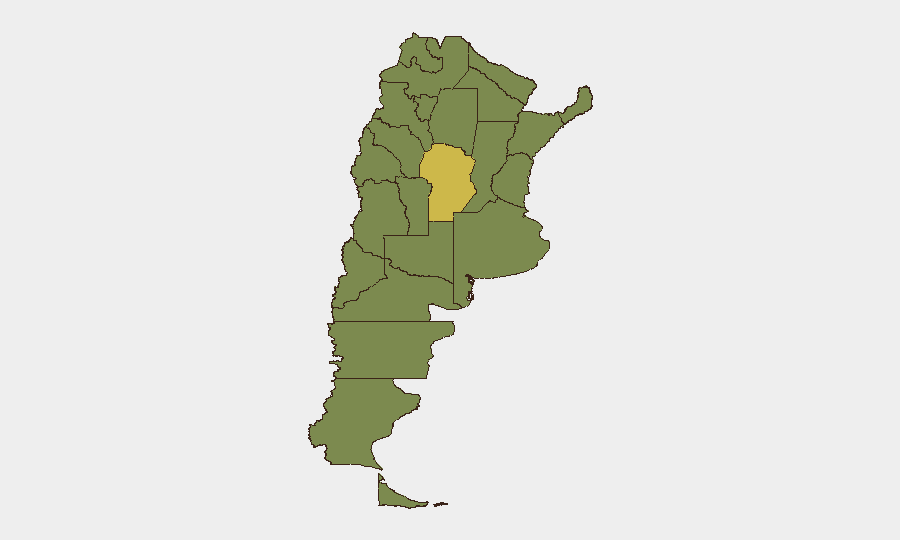
Argentina remains a moderate global security risk (rank #41, composite score 50) with scattered localized threats but no systemic instability. The past 24–48 hours have been dominated by post–World Cup semifinal celebration violence on 15 July, with knife attacks and mass brawls reported across multiple provinces; the underlying security environment is shaped by elevated national alert status (in effect since 28 February) linked to Middle East developments. Córdoba Province significantly outpaces other regions in composite risk (64.9), while Buenos Aires Province and the northwest cluster (Río Negro, Misiones, Salta) remain moderately elevated. The country faces a contained but volatile near-term security posture, particularly around World Cup final activity.
Key Developments
- Post–match celebration violence, multiple locations, 15 July evening/night: Knife attacks and mass brawls ("batallas campales") erupted in at least six cities during celebrations of Argentina's semifinal win over England, including Tucumán, Mina Clavero (Córdoba), Catriel (Río Negro), and Rosario de Lerma (Salta). Three men were stabbed in Colón (Buenos Aires Province), with one sustaining a serious thoracic wound; violent melee with bottles and bladed weapons occurred on Avenida San Lorenzo, Capitán Bermúdez (Santa Fe). Risk of serious assault and weapon use remains acute in crowd contexts.
- Large gathering at Monumento a la Bandera, Rosario (Santa Fe), 15 July: Approximately 400,000 people assembled for celebrations, concluding without major reported incidents. Presence of crowds of this scale at central gathering points carries ongoing potential for rapid escalation if tensions re-emerge, particularly around the World Cup final.
- School shooting, San Cristóbal (Santa Fe Province): A 15-year-old student allegedly opened fire, killing one and injuring eight others. Precise date is unclear from open sources; treat as recent but possibly outside the strict 24–48-hour window. Reflects isolated but serious violent crime capability in provincial settings.
- Elevated national security level in effect: Government-wide "high" alert status (since 28 February) remains operative across Argentina, resulting in increased police visibility, infrastructure protection measures, and potential travel friction at checkpoints and sensitive sites.
Highest-Risk Areas
Córdoba Province dominates the risk landscape with a composite score of 64.9—more than 50% higher than the second-ranked Buenos Aires Province (38.8). The northwest corridor (Río Negro, Misiones, Salta, Jujuy, Santiago del Estero) forms a secondary risk band (36–36.5 range) characterized by endemic organized crime, border trafficking, and localized gang violence. Buenos Aires Province's elevated score (38.8) reflects dense urban crime and occasional mass-gathering disorder; the Autonomous City itself (35.8) remains lower-risk relative to suburban areas. Recent World Cup–related violence has been geographically distributed across multiple provinces rather than concentrated, suggesting celebration-driven incidents may spike and recede rapidly in different locations based on match outcomes and crowd assembly points.
How GeoBit Would Assist
Security teams managing Argentina operations should deploy AOI Monitoring & Early Warning to track World Cup venues and high-risk municipalities (especially in Córdoba, Buenos Aires Province, and Santa Fe) for escalating crowd or violence indicators; multi-language OSINT & social-media intelligence (X, Telegram, Spanish-language forums) to detect advance signals of mass gatherings or planned confrontations; and Intel Sweep & event-feed fusion to corroborate and geolocate emerging incidents in real time. Routing & Network Analysis capabilities enable alternative journey planning for personnel around stadium zones and celebration sites during remaining tournament activity.
7-Day Outlook
Argentina faces heightened but manageable short-term risk through the World Cup final (expected ~18–19 July). Celebration-related violence may recur if matches generate high emotional stakes; the national elevated-alert status will persist. Assuming no geopolitical shock or major criminal escalation, risk should revert to baseline levels post-tournament, though underlying provincial disparities (especially Córdoba) will remain structural.
Highest-Risk Areas — Ranked
| # | State / Region | Risk |
|---|---|---|
| 1 | Córdoba | 64.9 |
| 2 | Buenos Aires Province | 38.8 |
| 3 | Río Negro Province | 36.5 |
| 4 | Misiones | 36.5 |
| 5 | Salta Province | 36.3 |
| 6 | Autonomous City of Buenos Aires | 35.8 |
| 7 | Jujuy Province | 35.6 |
| 8 | Santiago del Estero Province | 35.6 |
| 9 | Tucumán Province | 35.3 |
| 10 | La Rioja Province | 35.2 |
| 11 | Entre Ríos Province | 35.2 |
| 12 | Chaco Province | 35.1 |
Sources
Previous Daily Briefs
A new Argentina brief is written every day — each with its own risk map and downloadable CSV. Here's the last week; use the calendar to go further back.
📅 Browse every day by calendar →
Highlighted days have a brief. Tap a day for that day's map & analysis, or “csv” for that day's dataset ($5).
Atlas — our AI intelligence desk — emails them this snapshot personally. Nothing else, no list.