Situation Summary
Armenia remains in a heightened period of geopolitical and domestic political volatility following the June 8 national election, which returned Prime Minister Nikol Pashinyan's party to power with a majority. Concurrent with this result, Russia has escalated economic and diplomatic pressure on Armenia—including threats to weaponize import restrictions and CSTO (Collective Security Treaty Organization) membership—amid signals that Pashinyan is deepening ties to NATO and the EU while nominally remaining in Russian-led security structures. The most recent event signals (June 11–13) indicate localized property seizure/damage by military actors, arrests of politicians and media figures, community-level unconventional violence, and ongoing investigative activity, suggesting internal security fractures and possible protest or resistance activity in response to the election and geopolitical realignment. Overall threat score remains moderate (composite 25), but concentration of risk in Ararat Province and Yerevan demands focused duty-of-care attention.
Key Developments
- Yerevan / Armenia-wide — June 13, 2026: Military actors seized or damaged property in an incident currently under investigation by Armenian authorities; exact location, scale, and cause remain unclear from available signals.
- Armenia-Russia diplomatic channel — June 11, 2026: Russian officials publicly rejected Armenian policy positions and disapproved of Armenian government actions, part of an escalating pressure campaign over Armenia's Western outreach and unpaid CSTO fees.
- Yerevan / Media & Political Security — June 11, 2026: Arrest or detention of a politician was reported in connection with media/journalism activity, signaling possible clampdowns on political opposition or press freedom in the post-election environment.
- Armenia / Community Level — June 11, 2026: One unconventional violence event was reported at community level; specific location and perpetrator/victim profile not confirmed in available summary data.
- Armenia / Public & Electoral Environment — June 12–13, 2026: Statements from schools, voters, and journalists indicate active public discourse and possible civil unrest or organized political response to the election result and geopolitical tensions.
Highest-Risk Areas
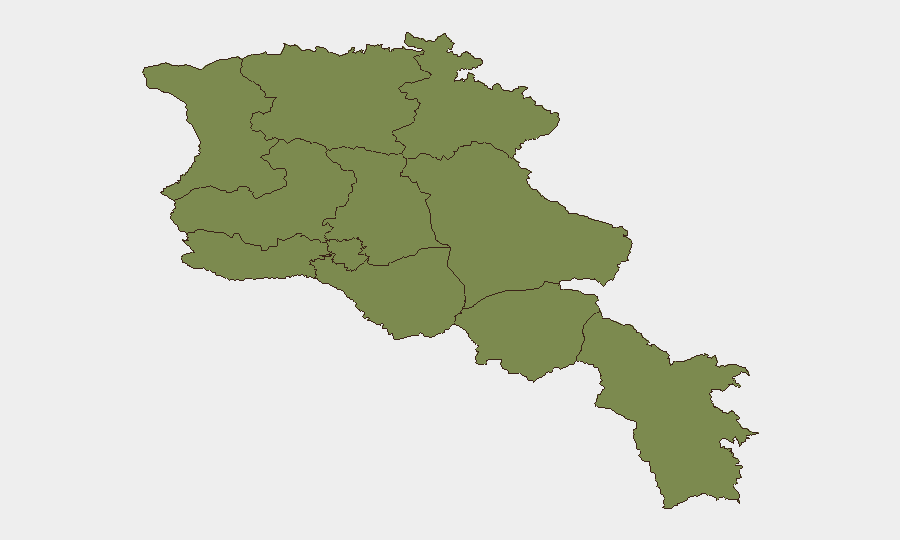
Ararat Province (risk 31.3) and Yerevan (risk 30.8) together account for the majority of tracked threat activity in Armenia and are driven by overlapping military, political, and civil instability signals. Ararat Province, which borders Turkey and includes strategic military zones, shows elevated risk tied to property seizure/damage events and cross-border military posture; Yerevan's concentration reflects post-election political turbulence, arrest activity, and media-security friction. The remaining nine provinces carry substantially lower individual scores (1.3–2.5), suggesting risk is not distributed evenly; organizations with personnel or assets outside the capital and Ararat should not assume equivalent threat levels. However, the southern border zones (Vayots Dzor, Syunik) warrant monitoring for spillover from broader regional tensions with Azerbaijan and Turkey.
How GeoBit Would Assist
Security teams managing Armenia operations should deploy AOI Monitoring & Early Warning on Yerevan and Ararat Province to capture real-time alerts on military, arrest, and property-damage events before they escalate. Intel Sweep and multi-language OSINT fusion (including Armenian media, Telegram, and X) would triangulate ongoing civil unrest, media suppression, and community-level incidents faster than single-source reliance. Network & Actor Analysis would map political factions, military units, and security-force actors involved in detention and property seizure, enabling predictive assessment of future targeting of foreign personnel or assets.
7-Day Outlook
The next week is likely to see continued diplomatic friction with Russia, possible further arrests or media restrictions tied to post-election consolidation, and localized community-level unrest in Yerevan and Ararat. No imminent armed conflict or mass-casualty event is signaled, but the intersection of election aftermath, Russian economic pressure, and internal security cracks creates conditions for rapid escalation if a triggering incident (e.g., a high-profile arrest, border incident, or strike action) occurs.
Highest-Risk Areas — Ranked
| # | State / Region | Risk |
|---|---|---|
| 1 | Ararat Province | 31.3 |
| 2 | Yerevan | 30.8 |
| 3 | Vayots Dzor Province | 2.5 |
| 4 | Syunik Province | 2.5 |
| 5 | Aragatsotn Province | 1.9 |
| 6 | Lori Province | 1.3 |
| 7 | Tavush Province | 1.3 |
| 8 | Kotayk Province | 1.3 |
| 9 | Gegharkunik Province | 1.3 |
| 10 | Shirak Province | 1.3 |
| 11 | Armavir Province | 1.3 |
Sources
Previous Daily Briefs
A new Armenia brief is written every day — each with its own risk map and downloadable CSV. Here's the last week; use the calendar to go further back.
📅 Browse every day by calendar →
Highlighted days have a brief. Tap a day for that day's map & analysis, or “csv” for that day's dataset ($5).