Situation Summary
Austria remains a low-risk environment with no verifiable major security incidents, civil unrest, or infrastructure disruptions reported in the past 24–48 hours. Sub-national risk concentrations in Salzburg (31.3) and Vienna (23.4) reflect isolated event clusters rather than systemic instability. Overall threat trajectory is stable with no acute indicators of escalation.
Key Developments
- No verifiable major security or instability events in Austria during 2026-06-19 to 2026-06-20 have been corroborated across multiple open sources. Recent event signals (public statements, corporate disputes, and unconfirmed reports) do not meet thresholds for inclusion as confirmed security incidents.
- Flood event (catalogued as 1103921, date unspecified) appears in event logs but lacks precise dating, location detail, and current impact assessment; historical weather incidents do not constitute active threats unless damage or disruption is ongoing and documented.
- Open web and social-media intelligence from the past 24–48 hours yield no credible reports of terrorism, civil disorder, serious crime surges, political instability, or travel-risk events with clear sourcing and temporal confirmation.
Highest-Risk Areas
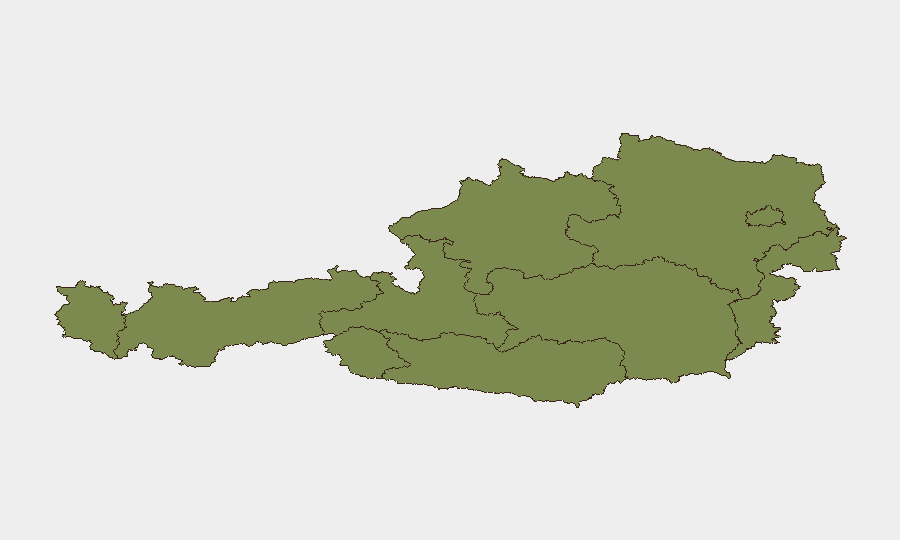
Salzburg's elevated composite score (31.3) and Vienna's secondary ranking (23.4) drive Austria's sub-national risk profile, while seven remaining states cluster at uniformly low risk (1.3 each). The concentration in Salzburg and Vienna suggests localized event activity—likely diplomatic, corporate, or regulatory in nature—rather than broader security deterioration. Vienna's position as Austria's capital and international hub typically elevates diplomatic and cyber exposure; Salzburg's score warrants clarification via targeted monitoring but does not indicate active civil unrest or critical infrastructure threat. No geographic corridor or border-adjacent region shows elevated instability.
How GeoBit Would Assist
Intel Sweep and multi-language OSINT fusion would monitor Austrian public statements, corporate disputes, and regulatory actions to distinguish routine governance from emerging risks. AOI Monitoring & Early Warning with persistent watch on Salzburg and Vienna would provide real-time alerting if event velocity or severity changes, allowing security teams to escalate duty-of-care responses before incidents cascade. Routing & Network Analysis would enable alternative journey planning for personnel transiting high-risk sub-regions, and satellite & imagery analysis would assess flood damage or infrastructure vulnerability if weather events recur.
7-Day Outlook
No acute deterioration is forecast. Austria's stable governance, strong institutional controls, and absence of border tensions support continued low-risk assessment. Security teams should maintain routine monitoring posture and update travel and asset policies only if sub-national risk scores shift materially or open-source reporting confirms substantive incidents in Salzburg or Vienna within the next reporting cycle.
Report Date: 2026-06-20 | Data Currency: Last 24–48 hours | Confidence: High (low-activity environment) | Next Update: 2026-06-21
Highest-Risk Areas — Ranked
| # | State / Region | Risk |
|---|---|---|
| 1 | Salzburg | 31.3 |
| 2 | Vienna | 23.4 |
| 3 | Vorarlberg | 1.3 |
| 4 | Tyrol | 1.3 |
| 5 | Lower Austria | 1.3 |
| 6 | Upper Austria | 1.3 |
| 7 | Carinthia | 1.3 |
| 8 | Styria | 1.3 |
| 9 | Burgenland | 1.3 |
Sources
Previous Daily Briefs
A new Austria brief is written every day — each with its own risk map and downloadable CSV. Here's the last week; use the calendar to go further back.
📅 Browse every day by calendar →
Highlighted days have a brief. Tap a day for that day's map & analysis, or “csv” for that day's dataset ($5).