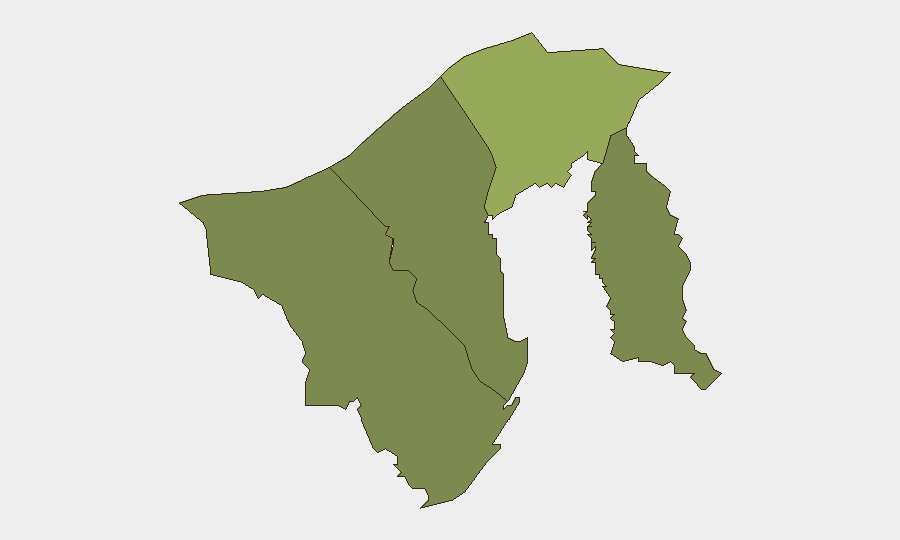
Situation Summary
Brunei remains a low-threat environment with a composite threat score of 3 and no acute security incidents reported in the last 24–48 hours. Open-source monitoring confirms routine diplomatic and economic engagement with regional partners (India, Timor-Leste, ASEAN) and no credible reports of civil unrest, terrorism, major crime spikes, infrastructure disruption, or travel-risk events. The security posture is stable and consistent with Brunei's baseline low-incident profile.
Key Developments
- No significant security incidents reported in Brunei Darussalam in the last 24–48 hours across open-source, social media, and specialized risk-mapping platforms.
- Routine regional diplomacy ongoing: Brunei engaged in standard bilateral and ASEAN-level economic and energy security discussions; no domestic destabilization indicated.
- Sub-national risk remains concentrated in Brunei-Muara District (composite risk score 45), driven by urbanization, port activity, and administrative density; no acute incident reported in this period.
- Event signal noise from non-Brunei sources: Detected signals (arrests in Benin City, Nigeria military activity, trafficking operations) are geographically unrelated to Brunei despite data-aggregation tagging and do not reflect Brunei's domestic security situation.
Highest-Risk Areas
Brunei-Muara District dominates the sub-national risk ranking (score 45) as the capital region hosting Bandar Seri Begawan, the principal port, government institutions, and commercial hubs. This concentration of economic and administrative activity typically drives higher baseline risk for transnational crime, port-related smuggling, and financial flows, though no acute incident is currently active. Tutong (score 20) and Belait (score 15)—the energy and industrial heartland—maintain moderate residual risk linked to oil/gas infrastructure and workforce mobility. Temburong (score 10) remains the lowest-risk zone. Current trajectory shows no escalation.
How GeoBit Would Assist
Security teams with personnel or assets in Brunei should employ AOI Monitoring & Early Warning (persistent area-of-interest watch on Brunei-Muara's port, government, and commercial zones) to detect emerging unrest or infrastructure disruption in near-real time. Intel Sweep and OSINT fusion (multi-language social media, X/Telegram, local news) provide continuous cross-corroboration of rumors and incident reports, reducing false positives inherent in aggregate event feeds. Network & Actor Analysis can map transnational trafficking, sanctions evasion, or financial crime networks that may touch Brunei despite originating elsewhere—critical for duty-of-care and compliance teams.
7-Day Outlook
No acute incidents or triggers are forecast for the next seven days. Brunei's political and security environment remains stable; regional diplomatic engagement is positive. Standard corporate security and travel protocols remain appropriate; no escalation of alert posture is warranted at this time. Teams should maintain routine monitoring cycles and remain alert to any disruption in the port, energy sector, or government operations, but no specific threat is imminent.
Highest-Risk Areas — Ranked
| # | State / Region | Risk |
|---|---|---|
| 1 | Brunei-Muara District | 45 |
| 2 | Tutong District | 20 |
| 3 | Belait District | 15 |
| 4 | Temburong District | 10 |
Sources
Previous Daily Briefs
A new Brunei brief is written every day — each with its own risk map and downloadable CSV. Here's the last week; use the calendar to go further back.
📅 Browse every day by calendar →
Highlighted days have a brief. Tap a day for that day's map & analysis, or “csv” for that day's dataset ($5).