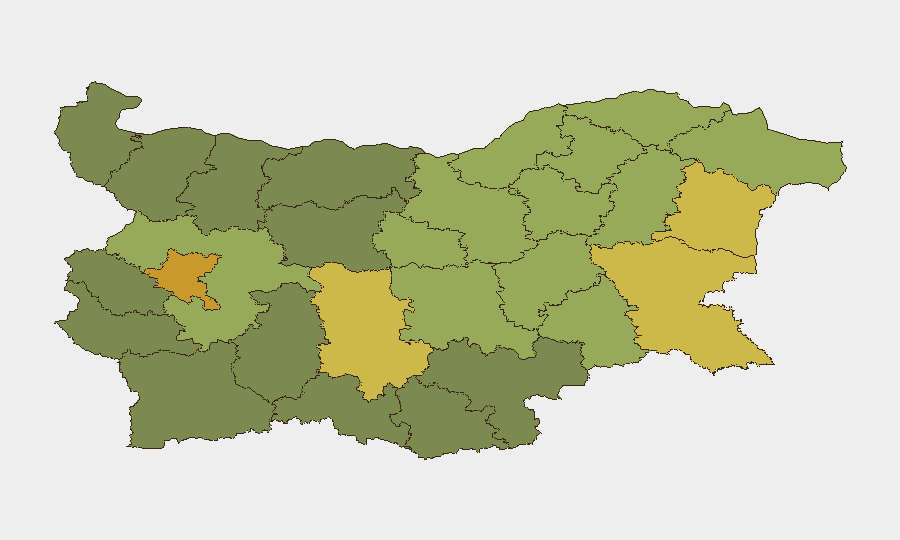
Situation Summary
Bulgaria remains a low-threat environment globally (rank #167), with no major security incidents recorded in the tracking window. However, the past week has surfaced several correlated risks: anti-government protest activity in the capital, ongoing migration and smuggling pressures at northern borders, reported sabotage concerns at defence-industrial facilities, and petty-to-serious urban crime including a homicide investigation. The trajectory indicates elevated political tension and persistent vulnerabilities in critical infrastructure security rather than imminent systemic instability.
Key Developments
- Sofia (Triangle of Power / Independence Square) – 15 September: Anti-government protest demanding resignation of the Radev cabinet over budget deficits, foreign debt, corruption, and organized crime; police deployed and central traffic closed.
- Sofia (Triangle of Power) – 15 September, 19:00: Planned rally organized by activist Manol Glishev and civil association BOETS calling for early elections and cabinet resignation; formally notified to Sofia Municipality and monitored by police; localized movement disruption.
- Vidin border crossing (Romania border, northwest) – 16 September, 04:00: Border Police and Romanian counterparts detained 12 irregular migrants (10 Iranian, one Egyptian, one Iraqi) hidden in a Turkish truck with tampered seal; migrants reportedly boarded near Sofia; investigation launched into smuggling network.
- Haskovo District Court – 16 September: Five defendants, including two customs officers, released on bail in case involving alleged fake-goods destruction fraud scheme; case reflects ongoing corruption vulnerabilities in customs sector.
- Sofia (Mladost district) – 17 September: Young woman detained in connection with homicide investigation; circumstances and motive not yet publicly disclosed.
- Nationwide critical infrastructure – 18 September (announced): Government ordered supply of anti-drone systems to critical infrastructure sites and increased police patrols at arms production and storage facilities following reported possible sabotage at EMCO weapons depot fire; reflects elevated defence-industrial security concerns.
- Sofia (city centre notary office) – 16 September, reported 18 September: Police operation prevented attempted multi-million-leva fraudulent property acquisition using fake will; demonstrates organized criminal targeting of high-value real estate.
- Stara Zagora–Kazanlak road (south-central Bulgaria) – 20 September: Serious traffic accident injuring 34-year-old male; significant traffic disruption during police investigation; ongoing road-safety risk on major inter-city routes.
- National arms-sector security debate – 20 September: Bulgarian media reported official findings of non-compliance with security measures at industrial plants and inadequate counter-intelligence measures against Russian intelligence threats; reflects sustained concern over foreign-linked sabotage.
Highest-Risk Areas
Sofia-City (risk 72) and Plovdiv (risk 68) drive aggregate national risk, reflecting political volatility, organized crime presence, and property fraud in the capital, alongside economic and criminal pressures in Bulgaria's second-largest city. Varna and Burgas (coastal, risk 65 and 62) face migration and smuggling corridor exposure; Vidin's northern position on the Danube and Romania border amplifies irregular-migrant and trafficking risks. Risk concentration in these urban and border zones reflects capital-city protest activity, transnational crime networks, and defence-industrial vulnerabilities rather than broad territorial instability.
How GeoBit Would Assist
Teams with personnel or assets in Bulgaria should employ AOI Monitoring & Early Warning on Sofia government zones and border crossings (Vidin, Kapitan Andreevo) to track protest activity, migrant flows, and security deployments in real time. OSINT Fusion & Corroboration across X, Telegram, and Bulgarian media would provide early signals of cabinet instability, defence-sector incidents, or organized-crime operations targeting corporate real estate. Route & Network Analysis would enable alternative journey planning for staff transiting Sofia-city and major inter-city roads during protest windows or following accidents.
7-Day Outlook
Anti-government sentiment is likely to sustain low-level protest activity through autumn, particularly around fiscal policy announcements. Border and migration pressures will remain endemic. Defence-industrial security measures announced this week may reduce near-term sabotage risk but signal sustained foreign-intelligence activity. No escalation to civil unrest or infrastructure disruption is forecast absent major political shock.
Highest-Risk Areas — Ranked
| # | State / Region | Risk |
|---|---|---|
| 1 | Sofia-City | 72 |
| 2 | Plovdiv | 68 |
| 3 | Varna | 65 |
| 4 | Burgas | 62 |
| 5 | Sofia | 58 |
| 6 | Ruse | 55 |
| 7 | Stara Zagora | 52 |
| 8 | Sliven | 50 |
| 9 | Shumen | 48 |
| 10 | Razgrad | 47 |
| 11 | Yambol | 45 |
| 12 | Dobrich | 44 |
Sources
Previous Weekly Briefs
A new Bulgaria brief is written every Monday, covering the week — each with its own risk map and downloadable CSV. Use the calendar to go further back.
- September 14, 2026
- September 7, 2026
- August 31, 2026
- August 29, 2026
- August 26, 2026
- August 24, 2026
- August 22, 2026
📅 Browse past briefs by calendar →
Highlighted days have a brief. Tap a day for that day's map & analysis, or “csv” for that day's dataset ($5).
Atlas — our AI intelligence desk — emails them this snapshot personally. Nothing else, no list.