Situation Summary
Estonia maintains a composite threat score of 6 (rank #106 globally), reflecting persistent regional hybrid and cyber threats rather than acute domestic security incidents. Open-source intelligence over the last 24–48 hours shows no confirmed physical security events, civil unrest, or travel disruptions within Estonia's borders. The threat environment remains shaped by Russia's broader regional posture and Estonia's NATO alignment, with policy-level developments in digital evidence frameworks and defense cooperation dominating recent reporting.
Key Developments
- Tallinn, 2026-06-13/14 – No acute physical security incidents, arrests, or civil unrest confirmed in open reporting for the past 48 hours. GeoBI's event-feed data shows protest-related signals dated 2026-06-12 (detentions, police-protester contact) but no independent corroboration of ongoing or new incidents in the 24–48 hour window.
- Tallinn, mid-June 2026 – Estonia is implementing tightened digital-evidence rules under the EU's e-evidence regulation, affecting cross-border data production and cyber-crime investigation protocols. This legal/regulatory change carries operational implications for organizations handling sensitive data and for incident-response timelines.
- National, mid-June 2026 – Estonian Defence Forces Military Intelligence Center published assessment identifying Russian intelligence recruitment via Telegram for terrorist plots, citing 82% of uncovered operations in Ukraine involved such methods. While Ukraine-focused, the assessment reflects Estonia's current threat intelligence priorities and hybrid-operation awareness.
- Tallinn, mid-June 2026 – Ukraine and Estonia signed a Joint Declaration on security and defense cooperation, emphasizing air defense and drone capabilities. Policy-level escalation may marginally increase Estonia's visibility in Russian information operations but does not constitute a domestic incident.
- Open web/X (24h) – No verified reports of significant crime, infrastructure failure, or transport disruption in Estonia. Social media and news coverage remain dominated by defense-policy and regulatory updates rather than acute security events.
Highest-Risk Areas
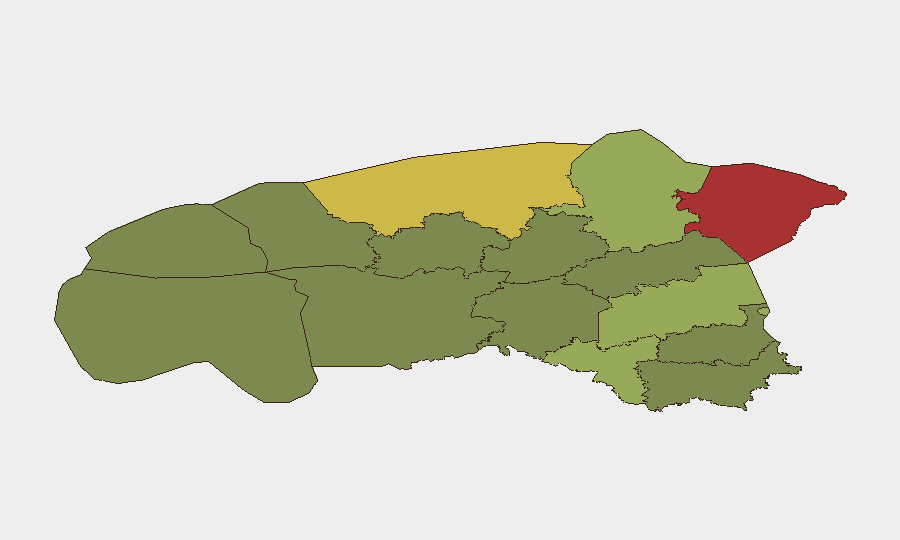
Ida-Viru County (risk 78) and Harju County (risk 68) drive the sub-national ranking and warrant priority monitoring. Ida-Viru's elevated risk reflects its proximity to the Russian border and historical sensitivity to hybrid operations; Harju—encompassing Tallinn and the capital region—carries risk from its concentration of government, financial, and critical-infrastructure assets. Tartu County (risk 58) and Valga County (risk 55) follow, with Valga's southern border location maintaining sensitivity. Remaining counties register materially lower risk, with southern and southwestern regions (Võru, Põlva, Viljandi) at the lowest end of the national scale.
How GeoBit Would Assist
Security and risk teams operating in Estonia should leverage Intel Sweep and multi-language OSINT fusion to monitor low-visibility protest, labor, and regional-sentiment activity in Ida-Viru and Harju counties, where cyber and hybrid operations historically precede policy shifts. AOI Monitoring with alerting on Tallinn's financial district, port facilities, and state institutions would provide early warning of unscheduled protests, access disruptions, or unusual security deployments. Network & Actor Analysis applied to Telegram and social platforms would support detection of recruitment or coordination signals consistent with the hybrid-threat patterns Estonian intelligence has flagged.
7-Day Outlook
No material escalation in domestic security risk is forecast for the next seven days based on current open reporting. Attention should remain on police-protester contact signals from 2026-06-12 to determine whether detentions resolve or spark secondary unrest. Cyber and information-operation risk remains persistent and regionally ambient; travel and asset security in Estonia remain within normal operating parameters for NATO-aligned organizations.
Highest-Risk Areas — Ranked
| # | State / Region | Risk |
|---|---|---|
| 1 | Ida-Viru County | 78 |
| 2 | Harju County | 68 |
| 3 | Tartu County | 58 |
| 4 | Valga County | 55 |
| 5 | Lääne-Viru County | 52 |
| 6 | Pärnu County | 35 |
| 7 | Rapla County | 32 |
| 8 | Jõgeva County | 30 |
| 9 | Järva County | 28 |
| 10 | Viljandi County | 25 |
| 11 | Põlva County | 22 |
| 12 | Võru County | 18 |
Sources
Previous Daily Briefs
A new Estonia brief is written every day — each with its own risk map and downloadable CSV. Here's the last week; use the calendar to go further back.
📅 Browse every day by calendar →
Highlighted days have a brief. Tap a day for that day's map & analysis, or “csv” for that day's dataset ($5).