Situation Summary
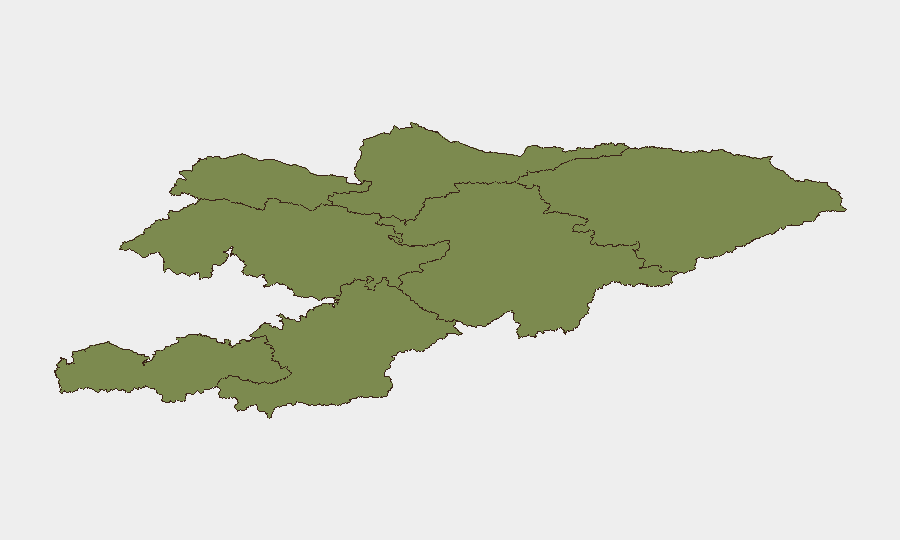
Kyrgyzstan remains at baseline security risk (composite threat score 28) with no corroborated acute incidents—attacks, civil unrest, or infrastructure failures—documented in the last 48 hours. The country continues to manage structural vulnerabilities in water and land infrastructure and policy coordination around returnee management, but these do not reflect immediate operational risk. Bishkek City concentrates the highest risk profile (31.3), followed by the Batken Region (22.1), though neither shows active escalation in the current reporting window.
Key Developments
- Bishkek, June 11, 2026 – Regional expert forums convened to discuss security frameworks for handling returnees from conflict zones and community-based reintegration approaches. This is a policy and coordination event, not an incident-level trigger.
- Kyrgyzstan (National), June 11, 2026 – Commentary within SCO 25th anniversary coverage highlighted structural vulnerabilities in irrigation and land-reclamation infrastructure. Medium-term risk concern; no acute event.
- Across Kyrgyzstan – Indexed social media and open-source reporting for June 10–12 shows no corroborated reports of violent incidents, protest activity, serious crime spikes, or sudden political instability meeting incident thresholds.
Highest-Risk Areas
Bishkek City (31.3) is the primary risk concentration, driven by urban density, administrative centrality, and the clustering of June 10 event signals (conventional military force, public statements, administrative actions, and detainee-related demands). Batken Region (22.1) remains elevated, consistent with its history as a border-flashpoint area with periodic land and water disputes; current reporting does not indicate active escalation. All other regions score 12.9 or below, with eight regions at 1.3, indicating risk is geographically contained. Corporate assets and personnel in Bishkek should maintain standard duty-of-care protocols; Batken-based operations warrant heightened environmental monitoring.
How GeoBit Would Assist
AOI Monitoring & Early Warning on Bishkek City and Batken Region with persistent alerting for protest activity, military movements, or arrest/detention clusters would provide 24–48 hour lead time on emerging unrest. Multi-language OSINT fusion (X/Twitter, Telegram, local news, radio SIGINT) paired with entity extraction and sentiment analysis would filter routine policy activity from genuine operational escalation. Routing & Network Analysis would enable rapid alternative-route and safe-haven planning should conditions deteriorate in high-risk corridors, particularly near the Kyrgyzstan–Tajikistan border in Batken.
7-Day Outlook
No acute deterioration is forecast for the next seven days based on current signals and absence of corroborated incident reporting. The June 10–11 clustering of administrative, detainee, and public-statement events likely reflects routine governance activity rather than crisis escalation. Continued baseline monitoring of Bishkek and Batken is warranted; any spike in arrest/detention signals, military mobilization, or protest announcements should trigger immediate re-assessment and asset-location verification.
Highest-Risk Areas — Ranked
| # | State / Region | Risk |
|---|---|---|
| 1 | Bishkek City | 31.3 |
| 2 | Batken Region | 22.1 |
| 3 | Naryn Region | 12.9 |
| 4 | Jalal-Abad Region | 1.3 |
| 5 | Osh City | 1.3 |
| 6 | Osh Region | 1.3 |
| 7 | Issyk-Kul Region | 1.3 |
| 8 | Talas Region | 1.3 |
| 9 | Chuy Region | 1.3 |
Sources
Previous Daily Briefs
A new Kyrgyzstan brief is written every day — each with its own risk map and downloadable CSV. Here's the last week; use the calendar to go further back.
📅 Browse every day by calendar →
Highlighted days have a brief. Tap a day for that day's map & analysis, or “csv” for that day's dataset ($5).