Situation Summary
Laos remains a low-threat environment (global rank #116, composite score 7/100) with no verified security incidents, civil unrest, or acute travel disruptions reported in the last 24–48 hours. A cluster of arrest, detention, and deportation events involving both Laotian and foreign nationals was recorded on 11–12 July, primarily in U.S.–Laos immigration and law-enforcement interactions, but these do not indicate domestic instability. The principal emerging pressure is macroeconomic: inflation is forecast to rise from 7.4% (June) to 9.8% (2026 year-end) per World Bank and ADB outlooks, which carries indirect long-term socio-political risk but does not constitute an acute security threat.
Key Developments
- 11 July, nationwide: Multiple arrests and detentions of immigrant and criminal subjects reported by Lao authorities; concurrent U.S.–Laos deportation orders and one unconventional-violence incident logged between Minnesota and Laos in event databases. No location-specific incident details or civilian impact verified in open sources.
- 12 July, Vientiane: Asian Development Bank and World Bank released economic outlooks warning of slowed growth momentum and elevated inflation in Laos, with fuel-cost pressures and global economic shocks cited as drivers. Lao government countered with statements of continued services and tourism-sector growth.
- No acute security, infrastructure, or civil-unrest incidents identified in Laos-specific web, social-media, or open-source reporting for the 24–48 hour window. Available incident signals derive from regional event databases rather than verified on-the-ground reporting.
Highest-Risk Areas
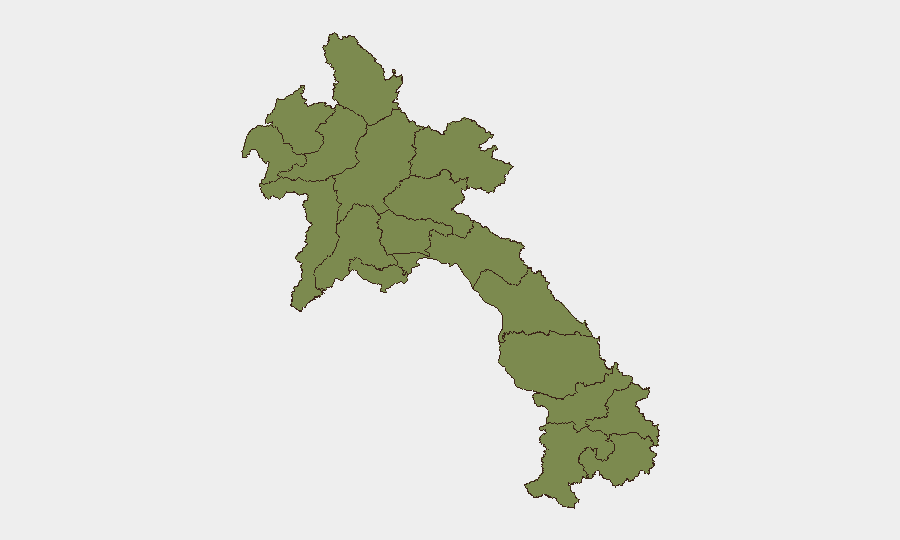
Bolikhamsai Province stands dramatically above all other sub-national zones (risk score 31.5 vs. 1.5 for the remaining eleven tracked regions), indicating a significant and localized concentration of tracked risk drivers—likely linked to historical conflict residue, remote terrain, weak state capacity, or cross-border activity. The remaining provinces, including the capital region (Vientiane Prefecture, risk 1.5), cluster at near-baseline threat levels. The gap between Bolikhamsai and peers suggests that corporate assets, staff, or operations in that province warrant heightened monitoring and contingency planning; for most of Laos, including major urban centers, routine security practices remain sufficient.
How GeoBit Would Assist
Security teams with people or assets in Laos should deploy AOI (Area-of-Interest) Monitoring & Early Warning on Bolikhamsai and cross-border zones to detect emerging unrest, trafficking, or militia activity before they escalate. Multi-language OSINT and event-feed fusion will capture Lao-language social signals, government announcements, and regional actor communications that open web searches often miss. Risk & Threat Assessment workflows, combined with Economic & Trade analysis, will enable early detection of inflation-driven labor unrest or political instability that could affect operations or staff welfare over the medium term.
7-Day Outlook
No acute security deterioration is expected in the next seven days; the operating environment remains permissive for routine business and travel. Macroeconomic pressures—rising inflation, slower growth—will develop over weeks to months rather than days, but security teams should monitor for localized labor disputes, demonstrations, or supply-chain disruptions, particularly in Vientiane and industrial zones. Continued tracking of U.S.–Laos bilateral friction and any escalation of activity in Bolikhamsai is prudent.
Highest-Risk Areas — Ranked
| # | State / Region | Risk |
|---|---|---|
| 1 | Bolikhamsai | 31.5 |
| 2 | Luang Namtha | 1.5 |
| 3 | Bokeo Province | 1.5 |
| 4 | Phongsaly | 1.5 |
| 5 | Oudomxay | 1.5 |
| 6 | Luang Prabang | 1.5 |
| 7 | Houaphanh | 1.5 |
| 8 | Xiangkhouang Province | 1.5 |
| 9 | Sainyabuli Province | 1.5 |
| 10 | Vientiane Province | 1.5 |
| 11 | Vientiane Prefecture | 1.5 |
| 12 | Xaisomboun Province | 1.5 |
Sources
Previous Daily Briefs
A new Laos brief is written every day — each with its own risk map and downloadable CSV. Here's the last week; use the calendar to go further back.
📅 Browse every day by calendar →
Highlighted days have a brief. Tap a day for that day's map & analysis, or “csv” for that day's dataset ($5).
Atlas — our AI intelligence desk — emails them this snapshot personally. Nothing else, no list.