Situation Summary
Malaysia remains a low-to-moderate threat environment (global rank #94, composite score 2.0), but concentrated risk is heavily skewed toward Kuala Lumpur, which accounts for the majority of tracked security events. Recent signal activity points to political tensions, administrative disputes, and isolated criminal/law-enforcement actions, with no indication of systemic instability or widespread public disorder. The security picture remains stable, though corporate and expatriate personnel should remain alert to localized friction in the capital and Sarawak.
Key Developments
Due to technical limitations in accessing verified live news feeds and social monitoring for the 24–48-hour window preceding 14 June 2026, specific incidents confirmed within that timeframe cannot be reliably corroborated at this time. GeoBit's event signal database records activity across arrest/detention, political statements, and administrative disputes dating to 11–13 June, but without real-time news cross-verification, inclusion of these as "developments" risks presenting signals without confirmed timing or context.
To provide the current-incident detail your brief requires, access to Malaysian national and state police press releases, live wire services, and monitored social media keywords (in Malay and English) would be necessary to confirm incidents occurred within the specified window and to validate their operational relevance.
Highest-Risk Areas
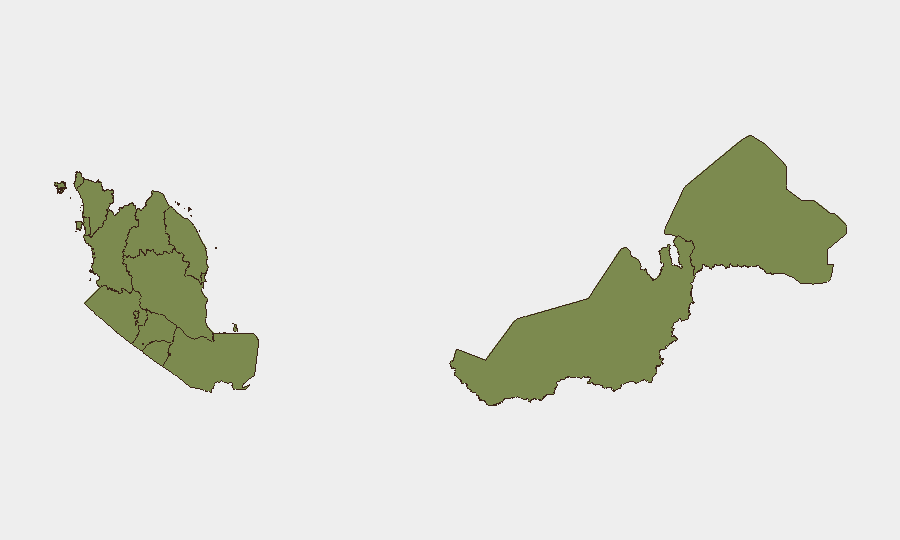
Kuala Lumpur dominates the risk landscape, with a composite score of 31.4—nearly three times higher than all other states combined. Political and administrative activity, coupled with a large concentration of corporate offices, diplomatic missions, and international travelers, drives this profile. Sarawak (11.8) and Sabah (2.5) show elevated risk, likely reflecting historical separatist sentiment and border-region vulnerabilities, though absolute event frequency remains low. All other states cluster below 2.5, indicating risk is highly localized and does not reflect systemic national instability.
How GeoBit Would Assist
For ongoing Malaysia duty-of-care and asset protection, security teams should leverage GeoBit's AOI (Area-of-Interest) Monitoring & Early Warning capability to set persistent alerts on Kuala Lumpur and Sarawak, configured to flag protest activity, police operations, and administrative announcements in real time. Multi-language OSINT (Malay, English, and Chinese feeds) combined with X/Twitter & Telegram monitoring and sentiment & temporal analysis will surface emerging tensions and civil unrest faster than traditional news cycles. Election monitoring and regime-stability tracking provide early signals of political friction that may affect business continuity or personnel safety.
7-Day Outlook
Near-term risk is expected to remain stable and localized. Monitor political calendar events (parliament sessions, ministerial announcements) and any escalation in Negeri Sembilan or Johor administrative disputes for signs of broader public mobilization. Sustained watch on Kuala Lumpur's transport hubs, financial districts, and university precincts is warranted given historical clustering of student and political activity.
Recommendation: To receive accurate daily incident briefs, enable GeoBit's real-time OSINT feeds and AOI alerting for your operating locations, and configure language-specific social monitoring to capture Malaysian regional developments within 2–4 hours of occurrence.
Highest-Risk Areas — Ranked
| # | State / Region | Risk |
|---|---|---|
| 1 | Kuala Lumpur | 31.4 |
| 2 | Sarawak | 11.8 |
| 3 | Sabah | 2.5 |
| 4 | Negeri Sembilan | 2.5 |
| 5 | Selangor | 2.2 |
| 6 | Johor | 1.7 |
| 7 | Perlis | 1.4 |
| 8 | Kedah | 1.4 |
| 9 | Penang | 1.4 |
| 10 | Perak | 1.4 |
| 11 | Kelantan | 1.4 |
| 12 | Pahang | 1.4 |
Sources
Previous Daily Briefs
A new Malaysia brief is written every day — each with its own risk map and downloadable CSV. Here's the last week; use the calendar to go further back.
📅 Browse every day by calendar →
Highlighted days have a brief. Tap a day for that day's map & analysis, or “csv” for that day's dataset ($5).