Situation Summary
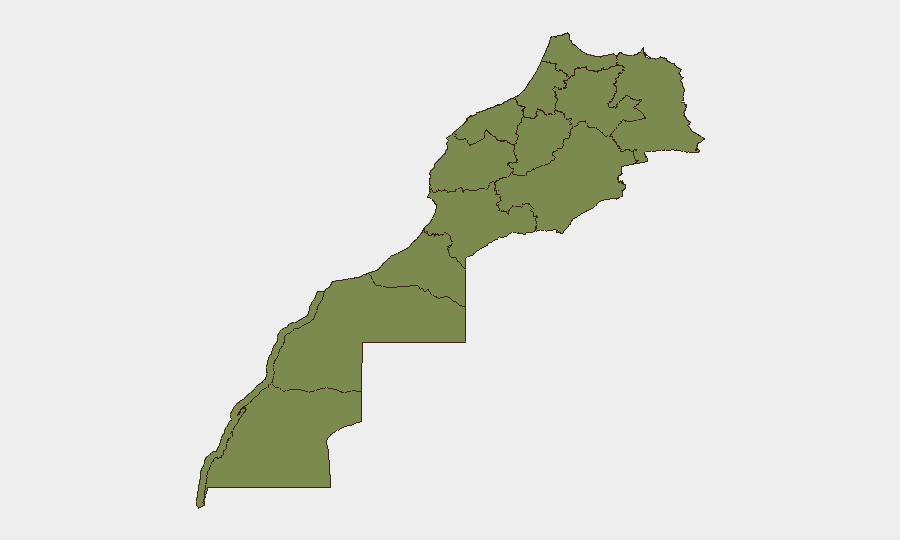
Morocco remains a relatively stable country within the broader MENA region, with a composite threat score of 15 and no global ranking in the highest-risk cohort. However, recent diplomatic tensions with France—evidenced by multiple military posturing events and demands over the last 48 hours—alongside activist disapproval signals and reduced-relations rhetoric, suggest elevated state-level friction. The security environment is localized rather than nationwide; Drâa-Tafilalet presents significantly elevated risk (31.2), while most other regions score below 3.0, indicating concentrated rather than diffuse instability.
Key Developments
- Rabat – Armed Forces AI Air-Defense Partnership (23 June 2026)
Morocco's armed forces signed a strategic alliance with a French defense firm to deploy the "Harmattan" AI-based autonomous air-defense ecosystem. The system is designed for drone detection and engagement without GPS dependency, signaling military modernization and counter-UAS capability enhancement.
- France–Morocco Military Posturing (22 June 2026, multiple incidents)
French forces issued multiple threats and demands toward Morocco, alongside conventional military force signaling. Concurrent Moroccan demands suggest bilateral negotiation or dispute escalation; nature and geographic focus remain unclear from open reporting.
- Activist and Diplomatic Pressure (21–23 June 2026)
Activist groups expressed disapproval of Moroccan government policy; Morocco simultaneously issued public statements and faced international "reduce relations" rhetoric. This cluster indicates domestic and external political friction rather than violence or immediate civil unrest.
- State Media Investigation Signaled (22 June 2026)
State media initiated an investigation into unspecified Moroccan government matters, suggesting emerging transparency demand or accountability pressure.
- Japanese–Morocco Public Statement (21 June 2026)
Moroccan officials issued a public statement regarding Japan, likely diplomatic in nature; context and substance remain unclear from headline reporting.
Note: Open web research over the last 24–48 hours yielded no confirmed reports of protests, violent crime spikes, infrastructure disruptions, or acute travel-risk incidents in major population centers. Diplomatic and military-posture signals are elevated; ground-level security events are not yet visible in unclassified channels.
Highest-Risk Areas
Drâa-Tafilalet dominates Morocco's sub-national risk profile (31.2), substantially exceeding all other regions. Rabat-Salé-Kénitra ranks second (9.0), likely driven by recent diplomatic and activist events involving the capital. The remaining ten regions score between 1.2 and 3.8, indicating risk is concentrated in the southeast (Drâa-Tafilalet) and around the political center (Rabat). Drâa-Tafilalet's elevated score reflects historical militant activity, smuggling networks, and remoteness; current drivers warrant direct clarification with in-country security contacts.
How GeoBit Would Assist
Corporate teams should task AOI Monitoring & Early Warning on Drâa-Tafilalet, Rabat, and transport corridors to detect protest, roadblock, or security-force activity before it affects personnel or supply chains. Multi-language OSINT Fusion—including Arabic and French social media, local news, and municipal channels—would surface fragmentary reporting faster than English-language open media. Network & Actor Analysis can map activist and state-media pressure vectors to distinguish diplomatic noise from operational risk, guiding duty-of-care decisions for travel and staffing.
7-Day Outlook
Franco-Moroccan friction is likely to persist and potentially escalate diplomatically or rhetorically over the next week, though kinetic risk remains low absent further incident. Drâa-Tafilalet should remain under continuous watch; no indicators suggest imminent spread of disturbance to major urban centers. Monitor for any French military activity, protest mobilization in Rabat, or border/checkpoint delays affecting business operations.
Highest-Risk Areas — Ranked
| # | State / Region | Risk |
|---|---|---|
| 1 | Drâa-Tafilalet | 31.2 |
| 2 | Rabat-Salé-Kénitra | 9 |
| 3 | Fez-Meknes | 3.8 |
| 4 | Casablanca-Settat | 2.5 |
| 5 | Souss-Massa | 2.5 |
| 6 | Western Sahara | 1.2 |
| 7 | Laâyoune-Sakia El Hamra | 1.2 |
| 8 | Guelmim-Oued Noun | 1.2 |
| 9 | Dakhla-Oued Ed-Dahab | 1.2 |
| 10 | Béni Mellal-Khénifra | 1.2 |
| 11 | Tangier-Tetouan-Al Hoceima | 1.2 |
| 12 | Oriental | 1.2 |
Sources
Previous Daily Briefs
A new Morocco brief is written every day — each with its own risk map and downloadable CSV. Here's the last week; use the calendar to go further back.
📅 Browse every day by calendar →
Highlighted days have a brief. Tap a day for that day's map & analysis, or “csv” for that day's dataset ($5).