Situation Summary
Palau remains a low-threat environment with a composite threat score of 2 globally. No significant security incidents, civil unrest, crime spikes, infrastructure failures, or travel-risk events have been reported in the last 24–48 hours. The nation's security posture is shaped primarily by strategic geopolitical factors and event-hosting responsibilities rather than acute domestic or transnational threats at present.
Key Developments
- Koror, 10 June 2026 – Government reiterates U.S. security assistance request. Palau's presidential office publicly restated its need for U.S. security support in connection with hosting major international conferences, including the "Our Ocean" conference and regional forums. This reflects strategic event-protection planning and ongoing reliance on external security partnerships, not response to an active incident.
- Two monitored threat signals flagged (9 June). GeoBit's event tracking recorded two signals: a "threaten" category event involving the United States and Palau, and a separate "threaten" signal involving an oil tanker and Palau. Both remain at the signal level; no escalation or confirmed active incident has been publicly reported or independently verified in the 24–48 hours following.
- No verified acute security events in last 24–48 hours. Web scanning, social media monitoring, and news aggregation detected no credible reports of attacks, major crimes, unrest, infrastructure disruption, or travel warnings specific to Palau during this window.
Highest-Risk Areas
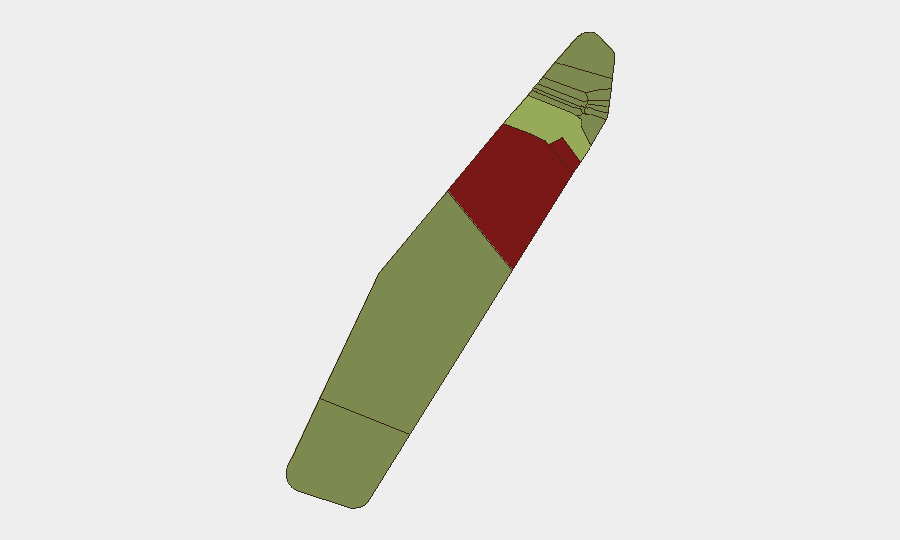
Peleliu (risk 92) and Angaur (risk 88) are substantially elevated relative to other states, though both remain below acute-incident thresholds. These southern islands' risk profiles likely reflect maritime exposure, historical sensitivity, or geopolitical positioning. Koror (risk 45) remains the largest urban center and government seat, warranting baseline monitoring. The remaining nine states cluster in the 21–32 range, indicating relatively uniform low-to-moderate risk distribution across Palau's dispersed geography. Corporate presence and asset concentration in Koror suggest that risk concentration is practical rather than evenly distributed.
How GeoBit Would Assist
Security teams with personnel or assets in Palau should use AOI Monitoring & Early Warning to track Peleliu and Koror for any change in threat signal density or event frequency, with automated alerting configured for security-category events. Intel Sweep and OSINT fusion (including X/Twitter and regional news feeds in English and local languages) provide continuous situational awareness and early detection of emerging civil, maritime, or geopolitical developments. Maritime & Aviation tracking is particularly valuable given Palau's island geography and the recent oil-tanker-related signal, enabling real-time awareness of vessels and traffic near corporate or logistical assets.
7-Day Outlook
No material escalation is forecast for the next week. Palau's security environment is expected to remain stable, with event-related security activity (associated with the "Our Ocean" conference and diplomatic forums) driving official security messaging rather than acute threats. Continued monitoring of the two flagged threat signals and the U.S.–Palau bilateral relationship is warranted as routine due diligence; however, no travel restrictions or asset-protection escalations are indicated at this time.
Highest-Risk Areas — Ranked
| # | State / Region | Risk |
|---|---|---|
| 1 | Peleliu | 92 |
| 2 | Angaur | 88 |
| 3 | Koror | 45 |
| 4 | Melekeok | 35 |
| 5 | Airai | 32 |
| 6 | Ngatpang | 28 |
| 7 | Ngeremlengui | 26 |
| 8 | Ngaraard | 25 |
| 9 | Ngardmau | 24 |
| 10 | Aimeliik | 23 |
| 11 | Ngiwal | 22 |
| 12 | Ngchesar | 21 |
Previous Daily Briefs
A new Palau brief is written every day — each with its own risk map and downloadable CSV. Here's the last week; use the calendar to go further back.
📅 Browse every day by calendar →
Highlighted days have a brief. Tap a day for that day's map & analysis, or “csv” for that day's dataset ($5).