Situation Summary
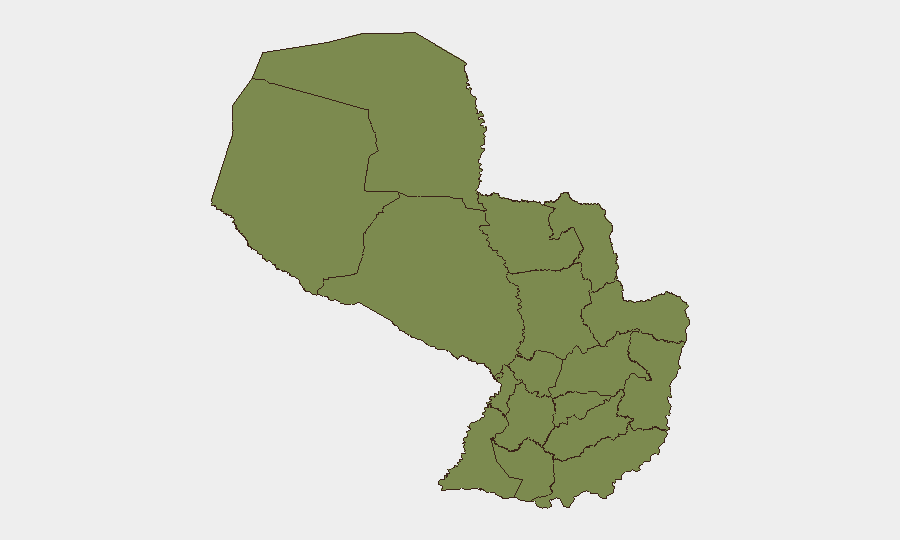
Paraguay remains at relatively low global threat rank (#99) with a composite threat score of 11, reflecting a broadly stable security environment. However, acute concentration of risk in Presidente Hayes Department (score 31.9)—driven by remote Chaco territory used for trafficking and criminal sanctuary—warrants focused attention for organizations with operations in or transiting that region. No significant security incidents have been documented in Paraguay in the last 24–48 hours; the security posture is essentially steady with persistent underlying vulnerabilities in border and frontier areas.
Key Developments
No discrete security, conflict, civil unrest, or crime incidents meeting verification standards were documented in Paraguay in the last 24–48 hours. Available web research, OSINT feeds, and news aggregation returned no reliably sourced reports of armed activity, protests, infrastructure damage, trafficking incidents, or political instability timestamped within this window.
Note: A regulatory change (biodiesel blend mandate, 19 June) was identified but falls outside the current 24–48-hour window and is economic policy, not a security event.
Organizations should rely on continuous monitoring through established channels (embassy advisories, local police/transport authority notifications, wire services) for real-time alerts.
Highest-Risk Areas
Presidente Hayes Department stands as the sole significant outlier, with a composite risk score of 31.9—approximately 17 times the national average. This remote Chaco territory, characterized by sparse population, limited state presence, and proximity to Bolivia and Argentina, has historically served as a corridor for narcotics trafficking, cattle rustling, and weapons smuggling. The remaining 11 departments cluster at score 1.9, indicating relatively uniform, low baseline risk across the rest of the country. Asunción and urban centers in Alto Paraná and Itapúa remain substantially lower-risk than frontier regions; however, routine crime (robbery, burglary, vehicle theft) remains common in major cities and warrants standard duty-of-care precautions.
How GeoBit Would Assist
A security team with people or assets in Paraguay should employ AOI Monitoring & Early Warning to establish persistent watch on Presidente Hayes and border crossing points, triggering alerts on trafficking activity, armed clashes, or blockades. OSINT Fusion & Corroboration across local media, police radio (via SIGINT capabilities), Telegram/X channels, and transport authority feeds would enable near-real-time detection of emerging incidents. Routing & Network Analysis can model alternative travel corridors and identify crossing-point vulnerabilities, enabling duty-of-care teams to adjust transit plans before incidents escalate.
7-Day Outlook
No significant escalation is anticipated in the near term; Paraguay's security trajectory remains stable absent major external shocks (e.g., regional narcotics wars or border flare-ups with Argentina/Brazil). Routine criminal activity and seasonal trafficking fluctuations will likely persist in frontier zones. Organizations should maintain baseline monitoring posture and readiness to activate rapid-response protocols if Presidente Hayes indicators spike.
Highest-Risk Areas — Ranked
| # | State / Region | Risk |
|---|---|---|
| 1 | Presidente Hayes Department | 31.9 |
| 2 | Concepción Department | 1.9 |
| 3 | San Pedro Department | 1.9 |
| 4 | Guairá Department | 1.9 |
| 5 | Amambay Department | 1.9 |
| 6 | Canindeyú Department | 1.9 |
| 7 | Caaguazú Department | 1.9 |
| 8 | Alto Paraná Department | 1.9 |
| 9 | Caazapá Department | 1.9 |
| 10 | Itapúa Department | 1.9 |
| 11 | Boquerón | 1.9 |
| 12 | Alto Paraguay Department | 1.9 |
Previous Daily Briefs
A new Paraguay brief is written every day — each with its own risk map and downloadable CSV. Here's the last week; use the calendar to go further back.
📅 Browse every day by calendar →
Highlighted days have a brief. Tap a day for that day's map & analysis, or “csv” for that day's dataset ($5).