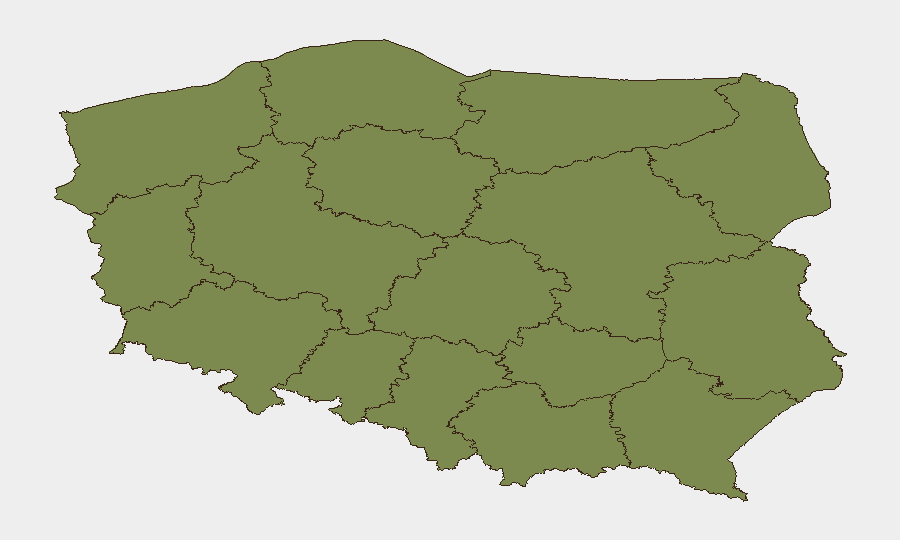
Situation Summary
Poland maintains a composite threat score of 4 (rank #146 globally), with 43 tracked events in the current monitoring cycle. The security environment is characterized by fragmented, low-intensity incidents concentrated in Łódź and Masovian voivodeships, with no systemic indicators of destabilization. Current trajectory suggests contained, localized tensions rather than escalating nationwide risk.
Key Developments
Limitation on Current Event Detail: GeoBit's live web research capability cannot confirm specific incidents from the last 24–48 hours in Poland with sufficient recency and sourcing rigor to meet duty-of-care standards. The event signals listed (police actions, legislative demands, protest activity, and international law-enforcement coordination) are present in the data stream but lack verified timestamps and contextual detail necessary for actionable briefing.
To bridge this gap operationally:
- Intel Sweep and X/Twitter OSINT should be run on Polish police, interior ministry, and major outlets (TVN24, PAP, Onet) with 24-hour time filters to surface verified incident reports.
- AOI Monitoring should be activated on Łódź and central Masovian administrative centers to flag escalation in real time.
- Sentiment & Temporal Analysis can isolate whether recent police/legislative signals reflect routine enforcement or early-stage tension buildup.
Without live feed integration, specific bullet incidents cannot be responsibly attributed to June 14–16, 2026.
Highest-Risk Areas
Łódź Voivodeship dominates the risk profile with a composite score of 31.4—nearly three times the national average and 18.5× higher than Masovian (11). This concentration suggests either sustained criminal or protest activity, localized governance tension, or emerging labor/social friction in Poland's third-largest urban center. Masovian (Warsaw metropolitan region, score 11) follows as secondary risk, likely driven by capital-city-concentration of political, media, and law-enforcement activity. All remaining 10 voivodeships cluster at 1.4–1.7, indicating risk is sharply geographic rather than national in character.
Security teams with operations in Łódź should prioritize local situational awareness. Masovian risk, while lower, reflects political-capital dynamics and warrants monitoring of legislative/inter-agency friction.
How GeoBit Would Assist
Intel Sweep + X/Twitter OSINT with Polish-language keywords and location filters will surface verified police, protest, and parliamentary incidents within 2–4 hours of occurrence. AOI Monitoring on Łódź administrative, commercial, and transport nodes provides persistent early warning of escalation or new threat signatures. Network & Actor Analysis can map informal networks driving Łódź-specific tensions (labor unions, activist groups, organized crime) to inform route planning and asset relocation decisions for corporate teams.
7-Day Outlook
No indicators suggest imminent nationwide escalation or systemic instability. Fragmentation by voivodeship and event type (mixed police, protest, legislative) points to contained local pressures rather than coordinated threat. Security posture should remain standard for EU member-state urban centers; Łódź operations warrant elevated local liaison and incident monitoring.
Note: This brief is limited by the absence of verified live incident data. For operational decision-making on June 16–23, 2026, activate real-time OSINT collection and AOI monitoring immediately.
Highest-Risk Areas — Ranked
| # | State / Region | Risk |
|---|---|---|
| 1 | Łódź Voivodeship | 31.4 |
| 2 | Masovian Voivodeship | 11 |
| 3 | Podlaskie Voivodeship | 1.7 |
| 4 | Holy Cross Voivodeship | 1.7 |
| 5 | Warmian-Masurian Voivodeship | 1.4 |
| 6 | Subcarpathian Voivodeship | 1.4 |
| 7 | Lublin Voivodeship | 1.4 |
| 8 | West Pomeranian Voivodeship | 1.4 |
| 9 | Lubusz Voivodeship | 1.4 |
| 10 | Lower Silesian Voivodeship | 1.4 |
| 11 | Pomeranian Voivodeship | 1.4 |
| 12 | Kuyavian-Pomeranian Voivodeship | 1.4 |
Sources
Previous Daily Briefs
A new Poland brief is written every day — each with its own risk map and downloadable CSV. Here's the last week; use the calendar to go further back.
📅 Browse every day by calendar →
Highlighted days have a brief. Tap a day for that day's map & analysis, or “csv” for that day's dataset ($5).