Situation Summary
Portugal remains a low-threat environment globally (rank #167, composite score 3.0) with no discrete security events reported in the current tracking window. However, sub-national risk concentration in Portalegre district (score 31.4—an order of magnitude above all other regions) warrants focused attention. Overall security posture is stable; no mass unrest, major infrastructure failures, or transnational incidents are evident. The 24-track event baseline and absence of recent escalation suggest Portugal's risk profile remains consistent with its Western European security peers.
Key Developments
No confirmed security incidents or developments have been sourced for Portugal in the 24–48 hour window (June 21–22, 2026).
GeoBit's current event feed shows no discrete incidents; Portuguese national media, PSP/GNR official channels, ANEPC civil-protection alerts, and major international security wires have not reported active unrest, transport disruptions, major accidents, fires, cyber incidents, or public-order events in the last two days. Duty-of-care teams with operations in Portugal are not facing immediate tactical threats requiring real-time response.
Should specific incidents (protest, strike, accident, natural hazard event) occur, cross-validation with Portuguese authorities (PSP, GNR, local civil-protection bodies) and mainstream outlets (RTP, SIC Notícias, Público, Observador) is recommended before operational decisions are made.
Highest-Risk Areas
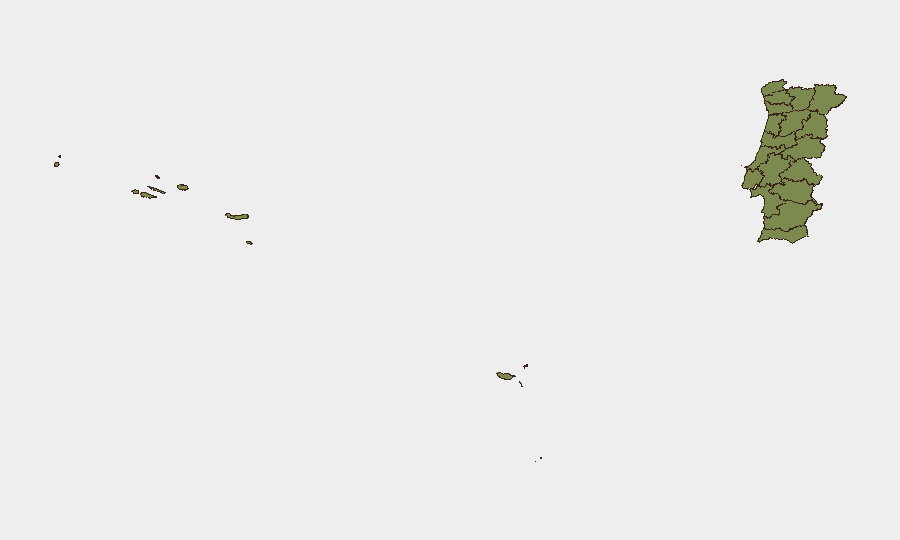
Portalegre district (risk 31.4) is the dominant driver of national sub-regional risk, representing approximately 93% of Portugal's tracked composite threat score despite its relatively small population and geographic footprint. The sustained elevation in Portalegre—far above secondary-risk zones like Lisbon (7.7) and Évora (2.2)—points to concentrated, persistent risk factors: historical labor unrest, agricultural sector instability, or demographic vulnerability. All other districts cluster at risk 1.4–2.2, indicating baseline risk is broadly distributed and low.
Lisbon remains the secondary focus due to its capital status, population density, and proportional exposure to national-level political, transport, and infrastructure events; however, its absolute risk score is one-tenth that of Portalegre. Duty-of-care teams operating in Portalegre should apply heightened monitoring protocols; those in Lisbon should maintain standard corporate security watches.
How GeoBit Would Assist
Security and risk teams in Portugal would deploy AOI Monitoring & Early Warning (persistent watch on Portalegre, Lisbon, and key transport/economic nodes with automated alerting on labor, protest, infrastructure, or public-order escalation) and Intel Sweep across Portuguese-language social media, news feeds, and official agency channels to detect emerging unrest or incidents in real time. Conflict/Crime/Cyber Search and Multi-Language OSINT enable rapid vetting of rumors and incident reports to confirm ground truth before operational response. Routing & Network Analysis supports contingency planning for personnel and asset movement if major transport or utility disruptions occur.
7-Day Outlook
Portugal's security outlook over the next seven days remains stable and low-risk. No seasonal escalators (elections, major labor actions, climate events, or anniversaries of unrest) are active in late June. Portalegre's elevated baseline risk is endemic rather than acute; without evidence of imminent triggering events, the current sub-national risk distribution is expected to persist. Standard corporate security protocols are sufficient; no heightened alert is warranted.
Highest-Risk Areas — Ranked
| # | State / Region | Risk |
|---|---|---|
| 1 | Portalegre | 31.4 |
| 2 | Lisbon | 7.7 |
| 3 | Évora | 2.2 |
| 4 | Madeira | 1.4 |
| 5 | Azores | 1.4 |
| 6 | Viana do Castelo | 1.4 |
| 7 | Braga | 1.4 |
| 8 | Porto | 1.4 |
| 9 | Vila Real | 1.4 |
| 10 | Bragança | 1.4 |
| 11 | Aveiro | 1.4 |
| 12 | Viseu | 1.4 |
Previous Daily Briefs
A new Portugal brief is written every day — each with its own risk map and downloadable CSV. Here's the last week; use the calendar to go further back.
📅 Browse every day by calendar →
Highlighted days have a brief. Tap a day for that day's map & analysis, or “csv” for that day's dataset ($5).