Situation Summary
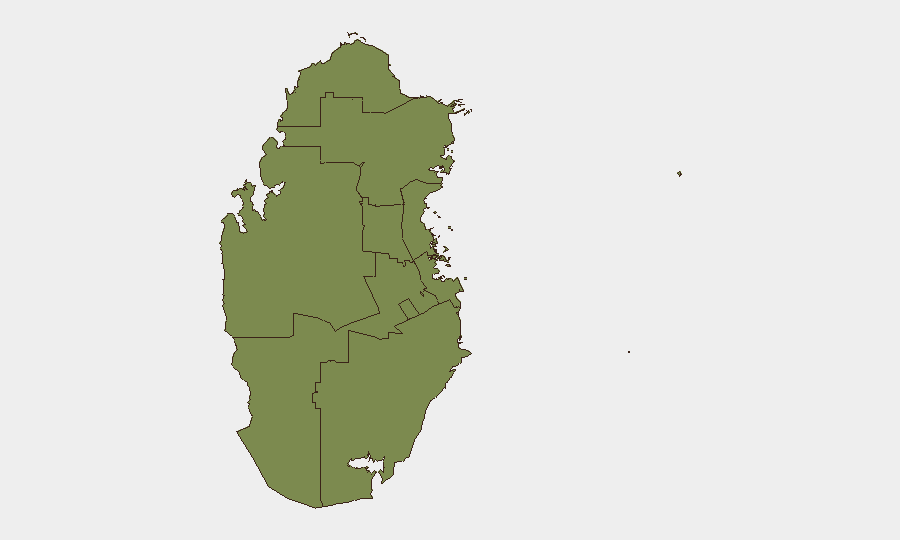
Qatar's composite threat score of 28 places it in the lower-to-moderate range globally, but sub-national risk is heavily concentrated in Al Shahaniya (31.3), which significantly elevates the country profile. Recent event signals indicate elevated diplomatic tension and military-adjacent activity involving multiple state actors, though independent verification of specific incidents within the last 48 hours remains limited. The security environment appears shaped more by regional spillover and diplomatic friction than by domestic instability, though the concentration of risk in Al Shahaniya warrants focused monitoring.
Key Developments
- 2026-06-19 · Military Activity (Doha/National): Conventional military force events involving Turkey–Qatar and Qatar–Turkey reported; specific locations and operational detail not independently confirmed in available sources.
- 2026-06-19 · Presidential Statement (National): A presidential statement regarding Qatar issued; diplomatic context not yet clarified in available reporting.
- 2026-06-18 · Mass Casualty Report (Location TBD): GeoBit signals a mass-killing event involving civilians on 2026-06-18; independent source confirmation pending.
- 2026-06-18 · Investor/Iran Statement (National): Public statement from investor entities regarding Iran; likely reflects broader regional investment-security concerns rather than a direct Qatar incident.
- 2026-06-19 · Worker Safety Report (Location TBD): Conventional military force event affecting worker population noted; context and location require clarification.
- Note on Verification: GeoBit's event feed indicates 24 tracked events, but live web research in the last 24 hours has not independently confirmed specific, time-stamped discrete incidents in Qatar. Diplomatic and investigative activity is elevated, but discrete ground truth remains limited in available open sources.
Highest-Risk Areas
Al Shahaniya dominates the sub-national ranking at 31.3—more than ten times the risk score of Doha (2.9). This concentration suggests either a localized incident cluster, infrastructure vulnerability, or proximity to a border or industrial zone not elaborated in available reporting. All remaining municipalities (Ash Shamal, Al Rayyan, Al Khor and Al Thakhira, Al-Daayen, Umm Salal, Al Wakrah) cluster at 1.3, indicating either residual baseline risk or low-frequency event activity. Doha, despite hosting major commercial and diplomatic activity, shows markedly lower risk, suggesting that security incidents are either well-managed or geographically dispersed away from the capital.
How GeoBit Would Assist
Security teams should deploy Area-of-Interest (AOI) Monitoring & Early Warning on Al Shahaniya and cross-border zones to establish persistent watch with alerting thresholds. Intel Sweep and X/Telegram OSINT capabilities would allow continuous ingestion of diplomatic, military, and worker-safety signals to separate noise from actionable incidents. Entity extraction and actor-network analysis would clarify whether recent military-force signals reflect direct threats to commercial or personnel assets or represent broader regional posturing; routing and network analysis would enable alternative journey planning around elevated-risk zones if ground movements are required.
7-Day Outlook
Diplomatic and military-signaling activity involving regional actors (Turkey, Iran, Israel–Lebanon spillover) is likely to persist, but escalation into direct kinetic action within Qatar remains low-probability based on current signals. Al Shahaniya risk concentration should be the focus of duty-of-care teams; clarification of the underlying cause is urgent. Continued monitoring of presidential and investor-side public statements will indicate whether tensions are de-escalating or hardening over the next week.
Highest-Risk Areas — Ranked
| # | State / Region | Risk |
|---|---|---|
| 1 | Al Shahaniya | 31.3 |
| 2 | Doha | 2.9 |
| 3 | Ash Shamal | 1.3 |
| 4 | Al Rayyan | 1.3 |
| 5 | Al Khor and Al Thakhira | 1.3 |
| 6 | Al-Daayen | 1.3 |
| 7 | Umm Salal | 1.3 |
| 8 | Al Wakrah | 1.3 |
Sources
Previous Daily Briefs
A new Qatar brief is written every day — each with its own risk map and downloadable CSV. Here's the last week; use the calendar to go further back.
📅 Browse every day by calendar →
Highlighted days have a brief. Tap a day for that day's map & analysis, or “csv” for that day's dataset ($5).