Situation Summary
Slovenia remains at global rank #179 with a composite threat score of 3, reflecting a stable security environment with no tracked major incidents. Over the last 24–48 hours, no security events meeting escalation thresholds have been recorded—police conducted routine operations across 2,331 emergency calls (797 interventions), with traffic enforcement and standard border processing dominating activity. The country's trajectory remains flat, with no indicators of civil unrest, infrastructure disruption, or political instability.
Key Developments
- Nationwide, Slovenia (2026-08-07 to 2026-08-08): Police logged 797 interventions across 2,331 emergency calls; incidents comprised routine traffic accidents, public-order violations, and criminal offences with no exceptional security event recorded.
- Slovenia–Croatia border (Novo Mesto, Koper, Maribor sectors; last 24 hours): Police intercepted 125 individuals attempting illegal entry from Croatia. Processing was routine; no associated violence or broader security incident was documented.
- Nationwide, Slovenia (2026-08-03 to 2026-08-09): Police announced a speed-enforcement campaign across the week—a preventative traffic operation rather than a security disruption.
- Nationwide, Slovenia (last 24–48 hours): Cross-check of major Slovenian outlets, social media, and open-source monitoring did not surface any protests, riots, attacks, sabotage, infrastructure failures, or political crises meeting reporting criteria.
- Nationwide, Slovenia (last 24–48 hours): No discrete terrorism, armed conflict, or civil-unrest incidents were identified in the current assessment window.
Highest-Risk Areas
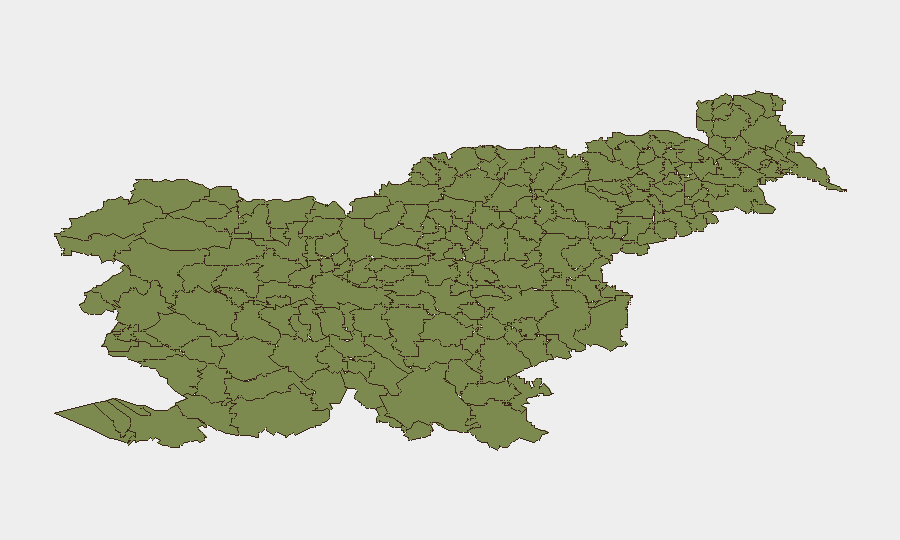
All twelve sub-national regions tracked by GeoBit carry a composite risk score of 0, indicating uniform low-threat conditions across Slovenia. The municipalities listed—from Bovec and Kobarid in the northwest (Primorska region) to Šempeter-Vrtojba and Miren-Kostanjevica in the southwest (bordering Croatia and Italy)—reflect border and Alpine zones where routine policing and migration processing occur. The lack of differentiation in risk scores reflects the absence of localized security incidents, active protest movements, or infrastructure vulnerabilities in the reporting period.
How GeoBit Would Assist
For organizations with people or assets in Slovenia, GeoBit's AOI Monitoring & Early Warning capability would detect emerging unrest, border incidents, or infrastructure disruptions in real time across the regions listed above. Intel Sweep and multi-language OSINT fusion would consolidate police statements, social media sentiment, and regional news to surface nascent risks before they escalate. Routing & Network Analysis would support contingency planning for personnel in border zones or transit corridors affected by seasonal migration or enforcement activity.
7-Day Outlook
No material change to Slovenia's risk profile is anticipated over the next seven days. Routine police operations, border processing, and the ongoing speed-enforcement campaign will continue without significant security disruption. Organizations should maintain standard duty-of-care protocols; escalation to heightened alerts is not warranted based on current indicators.
Highest-Risk Areas — Ranked
| # | State / Region | Risk |
|---|---|---|
| 1 | Bovec | 0 |
| 2 | Kobarid | 0 |
| 3 | Kanal | 0 |
| 4 | Kranjska Gora | 0 |
| 5 | Gorje | 0 |
| 6 | Tolmin | 0 |
| 7 | Bohinj | 0 |
| 8 | Cerkno | 0 |
| 9 | Brda | 0 |
| 10 | Šempeter-Vrtojba | 0 |
| 11 | Renče-Vogrsko | 0 |
| 12 | Miren-Kostanjevica | 0 |
Sources
Previous Daily Briefs
A new Slovenia brief is written every day — each with its own risk map and downloadable CSV. Here's the last week; use the calendar to go further back.
📅 Browse every day by calendar →
Highlighted days have a brief. Tap a day for that day's map & analysis, or “csv” for that day's dataset ($5).
Atlas — our AI intelligence desk — emails them this snapshot personally. Nothing else, no list.