Situation Summary
South Korea remains a moderate-risk environment (composite threat score 20; 135 tracked events) with security pressures arising from U.S. military–civil friction, labor unrest, ongoing North Korean military activity, and persistent cyber-targeting of corporate networks. Seoul dominates the risk profile (31.3), driven by recent high-profile arrests and protest activity, while North Chungcheong presents secondary concern (25). The overall trend reflects sustained baseline tension rather than acute escalation, though the possibility of rapid Korean Peninsula destabilization remains a standing concern flagged by allied governments.
Key Developments
- Seoul, Itaewon (8 June, early Monday): Four U.S. Army soldiers from Camp Casey were arrested by Seoul Metropolitan Police following an alleged assault and property-damage incident in the nightlife district; they were transferred to military authorities for further handling, raising civil-military and diplomatic sensitivities typical of U.S. force presence in the capital.
- Seoul, Pangyo/Seongnam tech cluster (9 June): Kakao unionized workers conducted a four-hour strike and rally protesting bonus structures and job-security terms; operations were temporarily disrupted and the gathering was police-monitored, but no violence occurred.
- Nationwide (9–10 June): South Korea's Ministry of National Defense reiterated heightened military alertness around the DMZ and coastal areas in response to ongoing North Korean missile and drone activities; no new specific attack was reported, but the posture underscores sustained northern threat perception.
- Nationwide cyber (9–10 June): Monthly breach reporting highlighted new South Korea–linked cyber incidents targeting corporate networks and personal data, attributed to cybercriminals and state-aligned actors; this reflects an elevated and persistent targeting environment for firms operating in-country.
- Diplomatic/Regional (9 June, Japan forum): Former Japanese PM Fumio Kishida publicly identified South Korea and Japan as Indo-Pacific security partners; this framing may invite critical response from North Korea and China and signals Seoul's continued exposure to great-power competition dynamics.
- Regional Travel Advisory (current): Canadian government maintains that Korean Peninsula tensions could escalate with little notice, warning of potential sudden security deterioration despite absence of immediate new trigger events.
Highest-Risk Areas
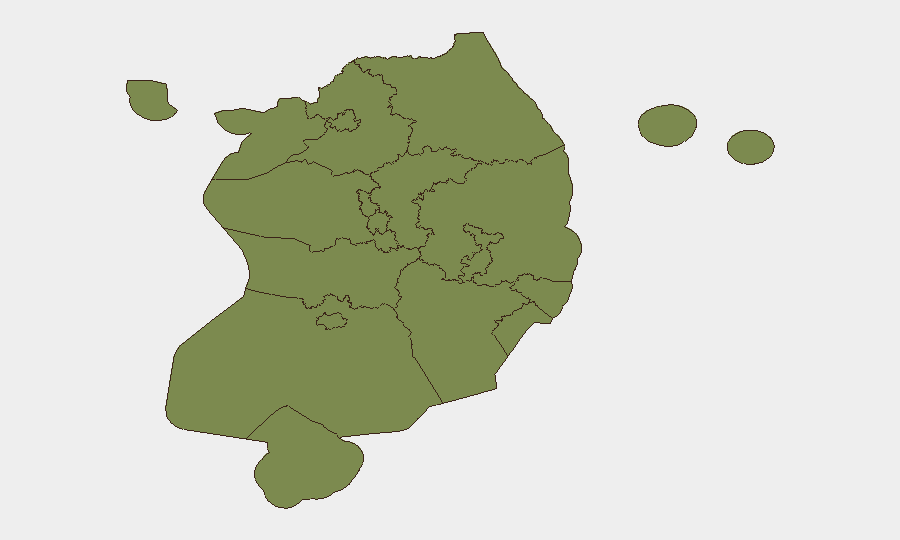
Seoul (31.3) and North Chungcheong (25) drive the national risk profile. Seoul's elevation reflects recent military-personnel arrests, labor protest activity, and its role as the primary locus of diplomatic tension and cyber-targeting. North Chungcheong's significant secondary score warrants investigation into specific drivers (industrial facilities, border proximity, or reported incidents) to determine whether it reflects structural vulnerability or concentrated recent events. Remaining provincial areas carry substantially lower individual scores, with Busan (3.8) and South Chungcheong (3.6) as the only other two-digit regions.
How GeoBit Would Assist
Teams managing personnel and assets in South Korea should leverage AOI Monitoring & Early Warning to track Seoul and North Chungcheong for protest activity, security incidents, and military movements; Cyber risk and breach intelligence to monitor targeting patterns and identify company-specific exposure; and Network & Actor Analysis combined with OSINT (X, Telegram, local news feeds) to detect emerging labor disputes, military–civil friction, and North Korea–linked activities before they escalate. Conflict & Military tracking and early-warning prediction support rapid response to Korean Peninsula developments.
7-Day Outlook
No imminent crisis indicators are present, but the combination of North Korean military alertness, U.S. military presence friction, labor-sector activism, and cyber-targeting suggests sustained operational complexity. Seoul and adjacent areas should remain under continuous monitoring for cascading protest or security incidents. Allied diplomatic statements and Korean Peninsula tension updates warrant daily review.
Highest-Risk Areas — Ranked
| # | State / Region | Risk |
|---|---|---|
| 1 | Seoul | 31.3 |
| 2 | North Chungcheong | 25 |
| 3 | South Jeolla | 6.3 |
| 4 | Busan | 3.8 |
| 5 | South Chungcheong | 3.6 |
| 6 | Incheon | 2.5 |
| 7 | Gyeonggi | 1.9 |
| 8 | Jeonbuk State | 1.9 |
| 9 | Daejeon | 1.9 |
| 10 | Gangwon State | 1.7 |
| 11 | Jeju | 1.7 |
| 12 | Sejong | 1.3 |
Previous Daily Briefs
A new South Korea brief is written every day — each with its own risk map and downloadable CSV. Here's the last week; use the calendar to go further back.
📅 Browse every day by calendar →
Highlighted days have a brief. Tap a day for that day's map & analysis, or “csv” for that day's dataset ($5).