Situation Summary
Spain remains a low-threat environment globally (rank #162, composite score 4) but faces acute localized volatility, particularly in Castile-La Mancha. Recent signals (27 June) indicate military mobilization, police deployment along the Portugal border, diplomatic friction with France, and parliamentary discord—suggesting internal or cross-border tension that warrants close monitoring. The threat landscape is dominated by institutional and bilateral friction rather than widespread civil unrest or security incidents.
Key Developments
- 27 June · Military Mobilization (Spain domestic): Armed forces mobilized within Spanish territory; nature and scale not yet clarified in available reporting. Warrants urgent clarification on whether this reflects exercises, readiness posture, or response to a specific incident.
- 27 June · Police Mobilization (Spain–Portugal border): Police forces deployed to the Spain–Portugal frontier, signaling heightened border alertness or response to a cross-border incident; context unclear from current data.
- 27 June · Diplomatic Rejection (Spain vs. France): Spain rejected an unspecified position or action by France; no detail available on substance or implications for bilateral relations.
- 27 June · Presidential Disapproval (President vs. Spain): Head of state issued disapproval statement targeting Spain (or a Spanish institution); political or institutional friction indicated but not detailed.
- 26 June · Disapproval (Spain vs. Venezuela): Spain formally disapproved Venezuelan action or policy; reflects diplomatic posture but unlikely to affect personnel or assets in Spain directly.
- 26–27 June · Multiple Public Statements (Parliament, Secretariat, Spain): Three separate institutional statements issued, suggesting active political or institutional debate; content and urgency unknown.
- 26 June · Heat Alert (Northern Spain, Basque Country region): Spain's meteorological agency (Aemet) reported record June average temperatures (28.17°C) with red-level heat alerts in the Basque Country, forecasting maxima to 42°C. Increases health, transport, and infrastructure risk, particularly for outdoor personnel and supply-chain operations.
Highest-Risk Areas
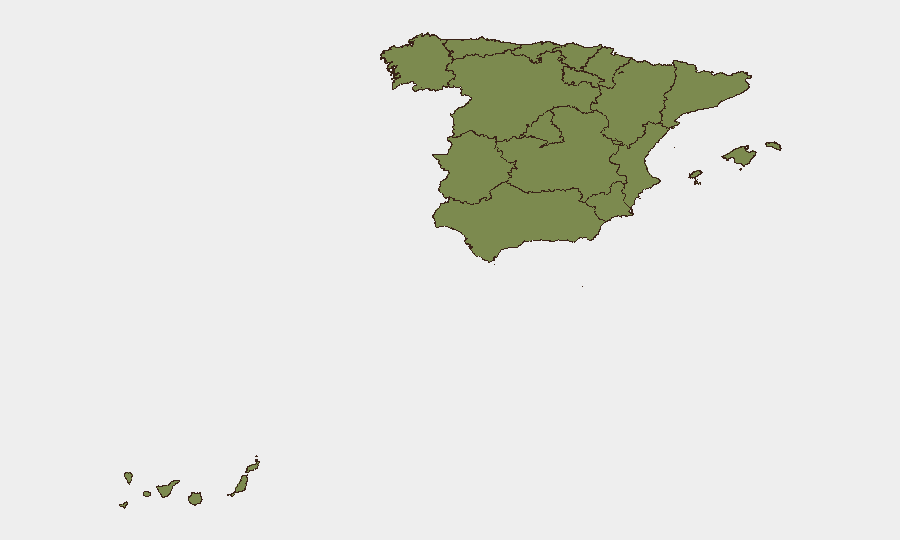
Castile-La Mancha dominates the sub-national ranking (risk 31.4), significantly outpacing all other regions—the source of this elevated score is not granularly detailed in event signals and warrants targeted intelligence collection. Madrid (6.3) and Andalusia (5.9) rank second and third; their risk profiles likely reflect capital-city concentration (Madrid) and broader demographic/economic factors (Andalusia). Catalonia, the Basque Country, and the Balearic Islands show substantially lower risk (2.7, 2.4, and 1.4 respectively), suggesting that historical independence tensions and tourism exposure do not currently drive measurable threat elevation. Extreme heat across northern regions adds a secondary, non-conflict hazard layer.
How GeoBit Would Assist
Intel Sweep and multi-language OSINT would rapidly clarify the substance, timing, and actors behind the 27 June military and police mobilizations and the parliamentary statements—distinguishing routine exercises from substantive threats. AOI Monitoring with persistent alerting on Castile-La Mancha, Madrid, and the Portugal border would provide early warning of escalation or new incidents. Conflict & Military tracking (force structure, deployment patterns) and Network & Actor Analysis (political/institutional actors) would support duty-of-care teams in assessing whether current developments pose risks to staff presence, movement, or operations in affected regions.
7-Day Outlook
Institutional friction and border alertness appear elevated but not yet translating into widespread disruption. The next 48–72 hours will likely clarify whether military mobilization reflects exercises, bilateral tension, or a genuine security incident. Heat alerts in the north will persist and may compound travel and operational delays; personnel should prepare contingency plans for high-temperature conditions and potential infrastructure strain.
Highest-Risk Areas — Ranked
| # | State / Region | Risk |
|---|---|---|
| 1 | Castile-La Mancha | 31.4 |
| 2 | Community of Madrid | 6.3 |
| 3 | Andalusia | 5.9 |
| 4 | Galicia | 3.2 |
| 5 | Catalonia | 2.7 |
| 6 | Autonomous Community of the Basque Country | 2.4 |
| 7 | Canary Islands | 1.7 |
| 8 | Region of Murcia | 1.5 |
| 9 | Navarre | 1.5 |
| 10 | Balearic Islands | 1.4 |
| 11 | Aragon | 1.4 |
| 12 | Valencian Community | 1.4 |
Previous Daily Briefs
A new Spain brief is written every day — each with its own risk map and downloadable CSV. Here's the last week; use the calendar to go further back.
📅 Browse every day by calendar →
Highlighted days have a brief. Tap a day for that day's map & analysis, or “csv” for that day's dataset ($5).