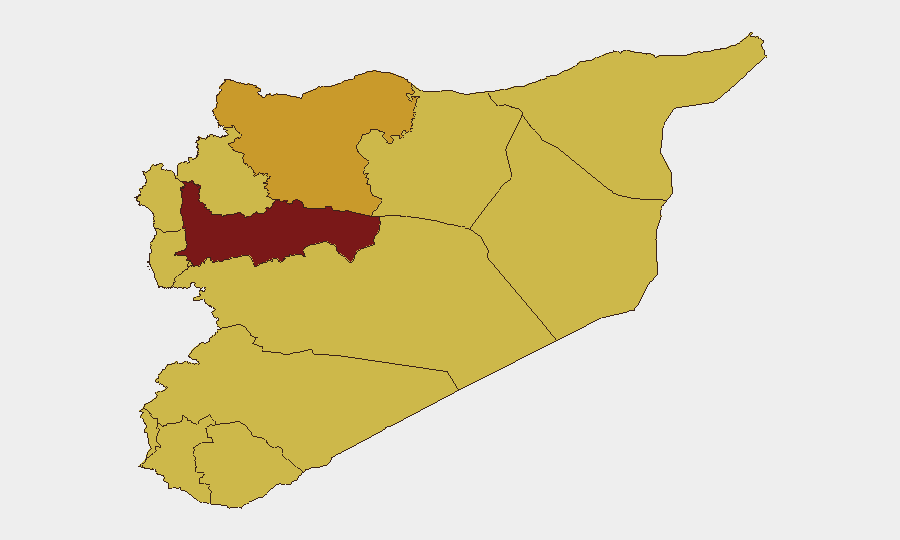
Situation Summary
Syria remains at composite threat rank #13 globally (score 96) with 151 tracked events, reflecting persistent instability across multiple governorates driven by active militant cells, cross-border military activity, and infrastructure vulnerability. A bombing cell responsible for July 7 twin attacks in Damascus continues under interrogation following discovery of a secondary explosives cache, signaling ongoing capability for urban violence. Concurrent regional tensions—including Israeli military mobilization, Iraqi cross-border airstrikes, and U.S.–Iran friction—compound domestic risks, particularly in border regions and the capital.
Key Developments
- Damascus city (July 16): Syrian security forces dismantled a cache of explosive devices allegedly prepared by the same militant cell behind the July 7 twin bombings; interrogations are ongoing to establish links to other attacks and locate remaining hideouts.
- Al-Tanf border crossing, Homs Governorate (July 16): Syrian authorities seized a concealed shipment of missiles, rockets, and drones in an oil tanker at the Iraqi border, claiming it was destined for Hezbollah in Lebanon; Iraq announced a high-level investigation while Hezbollah publicly denied involvement.
- Homs city (July 17): The Syrian Atomic Energy Commission reported secure containment of a radioactive materials container with no radiation leakage, reducing immediate public-health and infrastructure risk.
- Al-Darbasiyah, Al-Hasaka Governorate (July 15–16): Multi-day fuel shortage and power outages disrupted basic services and commercial operations in this northeastern hub, elevating travel and operational risks.
- Deir ez-Zor Governorate (July 15–16): A river ferry sinking resulted in six fatalities, reflecting persistent transport-safety hazards on eastern waterway crossings.
- Nationwide (July 17): Road traffic incidents killed two and injured 17 across Syria in the preceding 24 hours, underscoring chronic travel-safety degradation on national routes.
Highest-Risk Areas
Hama Governorate (96.9) tops the sub-national risk ranking, followed by Damascus (75.2), Aleppo (71.7), and Al-Hasaka (69.8). Damascus remains high-risk due to active militant cells with demonstrated bombing capability and ongoing security operations; Al-Hasaka and border regions (Al-Tanf, UNDOF sector) face elevated risk from cross-border military activity, weapons trafficking, and infrastructure collapse. Hama's extreme ranking reflects compounded militant activity, military operations, and historical volatility. Organizations with personnel or assets in these zones should assume elevated threat to physical security, supply chains, and movement.
How GeoBit Would Assist
Security and duty-of-care teams should deploy AOI Monitoring & Early Warning on high-risk governorates (Damascus, Hama, Al-Hasaka) to capture emerging militant, military, or trafficking activity; pair this with Intel Sweep and multi-language OSINT (X, Telegram, local reporting) to track interrogation outcomes and cell reorganization. Conflict & Military tracking and GIS & Spatial Analysis enable real-time mapping of Israeli mobilization, cross-border airstrikes, and border-crossing security to inform routing decisions. Routing & Network Analysis provides alternative journey planning around Damascus and border zones, while Risk & Threat Assessment supports duty-of-care escalation protocols for in-country teams.
7-Day Outlook
The bombing cell's continued detention and secondary cache discovery should reduce immediate attack risk in Damascus over the next week, though interrogation leaks or cell fragmentation may trigger retaliatory incidents. Cross-border weapons seizures and military mobilization suggest elevated friction on Syria's borders; Israeli and Iraqi activity may intensify in response to the al-Tanf incident. Infrastructure instability and road hazards are likely to persist, maintaining baseline travel risk across the country.
Highest-Risk Areas — Ranked
| # | State / Region | Risk |
|---|---|---|
| 1 | Hama Governorate | 96.9 |
| 2 | Damascus Governorate | 75.2 |
| 3 | Aleppo Governorate | 71.7 |
| 4 | Al-Hasaka Governorate | 69.8 |
| 5 | Tartus Governorate | 67.9 |
| 6 | Lattakia Governorate | 66.9 |
| 7 | UNDOF | 66.9 |
| 8 | Al-Quneitra Governorate | 66.9 |
| 9 | Dar'a Governorate | 66.9 |
| 10 | Idleb Governorate | 66.9 |
| 11 | Ar-Raqqa Governorate | 66.9 |
| 12 | Homs Governorate | 66.9 |
Sources
Previous Daily Briefs
A new Syria brief is written every day — each with its own risk map and downloadable CSV. Here's the last week; use the calendar to go further back.
📅 Browse every day by calendar →
Highlighted days have a brief. Tap a day for that day's map & analysis, or “csv” for that day's dataset ($5).
Atlas — our AI intelligence desk — emails them this snapshot personally. Nothing else, no list.