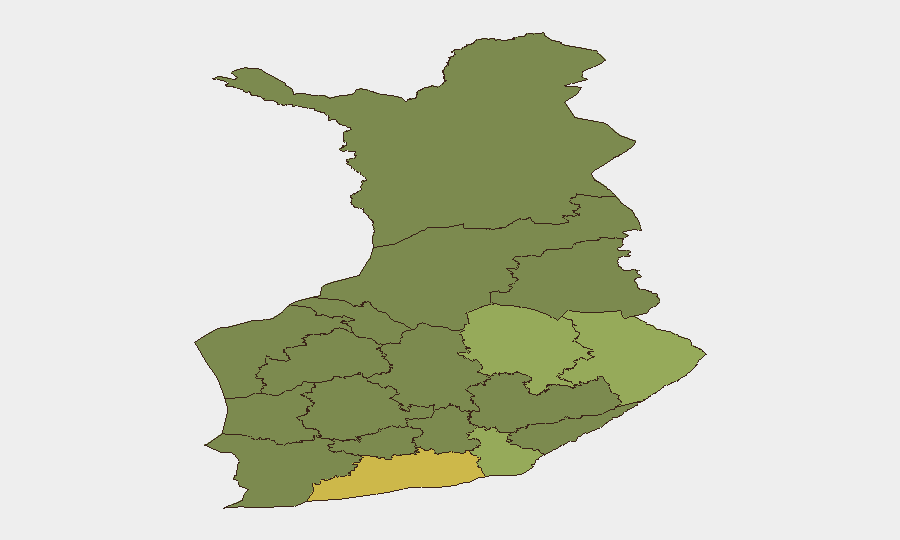
Situation Summary
Finland remains a low-threat environment (global rank #165) with no significant security incidents reported during the past week. However, recent developments—including suspected parliamentary break-ins, border-defence planning in response to Russia, and EU visa-restriction proposals—reflect a modest uptick in state-level security attention, particularly around espionage and critical infrastructure. The threat trajectory is stable but trending toward heightened vigilance along the eastern border and within government and tech sectors.
Key Developments
- Helsinki, 7 October: Helsinki Police and the National Bureau of Investigation opened a preliminary criminal investigation into suspected unlawful entries at fewer than 20 Members of Parliament homes. Cases are being investigated as attempted aggravated theft, with cooperation from Parliament, the NBI, and possible involvement of the Finnish Security and Intelligence Service.
- Finland–Russia eastern border, 12 October: Finnish defence officials disclosed planning for rapidly deployable, prefabricated fortifications deployable along the eastern border in the event of direct Russian attack. Large-scale construction has not begun; the announcement reflects contingency preparation rather than imminent threat response.
- Helsinki, 12 October: About 100 protesters gathered outside Google's Finnish headquarters to oppose forest clearances linked to planned data-centre projects in Muhos and Kymenlaakso region. The protest underscores environmental and land-use tensions in strategic infrastructure development.
- Helsinki / EU policy, 12 October: Foreign Minister Elina Valtonen called on the EU to halt issuance of Schengen tourist visas to Russian nationals and proposed binding visa restrictions, citing suspected Russian intelligence and sabotage activity as security concerns.
- Foreign property acquisitions (date range unclear): Finnish authorities blocked six foreign property purchases in Kotka, Viitasaari, Miehikkälä, and Imatra, though a precise occurrence date within 6–13 October is not confirmed in available reporting.
Highest-Risk Areas
Uusimaa (composite risk 65)—which encompasses Helsinki and the capital region—dominates the sub-national ranking, reflecting concentration of government, parliament, critical infrastructure, and international activity. North Karelia, Kymenlaakso, and North Savo form a second cluster of elevated risk (44, 42, 40 respectively), largely driven by proximity to the Russian border and economic/strategic importance. The parliamentary break-in incidents, border-defence initiatives, and foreign property-blocking actions are all concentrated in or adjacent to these higher-risk zones, suggesting that state-level security concerns are geographically clustered around Helsinki and the eastern frontier.
How GeoBit Would Assist
Security teams protecting personnel or assets in Finland would benefit from persistent Area-of-Interest Monitoring & Early Warning capabilities focused on Uusimaa, the eastern border corridor, and tech-sector locations to detect emerging threats before escalation. Intel Sweep and OSINT fusion across Finnish-language media, government statements, and police disclosures would provide early warning of parliamentary or critical-infrastructure incidents. Network & Actor Analysis would help identify patterns in foreign property acquisition attempts and suspected intelligence activity, enabling proactive asset protection.
7-Day Outlook
No acute security incidents are anticipated in the immediate term. However, elevated attention to Russia-related espionage, border contingencies, and critical-infrastructure security will likely persist through autumn, particularly as EU visa-policy discussions advance and parliamentary investigations continue. Corporate security teams should maintain heightened monitoring of foreign acquisition attempts and personnel access controls in sensitive sectors.
Highest-Risk Areas — Ranked
| # | State / Region | Risk |
|---|---|---|
| 1 | Uusimaa | 65 |
| 2 | North Karelia | 44 |
| 3 | Kymenlaakso | 42 |
| 4 | North Savo | 40 |
| 5 | South Karelia | 38 |
| 6 | Kainuu | 36 |
| 7 | Päijät-Häme | 35 |
| 8 | South Savo | 32 |
| 9 | Kanta-Häme | 30 |
| 10 | Pirkanmaa | 28 |
| 11 | Central Finland | 26 |
| 12 | Southwest Finland | 25 |
Sources
Previous Weekly Briefs
A new Finland brief is written every Monday, covering the week — each with its own risk map and downloadable CSV. Use the calendar to go further back.
- October 6, 2026
- September 29, 2026
- September 22, 2026
- September 15, 2026
- September 9, 2026
- September 3, 2026
- August 31, 2026
📅 Browse past briefs by calendar →
Highlighted days have a brief. Tap a day for that day's map & analysis, or “csv” for that day's dataset ($5).
Atlas — our AI intelligence desk — emails them this snapshot personally. Nothing else, no list.