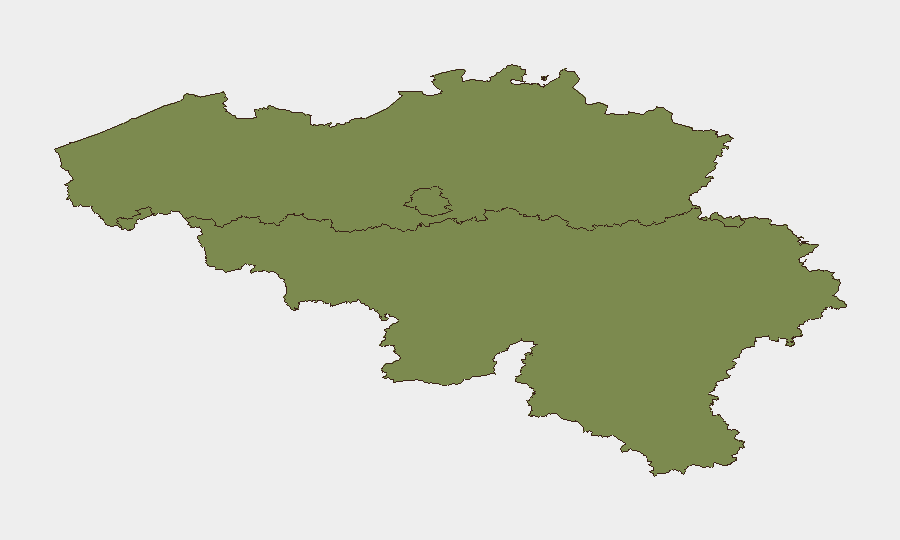
Situation Summary
Belgium remains a low-threat environment globally (composite score 31; rank #null) with no confirmed acute security incidents in the past 24–48 hours. Risk is heavily concentrated in Brussels-Capital (31.3), where routine high-level diplomatic and defence activity—including a NATO Defence Ministers' meeting on 18 June—creates persistent soft-target exposure and temporary security perimeter demands. Flanders and Wallonia present minimal localized risk (7.1 and 1.3, respectively), and no credible reports of terrorism, public disorder, infrastructure disruption, or travel warnings have emerged in recent open-source reporting.
Key Developments
- Brussels, 18 June 2026 – NATO Defence Ministers convened in Brussels for their final pre-Ankara summit session, with allied defence delegations and U.S. Secretary of Defense Pete Hegseth physically present for media engagements. Security perimeters and traffic management were in effect in the city center.
- Brussels, 18 June 2026 – European Commission issued a public statement on European-level governance matters; no Belgium-specific domestic security incident reported.
- Multi-lateral, 19 June 2026 – European Union reduced formal relations with Russia and issued public disapproval statements; no direct domestic Belgium security impact reported, though NATO presence in Brussels remains heightened.
- Investigation activity, 19 June 2026 – Brussels authorities initiated an investigation; specifics not yet clarified in open media.
- No confirmed public-order incidents, terrorist threats, or critical infrastructure disruptions reported in Belgium in the last 24–48 hours across major open-source channels and social media OSINT.
Highest-Risk Areas
Brussels-Capital dominates Belgium's risk profile (31.3 vs. 7.1 in Flanders, 1.3 in Wallonia), reflecting its role as the de facto EU and NATO capital. The presence of EU institutions, NATO HQ, and recurring high-level diplomatic summits creates recurring soft-target concentrations and associated security operations. Flanders and Wallonia present negligible comparative risk and are not a focus for corporate security planning.
How GeoBit Would Assist
Security teams operating in Belgium should deploy Intel Sweep and OSINT fusion to monitor NATO and EU event calendars and cross-correlate them with localized public-order signals via X/Twitter & Telegram OSINT, YouTube/podcast intelligence, and multi-language search to detect early warning of protest mobilization or threat rhetoric. AOI Monitoring & Early Warning with persistent Brussels-Capital watch would automatically alert on elevated police/security deployments, mass-gathering notices, or transport disruptions linked to diplomatic events. Routing & Network Analysis supports duty-of-care teams in pre-planning alternative journeys and secure access during high-profile ministerial meetings.
7-Day Outlook
No escalation trajectory is evident. NATO activity in Brussels will continue at routine operating tempo through the Ankara summit cycle in July; no new acute threats have materialized. Wallonia and Flanders remain stable. Maintain standard Brussels-area awareness of diplomatic calendars and traffic impacts around EU/NATO facilities, but no advisory upgrade is warranted at this time.
Highest-Risk Areas — Ranked
| # | State / Region | Risk |
|---|---|---|
| 1 | Brussels-Capital | 31.3 |
| 2 | Flanders | 7.1 |
| 3 | Wallonia | 1.3 |
Sources
Previous Daily Briefs
A new Belgium brief is written every day — each with its own risk map and downloadable CSV. Here's the last week; use the calendar to go further back.
📅 Browse every day by calendar →
Highlighted days have a brief. Tap a day for that day's map & analysis, or “csv” for that day's dataset ($5).