Situation Summary
The Democratic Republic of Congo (DRC) faces an accelerating Ebola outbreak concentrated in eastern provinces (Ituri, North Kivu, South Kivu) that has become the dominant near-term security concern for international personnel and operations. As of 17 June, 896 confirmed cases and 232 deaths have been reported, with case numbers rising sharply since 13 June and sustained transmission across multiple health zones in Ituri. Armed insecurity in affected regions is constraining humanitarian and health-sector access, compounding outbreak response challenges and raising operational and travel risk. Congo proper remains at composite threat score 71 globally, with Cuvette-Ouest Department driving the majority of sub-national risk; however, outbreak-driven humanitarian and health-security volatility in eastern DRC now merits heightened attention from corporate security teams with personnel or operations in the region.
Key Developments
- Bunia displacement camps, Ituri province (17–18 June 2026): UN OCHA confirmed at least 13 deaths in two displacement camps over 48 hours, amid overcrowding and poor sanitation; investigations are ongoing into whether deaths are linked to Ebola (Bundibugyo virus). Cumulative mortality in Bunia camps since April now exceeds 62 deaths.
- Eastern DRC Ebola acceleration (19 June 2026): WHO Disease Outbreak News reported rapidly increasing confirmed case numbers since 13 June, with sustained transmission across multiple health zones in Ituri. Over 90% of cases are concentrated in Ituri province.
- Ebola treatment centre departures (reported 19 June 2026): Local and regional media reported that Ebola patients have been leaving some treatment centres in eastern DRC due to food shortages, signalling heightened community tension and public-health management risk around response facilities.
- UNHAS flight suspension notice (issued in current reporting window, affecting 30 June 2026): UN Humanitarian Air Service announced suspension of regular UNHAS flights on 30 June 2026 except for Ebola-response and medical/security evacuation missions. This affects travel contingency planning for humanitarian and security actors dependent on UNHAS access to remote or insecure areas.
Highest-Risk Areas
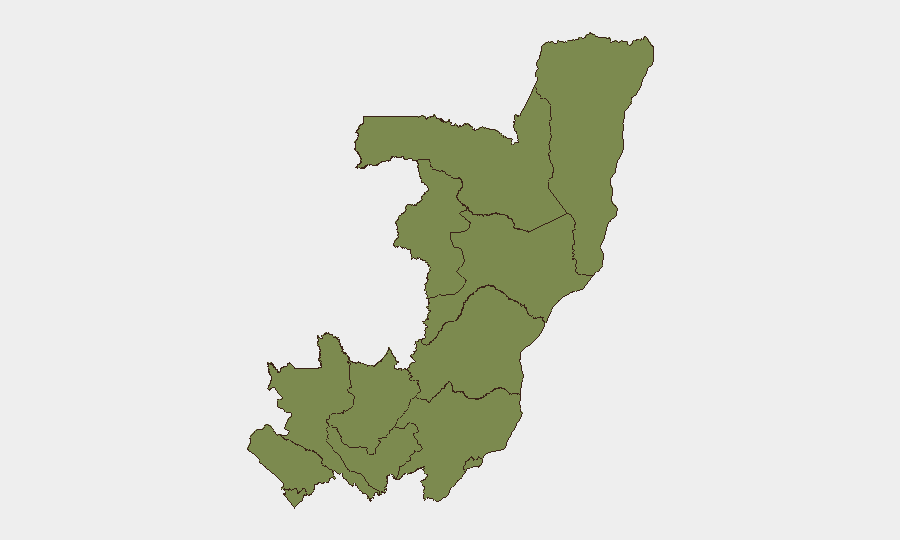
Cuvette-Ouest Department carries the highest sub-national risk score (31.3), driven by historical conflict and resource-competition dynamics. However, outbreak-driven health and humanitarian volatility now makes Ituri, North Kivu, and South Kivu provinces in eastern DRC the immediate operational priority for corporate security teams with personnel in the region. These provinces account for 896 confirmed Ebola cases and are experiencing simultaneous armed insecurity that is actively degrading health-sector access and creating cascading humanitarian, mobility, and community-unrest risks. Bunia city in Ituri is a critical flashpoint, with displacement-camp mortality, patient flight from treatment centres, and overcrowding creating conditions for both disease spread and civil tension.
How GeoBit Would Assist
AOI Monitoring & Early Warning with persistent watch on Ituri, North Kivu, and South Kivu would provide real-time alerts on Ebola case clusters, treatment-centre operational status, and displacement-camp incidents affecting movement. Environmental & Health intelligence coupled with Humanitarian & NGO data access would track outbreak trajectory, UNHAS flight schedules, and health-facility capacity to support duty-of-care decisions for field teams. Routing & Network Analysis capabilities would enable identification of alternative air and ground routes to avoid disease hotspots and areas of active insecurity.
7-Day Outlook
The Ebola outbreak in eastern DRC is forecast to continue accelerating through late June, with case numbers likely to climb further and geographic spread into North and South Kivu expected to persist. Humanitarian access constraints driven by insecurity will remain acute, and the food-security crisis in displacement camps may drive additional patient flight and community distrust of health facilities. Corporate security teams should anticipate heightened evacuation demand and degraded UNHAS availability; contingency routing and standby medical evacuation protocols are advisable for any international personnel working in or transiting through affected provinces.
Highest-Risk Areas — Ranked
| # | State / Region | Risk |
|---|---|---|
| 1 | Cuvette-Ouest Department | 31.3 |
| 2 | Sangha | 1.3 |
| 3 | Likouala | 1.3 |
| 4 | Cuvette Department | 1.3 |
| 5 | Kouilou Department | 1.3 |
| 6 | Niari Department | 1.3 |
| 7 | Pointe-Noire (département) | 1.3 |
| 8 | Lékoumou Department | 1.3 |
| 9 | Bouenza Department | 1.3 |
| 10 | Plateaux Department | 1.3 |
| 11 | Pool Department | 1.3 |
| 12 | Brazzaville (department) | 1.3 |
Previous Daily Briefs
A new Congo brief is written every day — each with its own risk map and downloadable CSV. Here's the last week; use the calendar to go further back.
📅 Browse every day by calendar →
Highlighted days have a brief. Tap a day for that day's map & analysis, or “csv” for that day's dataset ($5).