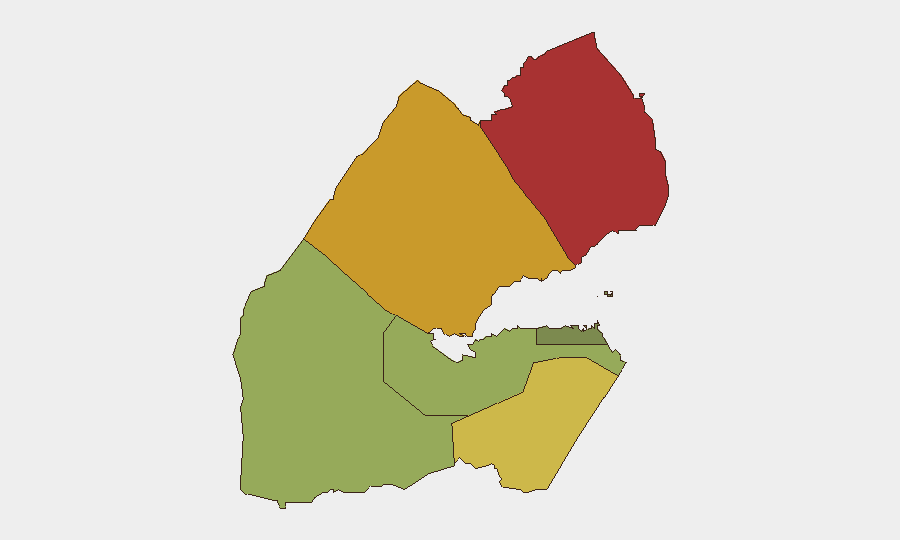
Situation Summary
Djibouti remains a low-threat environment (global rank #99; 18 composite threat score), but faces mounting humanitarian pressure from Yemen displacement and indirect exposure to Ethiopia's intensifying Afar conflict. No security incidents—crime, protest, terrorism, or armed clash—were independently corroborated inside Djibouti during September 28–October 5. The primary near-term risk is not internal instability but rather strain on refugee-processing capacity and potential disruption to critical Ethiopia–Djibouti trade corridors.
Key Developments
- Djibouti City — September 30: President Ismaïl Omar Guelleh held bilateral talks with Somali President Hassan Sheikh Mohamud on regional stability, Red Sea security, and the Ethiopia conflict. No unrest or security incident was reported in the capital.
- Northern coast — by October 1: More than 3,700 people fleeing fighting in western Yemen arrived by sea, adding to the refugee influx that began late September. UNHCR and aid agencies reported Markazi camp approaching saturation.
- UN General Assembly — October 1: Djibouti's foreign minister appealed for international assistance in managing Yemen refugee arrivals, signaling resource constraints in the humanitarian response.
- Ethiopia–Djibouti corridor — October 1–4: Intelligence reporting warned that widening conflict in Ethiopia's Afar region poses a potential supply-chain risk to the primary road and fuel routes connecting Ethiopia to Djibouti ports (including routes through Mille and Semera). No confirmed attack or closure was reported this week.
- Strategic infrastructure — October 2: A planned refined-fuel pipeline from Damerjog port (Djibouti) to Dewele (Ethiopia) was highlighted as exposed to regional conflict risk. This reflects longer-term strategic concern rather than a current incident.
- Yemen emergency response plan — October 2: UN agencies launched a refugee-response initiative covering October 2026–March 2027, indicating expectation of sustained displacement pressure.
- Travel advisory update — October 3: A monitored advisory maintained a high-caution rating for Djibouti overall and retained a Level 3 advisory for the Eritrea border area. No new security incident triggered the update.
- African Union coordination — October 5: Djibouti's foreign minister called for strengthened AU and regional-organization coordination on peace, security, and conflict prevention at a meeting in El Alamein, Egypt.
Highest-Risk Areas
Obock (78) and Tadjourah (72) in the north drive the country's sub-national risk ranking, reflecting proximity to Yemen, maritime refugee flows, and porous border terrain. Ali Sabieh (65), on the Ethiopia border, faces indirect exposure to Afar fighting and potential disruption to transit corridors. The capital and Djibouti City proper (35) remain substantially lower-risk, though refugee intake and infrastructure strain affect overall government capacity.
How GeoBit Would Assist
Security teams should deploy AOI Monitoring & Early Warning on the northern coast (Khor Angar, Obock) and Ethiopia–Djibouti transport corridors to detect changes in refugee flow or disruption to trade routes before corporate operations are affected. Routing & Network Analysis capabilities enable real-time alternative-journey planning for supply chains vulnerable to Afar conflict spillover. Conflict & Military tracking and Intelligence & OSINT fusion provide early indication of Ethiopia fighting spreading toward the border.
7-Day Outlook
Yemen displacement is expected to sustain or increase through October; international donor support will determine whether Djibouti's refugee infrastructure prevents a humanitarian crisis that could destabilize state capacity. Ethiopia's Afar fighting poses the largest indirect risk to corporate logistics; no imminent shift in that conflict trajectory is evident, but monitoring of the Mille–Semera corridor remains critical for supply-chain resilience.
Highest-Risk Areas — Ranked
| # | State / Region | Risk |
|---|---|---|
| 1 | Obock | 78 |
| 2 | Tadjourah | 72 |
| 3 | Ali Sabieh | 65 |
| 4 | Arta | 48 |
| 5 | Dikhil | 42 |
| 6 | Djibouti | 35 |
Sources
Previous Weekly Briefs
A new Djibouti brief is written every Monday, covering the week — each with its own risk map and downloadable CSV. Use the calendar to go further back.
- September 28, 2026
- September 21, 2026
- September 14, 2026
- September 7, 2026
- September 1, 2026
- August 30, 2026
- August 27, 2026
📅 Browse past briefs by calendar →
Highlighted days have a brief. Tap a day for that day's map & analysis, or “csv” for that day's dataset ($5).
Atlas — our AI intelligence desk — emails them this snapshot personally. Nothing else, no list.