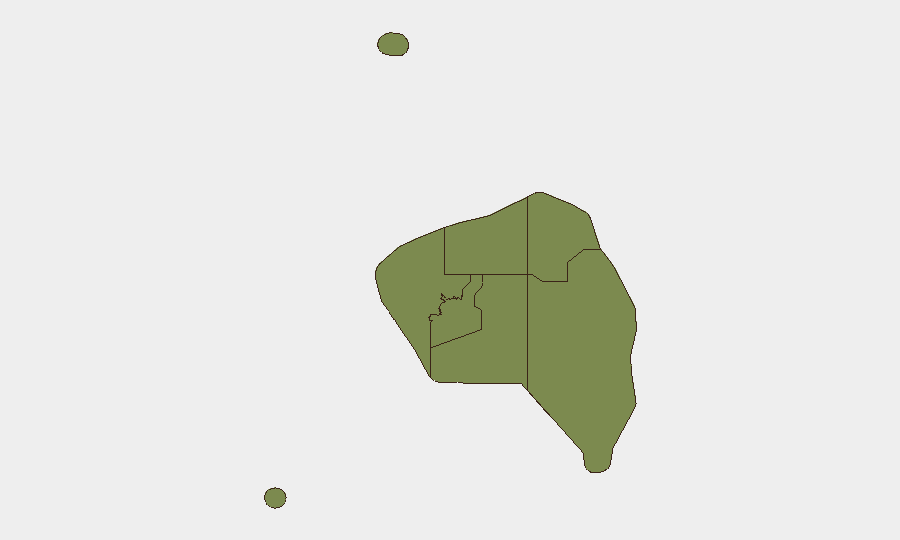
Situation Summary
Fiji's security environment remains stable with no verified disruptive incidents, civil unrest, or acute travel risks reported in the last 24–48 hours as of 13 June 2026. Institutional and governance tensions are active at the policy and administrative level but remain contained within formal channels—Parliament, the judiciary, police, and executive processes—without cascading into public disorder or service disruption. The composite national threat score of 7 reflects structural vulnerabilities and elevated regional risk rather than imminent operational incidents. The trajectory is one of managed institutional friction against a baseline of low acute security event density.
Key Developments
No specific, dated security, conflict, crime, civil-unrest, or infrastructure incidents with operational impact have been independently verified in Fiji during the 24–48 hours preceding this brief (11–13 June 2026).
Background note: Recent institutional activity—including parliamentary disapproval signals, electoral commission statements, and police/judicial communications (10–12 June)—reflects ongoing governance discourse but has not translated into public assemblies, strikes, roadblocks, or service disruptions. The Pacific Transnational Crime Summit co-hosted by Fiji Police and Australian Federal Police is a law-enforcement cooperation initiative addressing regional drug threats and does not constitute an acute incident or travel disruption.
Highest-Risk Areas
Central Division (composite risk 31.3) remains the highest-risk region, driven primarily by structural vulnerabilities in governance, institutional capacity, and socioeconomic conditions concentrated in the Suva urban area and surrounding districts. Northern and Western divisions (both 15.2) carry moderate structural risk; Northern reflects limited institutional presence and informal-economy dynamics, while Western combines commodity-export dependencies and sectoral vulnerabilities. Eastern (2.1) and Rotuma (1.3) present minimal composite risk. None of these rankings currently map to active incident clusters or flashpoint events; they indicate systemic fragility rather than acute conflict or crime surges.
How GeoBit Would Assist
A corporate security team with personnel or assets in Fiji should employ Intel Sweep and OSINT fusion capabilities to monitor institutional communications, police/judicial statements, and media reporting for early signals of governance breakdown or public-order tension that might precede mass gatherings or service disruption. Area-of-interest (AOI) monitoring with alerting on Central Division (Suva) and Western Division would provide persistent watch for incident emergence, crime spikes, or infrastructure disruption without requiring manual daily review. Conflict and regime-stability search tools allow rapid assessment of whether contemporary governance friction is trending toward escalation or remaining contained—critical for duty-of-care decision-making on staff movement and asset positioning.
7-Day Outlook
Fiji is expected to remain in a steady state of low acute incident risk over the next 7 days. Institutional activity will likely continue—policy statements, parliamentary proceedings, and administrative processes are normal governance rhythms—but there is no credible signal of imminent public unrest, major crime events, or infrastructure disruption. Monitoring should remain passive but alert to any consolidation of institutional tensions into organized civil protest or labor action, which would merit escalation.
GeoBit Daily Security Brief | Fiji | 2026-06-13
*Composite Threat Score: 7 | 47 Tracked Events | Assessment Basis: Open-source reporting, institutional signals, media & social monitoring, 10–13 June 2026*
Highest-Risk Areas — Ranked
| # | State / Region | Risk |
|---|---|---|
| 1 | Central | 31.3 |
| 2 | Northern | 15.2 |
| 3 | Western | 15.2 |
| 4 | Eastern | 2.1 |
| 5 | Rotuma | 1.3 |
Sources
Previous Daily Briefs
A new Fiji brief is written every day — each with its own risk map and downloadable CSV. Here's the last week; use the calendar to go further back.
📅 Browse every day by calendar →
Highlighted days have a brief. Tap a day for that day's map & analysis, or “csv” for that day's dataset ($5).