Situation Summary
Grenada presents a low to moderate baseline security profile with no major incidents reported in the last 24–48 hours. The composite threat score (4/100) and sparse recent event signals indicate a relatively stable operating environment, though sub-national risk concentration in Saint George parish and neighboring areas warrants continued attention. The absence of credible reports of protests, violent crime spikes, infrastructure disruptions, or political instability in the June 18–19 window is consistent with routine Caribbean conditions, though localized crime and inter-parish tension remain latent factors.
Key Developments
No confirmed security incidents meeting verification and recency standards (last 24–48 hours, multiple-source corroboration) were identified in Grenada during the June 18–19 reporting window. Open-source news media, regional Caribbean outlets, and social-media signals showed no validated reports of protests, riots, shootings, bombings, infrastructure outages, or state-level political crises. The absence of incident reporting—rather than evidence of specific new events—characterizes the current 48-hour period.
*Note: Recent event signals logged by GeoBit (June 17–18) reference military activity in Saint Vincent and the Grenadines, and investigative signals tagged to Grenada, Mississippi, and U.S. entities; none have been corroborated as affecting Grenada's domestic security posture or operations within this reporting window.*
Highest-Risk Areas
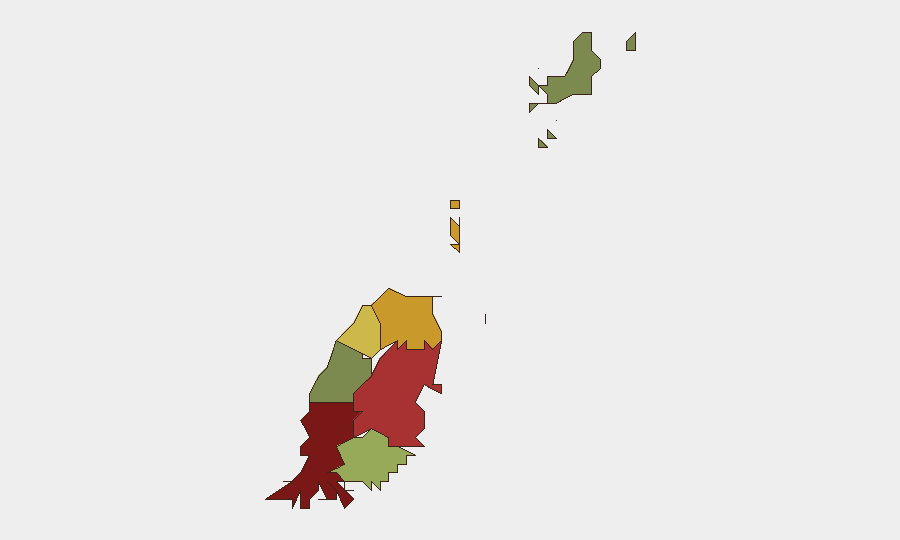
Saint George (risk 92) dominates the sub-national ranking and likely reflects historical crime concentration, gang-related activity, and socioeconomic stressors in and around St. George's, the capital and primary urban center. Saint Andrew (78) and Saint Patrick (71) follow, suggesting geographic clustering of risk in the northern and central parishes. Carriacou and Petite Martinique (12) remain markedly lower-risk, typical of smaller, more isolated communities; the southern parishes (David, John, Mark) show moderate to low composite scores, indicating risk is not uniformly distributed. Corporate security teams with assets in Saint George should maintain heightened situational awareness and hardened access protocols; operations in lower-risk zones face reduced baseline threat exposure but should not be presumed risk-free.
How GeoBit Would Assist
Intel Sweep and AOI Monitoring & Early Warning capabilities would provide persistent, automated alerting on emerging protests, violent incidents, or civil unrest across Grenada's parishes, reducing reliance on reactive news scanning. Network & Actor Analysis and OSINT Fusion would track gang and criminal-group movements, particularly in Saint George, to inform access and movement planning for personnel and assets. Routing & Network Analysis would enable alternative-route planning and real-time journey risk assessment if political or criminal instability escalates, ensuring duty-of-care compliance for staff mobility.
7-Day Outlook
Near-term trajectory favors continued baseline stability, absent new catalysts (e.g., political upheaval, major crime event, or regional destabilization). Hurricane season (June–November) and routine socioeconomic pressures remain persistent background factors; monitoring infrastructure resilience and gang-activity signals in Saint George remains prudent. No immediate escalation is signaled; routine security posture and community-liaison engagement should suffice for standard operations.
Highest-Risk Areas — Ranked
| # | State / Region | Risk |
|---|---|---|
| 1 | Saint George | 92 |
| 2 | Saint Andrew | 78 |
| 3 | Saint Patrick | 71 |
| 4 | Saint Mark | 64 |
| 5 | Saint David | 52 |
| 6 | Saint John | 38 |
| 7 | Carriacou and Petite Martinique | 12 |
Sources
Previous Daily Briefs
A new Grenada brief is written every day — each with its own risk map and downloadable CSV. Here's the last week; use the calendar to go further back.
📅 Browse every day by calendar →
Highlighted days have a brief. Tap a day for that day's map & analysis, or “csv” for that day's dataset ($5).