Situation Summary
Indonesia remains a moderate-tier global security concern (rank #38, composite threat score 36.1) with 682 tracked events, concentrated heavily in Jakarta and select resource-rich regions. Recent signal activity (June 4–5) spans unconventional violence, judicial and media statements, financial-sector tensions, military-rule demonstrations, and investor–military threats, indicating friction across institutional, civil-society, and economic domains. The pattern suggests elevated political and procedural stress rather than widespread physical instability, though sub-national volatility in South Sulawesi, North Sumatra, and East Java remains material. Trajectory appears stable but tension-prone; no imminent escalation signals detected.
Key Developments
GeoBit's event feed flagged the following activity clusters (June 4–5, 2026):
- Unconventional violence incident (June 4, actor unspecified) — location and casualty details not yet cross-verified; warrants immediate source confirmation.
- Judicial statement (June 5) — senior judge issued public remark; context (subject matter, tone, precedent) requires clarification to assess institutional implication.
- Finance Ministry vs. Media tension (June 5) — ministry rejected media claim; likely fiscal or regulatory dispute; low direct security impact unless part of broader institutional delegitimization.
- Military-rule vs. Military demonstration (June 5, location not yet specified) — street-level rally expressing opposition to military governance; no violence reported; monitor for size, duration, police response.
- Investor–Military threat dynamic (June 5) — investor threatened military actor, possibly over contract, concession, or labor dispute; confined risk unless weaponized.
- Police investigation (June 5) — nature of investigation not detailed; could span counter-terrorism, organized crime, or procedural matter.
- Student public statement (June 5) — student body issued statement; often signals university-centered grievance; monitor for campus mobilization or national political linkage.
Note: All above items require urgent source cross-verification (Indonesian media, official statements, OSINT) to confirm specifics, location, and scale. Signals alone do not confirm ground truth.
Highest-Risk Areas
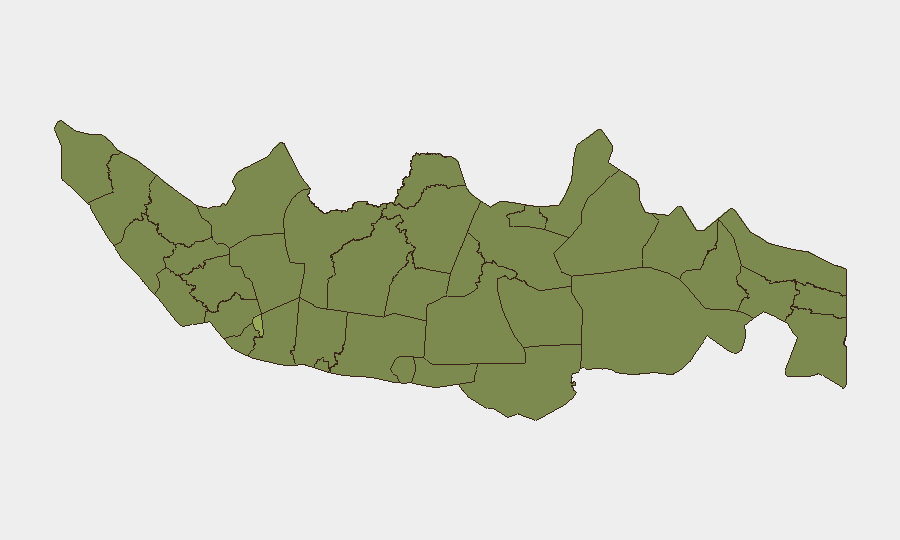
Jakarta dominates the threat landscape (risk score 55.3), reflecting concentration of government, finance, judiciary, media, and security apparatus; any institutional friction or protest activity carries multiplier effect for national stability and foreign-asset exposure. South Sulawesi (31.9), North Sumatra (30), and East Java (29.5) drive secondary risk, likely reflecting resource-sector labor disputes, maritime/smuggling activity, separatist sentiment, and organized-crime competition; these regions see less international media attention but sustain chronic instability. West Java, Banten, and Central Kalimantan round out the elevated-risk tier, consistent with industrial zones, palm/mining operations, and trans-regional criminal networks. Corporate personnel and supply chains in Jakarta face the highest density of disruption vectors (protest, traffic, official action); regional operations in Sumatra and Sulawesi face localized labor, environmental, and organized-crime exposure.
How GeoBit Would Assist
AOI Monitoring & Early Warning on Jakarta and South Sulawesi would flag protest mobilization, police deployments, and unofficial gatherings in real time. OSINT Fusion & Corroboration (X/Twitter, local media, official channels) would rapidly confirm or dismiss signal events, eliminating guesswork. Network & Actor Analysis would map investor–military and finance-media tensions to specific personalities and interests, enabling targeted due-diligence and exposure assessment. Routing & Network Analysis supports real-time journey planning around disruptions for staff commuting or supply logistics.
7-Day Outlook
Near-term trajectory suggests sustained institutional and civil friction without major violence escalation. Monitor for June 10–15 triggers (government fiscal decisions, court rulings, labor actions, or anniversary dates); if student or investor statements escalate to coordinated action, risk of Jakarta traffic disruption and police response increases. Regional security in South Sulawesi and North Sumatra remains baseline-elevated and unpredictable; no specific 7-day trigger identified.
Highest-Risk Areas — Ranked
| # | State / Region | Risk |
|---|---|---|
| 1 | Special capital Region of Jakarta | 55.3 |
| 2 | South Sulawesi | 31.9 |
| 3 | North Sumatra | 30 |
| 4 | East Java | 29.5 |
| 5 | South Sumatra | 29.5 |
| 6 | Central Kalimantan | 28.7 |
| 7 | West Java | 28 |
| 8 | Banten | 27 |
| 9 | West Kalimantan | 26.8 |
| 10 | Central Java | 26.1 |
| 11 | South Papua | 25.9 |
| 12 | Riau | 25.8 |
Previous Daily Briefs
A new Indonesia brief is written every day — each with its own risk map and downloadable CSV. Here's the last week; use the calendar to go further back.
📅 Browse every day by calendar →
Highlighted days have a brief. Tap a day for that day's map & analysis, or “csv” for that day's dataset ($5).