Situation Summary
Kazakhstan's domestic security environment remains stable with no reported violent incidents, civil unrest, or infrastructure attacks within the country over the last 24–48 hours. However, external supply-chain and maritime risks have escalated sharply due to coordinated drone attacks on civilian tankers carrying Kazakhstani crude oil near Russia's Caspian Pipeline Consortium (CPC) terminal in Novorossiysk. These attacks have triggered CPC loading suspensions, formal diplomatic complaints from Astana, and international maritime advisories, creating economic and energy-sector pressure rather than direct territorial threat.
Key Developments
- Novorossiysk, Russia (CPC terminal) — 20 July 2026
Civilian tanker *NELSA*, half-loaded with Kazakhstani crude, struck by drone attack near the CPC offshore mooring facility, causing deck and compartment fires and prompting another suspension of crude loading operations.
- Black Sea / CPC export corridor — 17–19 July 2026
Tankers *ASIA* (17 July) and *NISSOS IOS* (19 July), both loading Kazakh crude, hit by sea or drone attacks at Novorossiysk CPC terminal; *ASIA* fire extinguished without terminal damage; cumulative effect triggered multi-day loading suspension.
- Astana, Kazakhstan — 20–21 July 2026
Kazakhstan's Ministry of Foreign Affairs issued formal public condemnation of attacks on CPC-linked tankers, signaling intent to pursue compensation under international law and framing incidents as encroachments on national economic interests.
- Athens, Greece — 21–22 July 2026
Greek shipping ministry issued advisory to Greek-flagged vessels transiting the Black Sea, citing recent attacks on CPC tankers carrying Kazakhstani oil and recommending upgraded security measures.
- CPC loading operations — ongoing through 22–23 July 2026
Suspension of crude loading continued pending technical clearance and risk reassessment, creating near-term supply-chain disruption for Kazakhstan's primary export route.
- Domestic Kazakhstan — last 24–48 hours
No verified violent incidents, mass protests, or infrastructure disruptions reported within Kazakhstan's borders; border administrative delays with Russia and Kyrgyzstan remain limited to fuel-control procedures without security incidents.
Highest-Risk Areas
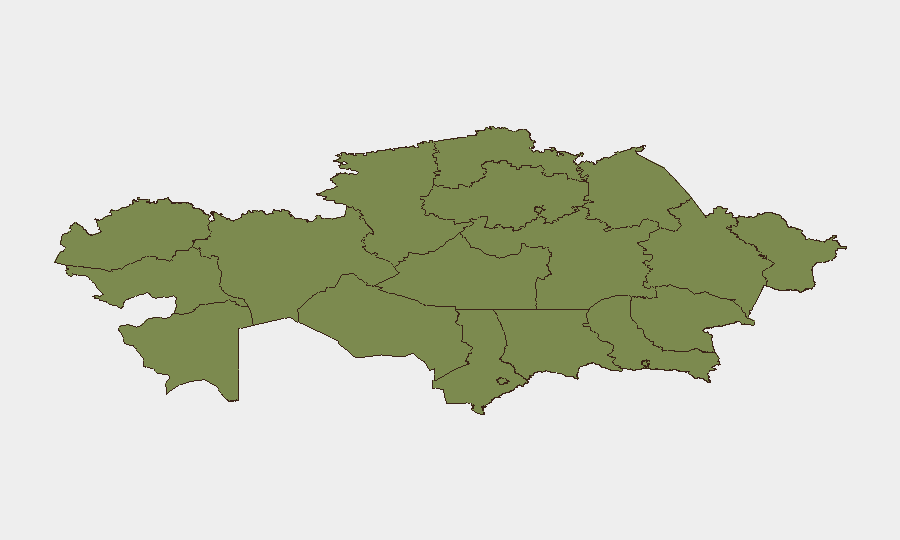
Ulytau Region and Astana dominate the sub-national risk ranking (31.3 and 29.3 respectively), driven primarily by political and diplomatic activity rather than street-level violence or terrorism. Astana's elevated score reflects the foreign-ministry responses and high-level security coordination tied to the CPC crisis; Ulytau's reflects resource-infrastructure sensitivity. West Kazakhstan Region (5.3) carries residual risk linked to energy infrastructure and border management. All remaining regions score at baseline (1.3), consistent with a nationally stable domestic security picture. The concentration of risk in the capital and central oil-producing areas indicates that threat exposure is structural (export-route dependency) rather than dispersed or grassroots.
How GeoBit Would Assist
Security teams protecting Kazakhstani energy assets and corporate interests would deploy Maritime & Aviation Tracking to monitor CPC tanker movements and insurance/routing changes in real time, combined with Economic & Trade analysis to forecast supply-chain delays and alternative logistics. Intel Sweep (global event feeds, X/Telegram OSINT, and multi-language corroboration) provides continuous monitoring of diplomatic statements, shipping advisories, and port-status updates. Early Warning & Prediction would flag shifts in Black Sea attack patterns or escalation in domestic political response that could trigger broader unrest.
7-Day Outlook
CPC loading suspension is expected to persist through 23–24 July pending safety certification, creating 5–7 days of export bottleneck and revenue impact. Diplomatic pressure from Astana will likely intensify if attacks recur; however, no evidence suggests spillover into domestic unrest or new territorial incidents. Economic stress from prolonged export delays poses the principal medium-term risk to Kazakhstan's stability rather than immediate security threats.
Highest-Risk Areas — Ranked
| # | State / Region | Risk |
|---|---|---|
| 1 | Ulytau Region | 31.3 |
| 2 | Astana | 29.3 |
| 3 | West Kazakhstan Region | 5.3 |
| 4 | Turkistan Region | 1.3 |
| 5 | Almaty Region | 1.3 |
| 6 | East Kazakhstan Region | 1.3 |
| 7 | Abay Region | 1.3 |
| 8 | Jetisu Region | 1.3 |
| 9 | Atyrau Region | 1.3 |
| 10 | Mangystau Region | 1.3 |
| 11 | Aqtöbe region | 1.3 |
| 12 | Pavlodar Region | 1.3 |
Sources
Previous Daily Briefs
A new Kazakhstan brief is written every day — each with its own risk map and downloadable CSV. Here's the last week; use the calendar to go further back.
📅 Browse every day by calendar →
Highlighted days have a brief. Tap a day for that day's map & analysis, or “csv” for that day's dataset ($5).
Atlas — our AI intelligence desk — emails them this snapshot personally. Nothing else, no list.