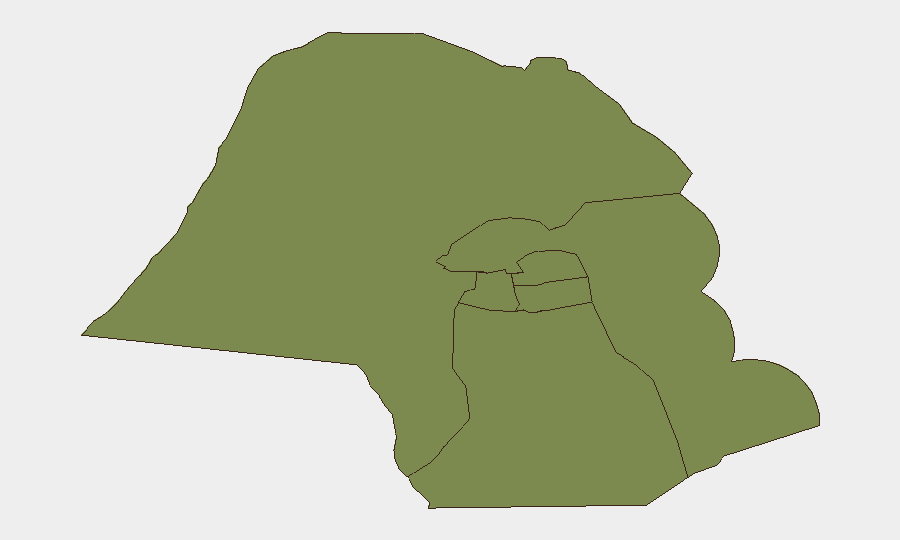
Situation Summary
Kuwait remains a low-threat environment (#80 globally) with a composite threat score of 16 across 255 tracked events. No credible security incidents, civil unrest, or infrastructure disruptions were reported in the last 24–48 hours. The security posture is stable, though administrative changes affecting expatriate documentation—including address-registration cancellations by the Public Authority for Civil Information—reflect ongoing tightening of residency controls. The overall trajectory is one of routine operations with no acute destabilizing factors.
Key Developments
- Kuwait (national) – 29–30 June 2026: Public Authority for Civil Information (PACI) announced cancellation of registered residential addresses for 464 expatriates, requiring affected individuals to correct address data. Notices circulated on Kuwait-focused social media and in official channels. Relevance: administrative measure affecting expatriate documentation compliance; no security incident.
- Kuwait (general) – 29–30 June 2026: Local press coverage reported ongoing bilateral security cooperation initiatives between Kuwait and Lebanon. Framed as routine regional security-ties enhancement rather than response to a specific threat or incident inside Kuwait.
Highest-Risk Areas
Jahra Governorate carries substantially elevated risk (31.4) compared to all other regions, driving Kuwait's overall threat profile. This concentration suggests localized factors—infrastructure vulnerability, border proximity, or historical incident clustering—merit focused monitoring. Farwaniya Governorate (4.8) represents the second-tier concern. The Capital, Hawalli, Ahmadi, and Mubarak al-Kabir governorates all score at 1.4, indicating relatively uniform baseline risk across the populated core. Organizations with personnel or assets in Jahra should maintain heightened situational awareness and enforce standard protective postures; all other regions support routine security protocols.
How GeoBit Would Assist
Intel Sweep and OSINT Fusion would enable continuous monitoring of Arabic-language news, social-media sentiment, and Telegram channels for early signals of unrest, crime clusters, or policy changes affecting business continuity. AOI Monitoring & Early Warning can maintain persistent watch on Jahra Governorate and other high-traffic commercial or industrial zones, triggering alerts if event density or incident types shift. Routing & Network Analysis supports real-time alternative-route planning for personnel and supply chains if localized disruption occurs, and Risk & Threat Assessment provides updated daily or weekly threat scores linked to specific events, allowing duty-of-care teams to calibrate staffing, movement, and asset positioning with confidence.
7-Day Outlook
No acute triggers are evident. Expatriate documentation tightening may require compliance review cycles but poses no direct security risk. Bilateral security cooperation signals reflect normal diplomatic activity and do not suggest incoming regional escalation affecting Kuwait directly. The low-incident baseline is expected to persist over the next week unless external regional developments or sudden policy shifts alter the landscape.
Highest-Risk Areas — Ranked
| # | State / Region | Risk |
|---|---|---|
| 1 | Jahra Governorate | 31.4 |
| 2 | Farwaniya Governorate | 4.8 |
| 3 | Ahmadi Governorate | 1.4 |
| 4 | Hawalli Governorate | 1.4 |
| 5 | Mubarak al-Kabir Governorate | 1.4 |
| 6 | Capital Governorate | 1.4 |
Sources
Previous Daily Briefs
A new Kuwait brief is written every day — each with its own risk map and downloadable CSV. Here's the last week; use the calendar to go further back.
📅 Browse every day by calendar →
Highlighted days have a brief. Tap a day for that day's map & analysis, or “csv” for that day's dataset ($5).