Situation Summary
Laos remains a low-threat environment globally (#103 composite ranking, score 9), but faces elevated diplomatic friction and specific localized risks tied to crime and public-health concerns. The past 48 hours have been marked by diplomatic statements and media tensions rather than discrete security incidents; the most substantive recent developments are a large-scale arrest operation targeting online scammers (11 July) and ongoing uncertainty surrounding tourist methanol poisoning. The security picture is stable at the macro level, with risk concentrated in Vientiane Province and specific operational hazards for travelers and expatriates.
Key Developments
- Vientiane Capital, Sisattanak District (11 July): Lao National Police arrested 122 suspected online scammers in raids on seven rental houses at ASEAN Villa, seizing electronic devices, documents, and vehicles in an expanding anti-fraud crackdown. This represents a continuation of an established law-enforcement operation rather than an emergence of new criminal activity.
- Vientiane (18 July): Lao authorities acknowledged inability to confirm cause of death for six foreign tourists linked to methanol poisoning, citing absence of autopsy permission; laboratory analysis confirmed excess methanol in Tiger Vodka samples. This development reflects ongoing investigation complexity and forensic constraints in-country.
- Australia DFAT Travel Advice Update (17–18 July): Australia elevated travel advisory for Laos, citing risks including petty crime, methanol-contaminated alcohol, and concerns regarding transparency and impartiality of the legal system. This is a risk-perception shift rather than an incident, but signals heightened corporate duty-of-care scrutiny for personnel in Laos.
- Diplomatic Statements (17–18 July): Lao Foreign Ministry issued public statements in response to media reports and international comment; Australian and Danish officials made public remarks on related issues. No substantive policy change or bilateral deterioration confirmed; statements appear responsive and containment-focused.
- Cross-Border Context (15–17 July): Open-source reporting indicates border administrative and detention activity between Lao and Thai nationals, but insufficient verified detail is available to establish a specific Laos-side incident or threat change.
Highest-Risk Areas
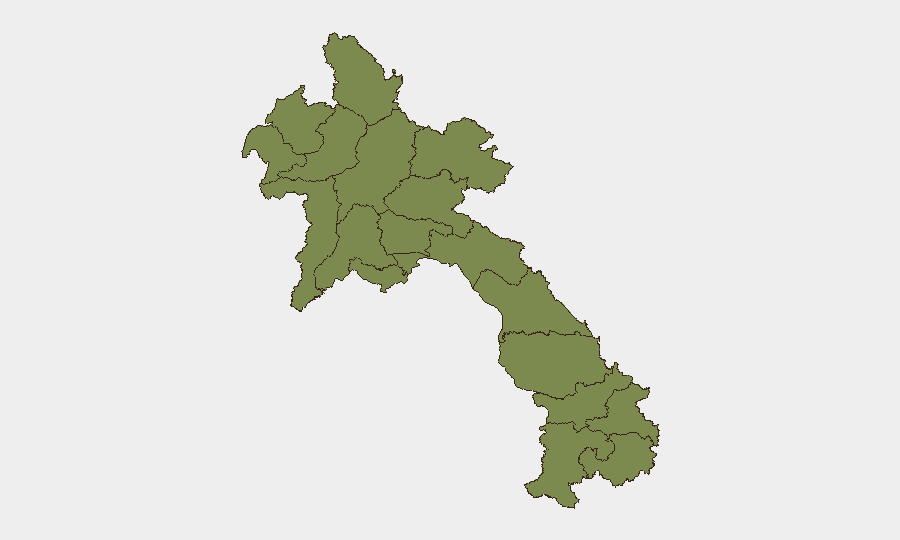
Vientiane Province dominates the national risk profile (composite 31.8), driven by concentration of urban crime, expatriate presence, and administrative complexity. Bolikhamsai Province (16.5) represents a secondary concern; all remaining provinces score below 2.0. Risk in Vientiane is primarily economic crime (fraud, theft), alcohol-safety hazards, and legal-system opacity rather than political instability or armed conflict. Bolikhamsai's elevation reflects tourism and cross-border activity. The sub-national distribution indicates that duty-of-care risk for corporate operations is overwhelmingly urban and tied to individual traveler/expatriate behavior rather than regional instability.
How GeoBit Would Assist
Security teams operating in Laos should deploy Area-of-Interest Monitoring & Early Warning focused on Vientiane Province and border zones to detect emerging crime patterns and administrative enforcement actions. OSINT fusion and multi-language search capabilities enable real-time tracking of official Lao and Thai statements, social media sentiment, and media reporting to anticipate travel-advisory shifts or regulatory changes affecting personnel. Risk & Threat Assessment with routine Intel Sweeps provide early signals of diplomatic friction, crime-sector changes, or health/safety alerts that warrant internal communication to staff or supply-chain partners.
7-Day Outlook
No significant escalation is anticipated. Diplomatic tensions appear contained to statement-level exchanges. Methanol-poisoning investigations will likely continue without immediate resolution, sustaining background travel-risk awareness. Crime and administrative enforcement activity in Vientiane will remain the primary operational concern for corporate teams; no indicators suggest imminent macro-level instability or policy shifts affecting business continuity.
Highest-Risk Areas — Ranked
| # | State / Region | Risk |
|---|---|---|
| 1 | Vientiane Province | 31.8 |
| 2 | Bolikhamsai | 16.5 |
| 3 | Vientiane Prefecture | 7.1 |
| 4 | Luang Namtha | 1.8 |
| 5 | Bokeo Province | 1.8 |
| 6 | Phongsaly | 1.8 |
| 7 | Oudomxay | 1.8 |
| 8 | Luang Prabang | 1.8 |
| 9 | Houaphanh | 1.8 |
| 10 | Xiangkhouang Province | 1.8 |
| 11 | Sainyabuli Province | 1.8 |
| 12 | Xaisomboun Province | 1.8 |
Sources
Previous Daily Briefs
A new Laos brief is written every day — each with its own risk map and downloadable CSV. Here's the last week; use the calendar to go further back.
📅 Browse every day by calendar →
Highlighted days have a brief. Tap a day for that day's map & analysis, or “csv” for that day's dataset ($5).
Atlas — our AI intelligence desk — emails them this snapshot personally. Nothing else, no list.