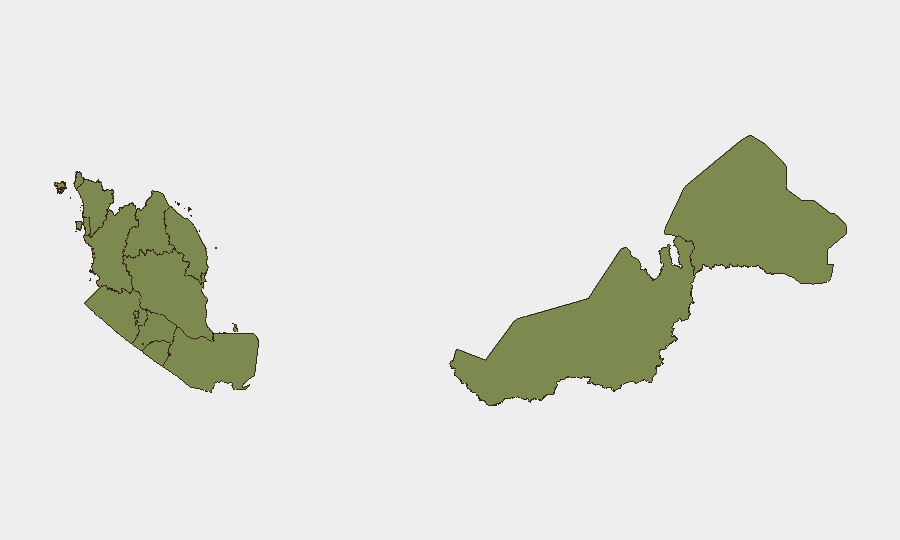
Situation Summary
Malaysia maintains a composite threat score of 4 (rank #168 globally) with 87 tracked events, reflecting a relatively stable national security environment over the reporting period. No major security incidents, civil unrest, infrastructure disruptions, or conflict-related events have been corroborated in the last 24–48 hours across open-source and social media channels. The absence of significant incident reporting at the national level suggests routine operating conditions, though sub-national risk concentration in East Malaysia and select urban centers warrants targeted monitoring.
Key Developments
No incidents meeting strict recency (last 24–48 hours) and multi-source corroboration thresholds have been identified in the current reporting window. Recent event signals logged on 2026-06-22 and 2026-06-23 (arrests/detentions, university and student-related statements, ministry-level demands, and one server investigation) remain insufficiently detailed or time-stamped in open reporting to confirm discrete current incidents. Web research across Malaysian national and local media, police/official feeds, and X/Twitter (English and Bahasa Malaysia) found only undated social posts, older crime reports (pre-dating the current 24–48 hour window), and general analytical pieces on policy or cyber matters—none rising to actionable incident status within the required timeframe.
Organizations with personnel or assets in Malaysia should continue baseline vigilance; the lack of reported incidents does not eliminate underlying chronic risks (petty crime, protest-related disruption, cyber intrusions) present in higher-risk zones.
Highest-Risk Areas
Sarawak (risk score 32) and Sabah (risk score 18.3) drive substantially higher threat levels than peninsular Malaysia, reflecting a combination of remote geography, border proximity, transnational criminal activity, and historical political sensitivities in East Malaysia. Kuala Lumpur (11.5) and Selangor (8.8) concentrate urban risks—including cyber intrusions, financial crime, and labor/student unrest—typical of major commercial and political hubs. Remaining peninsular states register minimal individual risk (2.0–4.7), indicating threat concentration in three or four high-priority zones rather than national diffusion.
How GeoBit Would Assist
Corporate security and risk teams would deploy AOI (Area-of-Interest) Monitoring & Early Warning to establish persistent watch on Sarawak, Sabah, and Kuala Lumpur, triggering alerts on civil unrest, crime clusters, or cyber incidents before they escalate. Intel Sweep and multi-language OSINT (X/Twitter, Telegram, local media feeds in Bahasa Malaysia and English) enable rapid confirmation of incident rumors, arrest details, and official statements. Routing & Network Analysis supports alternative travel and supply-chain planning for personnel and assets in high-risk regions, while Cyber Intelligence and Shodan monitoring can identify emerging server/infrastructure vulnerabilities in Malaysian corporate networks.
7-Day Outlook
Malaysia is forecast to remain at or near current threat levels over the next 7 days absent new triggering events. Underlying risks in East Malaysia and urban centers remain chronic but not acute; standard corporate due-care protocols and region-specific contingency planning are appropriate. Organizations should maintain heightened awareness for student activism, labor actions, and transnational cyber campaigns, which have historically surfaced with limited advance warning in Malaysian media.
Highest-Risk Areas — Ranked
| # | State / Region | Risk |
|---|---|---|
| 1 | Sarawak | 32 |
| 2 | Sabah | 18.3 |
| 3 | Kuala Lumpur | 11.5 |
| 4 | Selangor | 8.8 |
| 5 | Pahang | 4.7 |
| 6 | Malacca | 3.3 |
| 7 | Perlis | 2 |
| 8 | Kedah | 2 |
| 9 | Penang | 2 |
| 10 | Perak | 2 |
| 11 | Kelantan | 2 |
| 12 | Labuan | 2 |
Sources
Previous Daily Briefs
A new Malaysia brief is written every day — each with its own risk map and downloadable CSV. Here's the last week; use the calendar to go further back.
📅 Browse every day by calendar →
Highlighted days have a brief. Tap a day for that day's map & analysis, or “csv” for that day's dataset ($5).