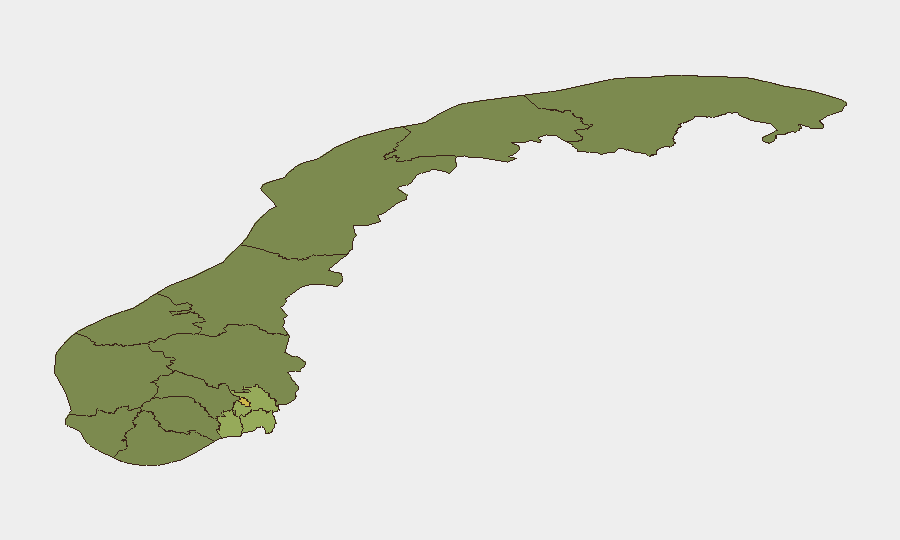
Situation Summary
Norway maintains a low overall threat profile (Global Rank #159, Composite Score 4) with no significant security incidents, civil unrest, infrastructure disruptions, or acute travel risks reported in the last 24–48 hours across open-source monitoring. The security environment remains stable, with routine political activity and normal law-enforcement operations dominating official channels. No cross-confirmed multi-source events meeting operational reporting thresholds have emerged in the period.
Key Developments
No security, crime, civil-unrest, infrastructure, or travel-risk events meeting multi-source confirmation standards have been identified in Norway in the last 24–48 hours. Open-source monitoring across Norwegian national news, police feeds, emergency-services channels, and Nordic security briefs confirms a stable operational picture with only routine matters reported.
NATO- and defence-related activity involving Norway documented in mid-June 2026 concerns ongoing training, posture, and long-term Eastern-flank initiatives—not acute incidents triggering duty-of-care escalation.
Highest-Risk Areas
Oslo (Risk 68) and Akershus (Risk 52) together account for the largest composite-risk concentration, reflecting Norway's capital-region density of financial services, government institutions, transportation hubs, and transient populations—vectors that historically attract routine street crime, petty theft, and administrative-level fraud rather than organized violence or political instability. Østfold (Risk 48) and Vestfold (Risk 42) follow, likely driven by similar urban-corridor dynamics and proximity to transport networks. The remaining nine counties grade progressively lower, with rural and northern regions (Innlandet, Møre og Romsdal) carrying minimal scores. Risk scores are compositional; they reflect prevalence of tracked event types (crime, protests, accidents, cyber incidents) rather than imminent threats, and should be read alongside the low national threat ranking.
How GeoBit Would Assist
Corporate security and duty-of-care teams with personnel or assets in Oslo, Akershus, or major transport corridors should deploy AOI Monitoring & Early Warning to flag emerging incidents in real time; Intel Sweep and OSINT fusion to correlate police feeds, local media, and social-media signals for early detection of localized unrest or crime clusters; and Routing & Network Analysis to identify safe transit options in higher-risk urban zones. For teams managing critical infrastructure or supply-chain assets, satellite and GIS analysis paired with economic & trade monitoring can track operational continuity and flag logistics disruptions before they cascade.
7-Day Outlook
No material change in Norway's threat posture is forecast for the next seven days. Operational conditions are expected to remain stable, with continued routine governance, law enforcement, and business activity. Monitoring should maintain standard cadence; escalation triggers would require credible multi-source evidence of sudden civil unrest, organized crime activity, or infrastructure disruption—none of which are currently signaled in available intelligence or open-source channels.
NEXT BRIEF: 2026-06-22 (24-hour rolling window)
DATA REFRESH: 2026-06-21 23:59 UTC
Highest-Risk Areas — Ranked
| # | State / Region | Risk |
|---|---|---|
| 1 | Oslo | 68 |
| 2 | Akershus | 52 |
| 3 | Østfold | 48 |
| 4 | Vestfold | 42 |
| 5 | Rogaland | 38 |
| 6 | Buskerud | 35 |
| 7 | Trøndelag | 32 |
| 8 | Telemark | 28 |
| 9 | Vestland | 27 |
| 10 | Agder | 26 |
| 11 | Møre og Romsdal | 22 |
| 12 | Innlandet | 20 |
Sources
Previous Daily Briefs
A new Norway brief is written every day — each with its own risk map and downloadable CSV. Here's the last week; use the calendar to go further back.
📅 Browse every day by calendar →
Highlighted days have a brief. Tap a day for that day's map & analysis, or “csv” for that day's dataset ($5).