Situation Summary
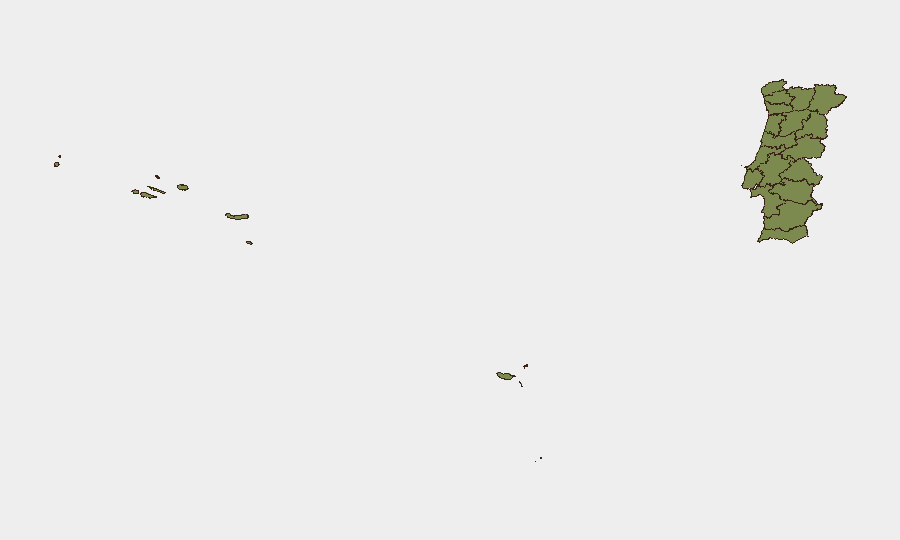
Portugal remains a low-threat environment globally (rank #179, composite score 3) with no widely reported major security incidents in the last 24–48 hours. The security landscape is stable, with sparse real-time incident signals across open sources. Risk is heavily concentrated in Portalegre district, which exhibits a composite score of 31.4—substantially higher than all other regions—while metropolitan areas (Lisbon, Porto) remain manageable within Portugal's overall low baseline.
Key Developments
No discrete, corroborated security, civil-unrest, crime, or infrastructure incidents were identified in Portugal for June 27–29, 2026, across available open-web and social-media channels. Commercial incident-aggregation platforms and regional OSINT feeds surface no new high-impact events in Lisbon or other major urban centers in the last 24–48 hours. This absence of reported incidents is consistent with Portugal's low global threat ranking and reflects stable baseline conditions during this period.
Highest-Risk Areas
Portalegre district stands as an exceptional outlier, with a composite risk score of 31.4—more than 4× higher than Lisbon (7.2) and roughly 6× higher than Porto (4.9). The drivers of this elevated risk in Portalegre are not clarified in the current brief window; security teams with personnel or assets in the district should conduct targeted local research into recent crime patterns, border-security dynamics (proximity to Spain), or infrastructure vulnerability. All other tracked regions (Viseu, Madeira, Azores, Braga, Viana do Castelo, Vila Real, Bragança, Aveiro, Guarda) remain at or below risk score 2.6, indicating relatively uniform, low risk across the northern and island territories.
How GeoBit Would Assist
Intel Sweep & OSINT Fusion (multi-language, real-time X/Twitter, Telegram, and commercial feeds) would enable 24/7 monitoring for emerging incidents in Portalegre and metropolitan Lisbon/Porto, with temporal and geolocation filtering to isolate Portugal-specific events. AOI Monitoring & Early Warning would establish persistent watch over Portalegre and key corporate sites, triggering alerts on civil unrest, crime escalation, or infrastructure disruption. Routing & Network Analysis would support alternative journey planning for personnel transiting high-risk districts or the Portugal–Spain border zone.
7-Day Outlook
Portugal is forecast to remain stable across the next seven days, with no imminent major incident indicators visible in open sources or trend data. The Portalegre risk anomaly warrants continued monitoring but does not signal acute near-term escalation; standard duty-of-care protocols are sufficient for Lisbon and Porto. Corporate security teams should maintain baseline alerting and periodic check-ins with local partners and law enforcement liaisons to detect any shift in threat posture.
Note: This brief reflects open-source and commercial signal availability as of June 29, 2026, 0000 UTC. For real-time updates, monitor PSP (Polícia de Segurança Pública) and GNR (Guarda Nacional Republicana) official channels and national news outlets (Público, RTP, Diário de Notícias).
Highest-Risk Areas — Ranked
| # | State / Region | Risk |
|---|---|---|
| 1 | Portalegre | 31.4 |
| 2 | Lisbon | 7.2 |
| 3 | Porto | 4.9 |
| 4 | Viseu | 2.6 |
| 5 | Madeira | 1.4 |
| 6 | Azores | 1.4 |
| 7 | Viana do Castelo | 1.4 |
| 8 | Braga | 1.4 |
| 9 | Vila Real | 1.4 |
| 10 | Bragança | 1.4 |
| 11 | Aveiro | 1.4 |
| 12 | Guarda | 1.4 |
Sources
Previous Daily Briefs
A new Portugal brief is written every day — each with its own risk map and downloadable CSV. Here's the last week; use the calendar to go further back.
📅 Browse every day by calendar →
Highlighted days have a brief. Tap a day for that day's map & analysis, or “csv” for that day's dataset ($5).