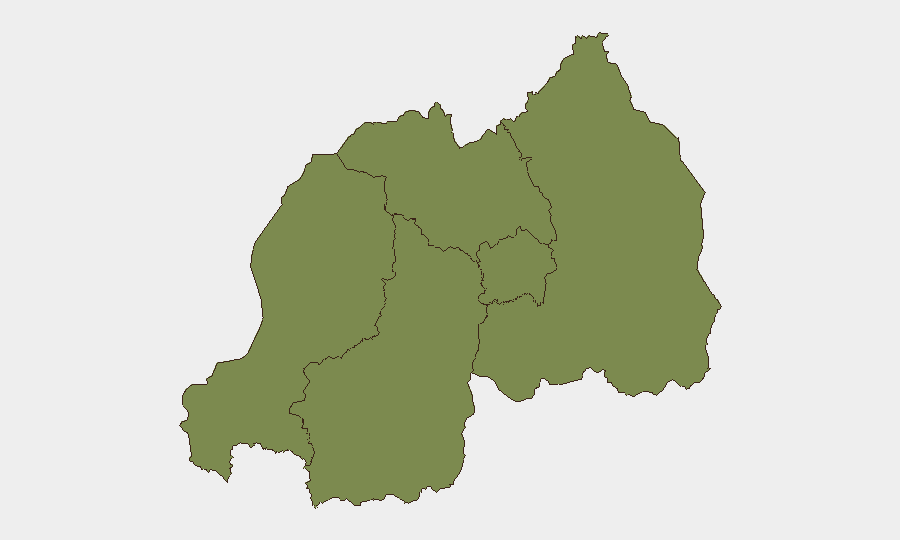
Situation Summary
Rwanda's security environment remains stable with no acute conflict, civil unrest, or major crime incidents documented in the last 24–48 hours. The primary operational risk is a confirmed and active Marburg virus disease outbreak affecting the health sector nationwide, with potential for movement restrictions and staffing disruptions. Low-intensity institutional friction within the judicial system has been recorded but does not yet translate to operational disruption. Overall threat trajectory remains contained, though the health emergency warrants immediate duty-of-care review for personnel on the ground.
Key Developments
- Nationwide (Health Sector) – 12–16 July 2026: Rwanda's Ministry of Health has confirmed active cases of Marburg virus disease. The outbreak remains under national alert with potential for movement restrictions, health-sector screening, and localized operational delays. No geographic containment boundaries have been publicly disclosed; organizations should assume nationwide exposure risk.
- Judicial Sector – 14 July 2026: A judicial rejection event was recorded within Rwanda's national legal apparatus, signaling internal institutional friction. Current assessment indicates this is low-intensity and does not yet drive political destabilization or wider civil unrest.
- Southern Province – Ongoing (mid-July 2026): Southern Province continues to register the highest composite risk score (32.7) among Rwanda's regions, driven by structural vulnerability factors rather than a single recent acute incident. This elevated baseline warrants heightened monitoring and operational caution for assets or personnel in the region.
- Government & International Actors – 16–17 July 2026: Military force posturing by government actors and a disapproval signal from the African Union were recorded. Neither has translated into visible escalation or street-level security impact in the last 24 hours.
- No acute incidents (Nationwide) – Last 48 hours: Explicit national security bulletins and cross-checked OSINT monitoring confirm the absence of attacks, riots, major criminal events, or infrastructure sabotage. Web and social-media monitoring reveal no corroborated breaking incidents contradicting this assessment.
Highest-Risk Areas
Southern Province is the clear outlier, with a composite risk score of 32.7—roughly 12 times higher than any other region. This elevation reflects structural vulnerabilities (border proximity, historical tensions, or governance capacity gaps) rather than an immediate crisis. The remaining four provinces (Western, Northern, Kigali City, and Eastern) all register identical baseline risk (2.7), indicating relatively uniform low-level threat exposure across these areas. Personnel and assets deployed to Southern Province should expect heightened operational friction; those in Kigali City and other provinces face standard country-baseline risks.
How GeoBit Would Assist
Organizations should deploy AOI Monitoring & Early Warning on Southern Province and key urban centers (Kigali, provincial capitals) to detect any emerging conflict signals, health-sector incidents, or movement restrictions in real time. Intel Sweep and multi-language OSINT fusion across government health announcements, tribunal filings, and cross-border actor statements will provide early visibility into outbreak progression and judicial developments before they affect operations. Routing & Network Analysis can support contingency planning for staff movement if health restrictions or civil unrest escalate unexpectedly in the next 7–14 days.
7-Day Outlook
The Marburg outbreak will likely remain the primary operational risk driver over the next week; organizations should monitor health-sector guidance and prepare for potential movement restrictions or screening protocols. Judicial and government-level friction signals bear watching but are not expected to escalate into visible civil unrest within the 7-day window. Rwanda's overall security posture remains favorable relative to regional benchmarks, supporting continued operations with heightened health-sector vigilance.
Highest-Risk Areas — Ranked
| # | State / Region | Risk |
|---|---|---|
| 1 | Southern Province | 32.7 |
| 2 | Western Province | 2.7 |
| 3 | Northern Province | 2.7 |
| 4 | Kigali City | 2.7 |
| 5 | Eastern Province | 2.7 |
Previous Daily Briefs
A new Rwanda brief is written every day — each with its own risk map and downloadable CSV. Here's the last week; use the calendar to go further back.
📅 Browse every day by calendar →
Highlighted days have a brief. Tap a day for that day's map & analysis, or “csv” for that day's dataset ($5).
Atlas — our AI intelligence desk — emails them this snapshot personally. Nothing else, no list.