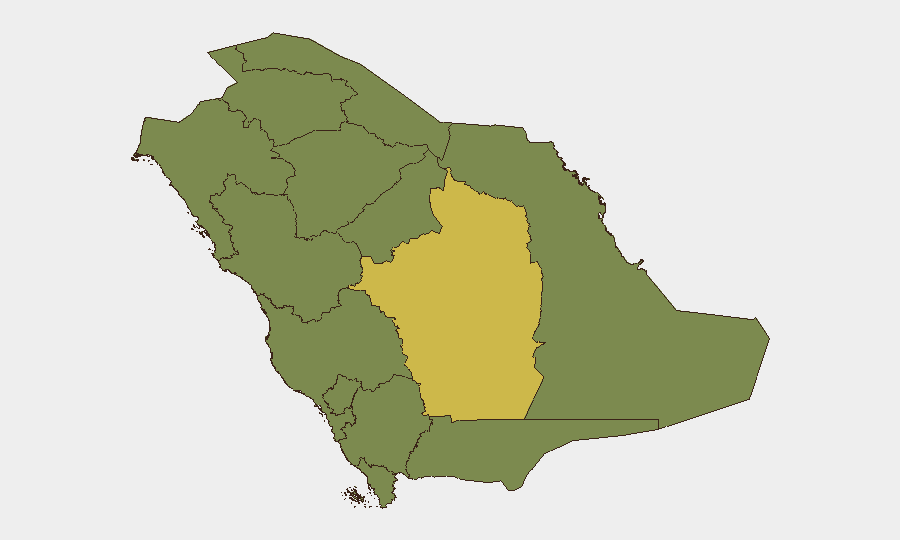
Situation Summary
Saudi Arabia faces a sharp escalation in cross-border military threat following Houthi ballistic missile and drone strikes on Abha International Airport in the 'Asir Region on July 15, 2026. The attacks, in retaliation for coalition airstrikes on Sanaa International Airport, mark the Houthi movement's declared end to a de-escalation phase with Riyadh and signal renewal of sustained hostile operations. Regional instability is amplified by concurrent Iranian-linked activity across Gulf states and maritime zones, elevating both ground-based conflict and aviation risk across the Kingdom.
Key Developments
- Abha International Airport, 'Asir Region – July 15 (late evening): Houthi forces launched multiple ballistic missiles and drones at Abha Airport. Saudi air defenses reported interception with no casualties; however, social-media eyewitness reports documented smoke columns in the airport vicinity, indicating on-the-ground impact or near-miss effects despite official claims.[6][7][9]
- Southern Saudi Arabia (multiple sites) – July 15–16: Saudi Ministry of Defense confirmed interception of multiple successive ballistic-missile launches by Houthis across the Kingdom's southern region, indicating sustained rather than single-point attack operations.[1][8]
- Abha and Najran airports – July 16: flydubai suspended all flights to/from both airports; Saudia, flynas, and Flyadeal cancelled or suspended at least 10 domestic departures linking Abha with Riyadh and Jeddah, reflecting immediate aviation-sector response to attack risk.[9]
- Gulf airspace – Within last 48 hours: The European Union Aviation Safety Agency (EASA) issued operational guidance to air carriers to avoid Gulf airspace through July 29, 2026, citing recent strikes and regional escalation.[10]
- Riyadh – July 17 (within 24 hours): Saudi Foreign Ministry explicitly condemned ongoing Iranian-linked attacks on Kuwait, Bahrain, and Jordan, and signalled heightened regional political-security tension, linking the Kingdom's diplomatic stance to the broader 48-hour escalation window.[3][5]
- Yemen/Saudi border – July 15–16 (context): Houthi movement formally declared an end to its prior de-escalation agreement with Riyadh and resumed ballistic-missile targeting of Saudi territory, following the Sanaa Airport airstrike.[4][6][7]
- Strait of Hormuz and Gulf maritime zone – Last 48 hours: UK UN statement documented further Iranian attacks on commercial shipping and Gulf-state targets, widening the regional threat envelope beyond land-based strikes and affecting maritime trade and logistics corridors affecting Saudi energy and commerce.[5]
Highest-Risk Areas
Riyadh Region ranks significantly above all other sub-national areas (composite risk 66 vs. 36–37 elsewhere), reflecting its concentration of government, energy, and commercial infrastructure as well as air-defense and diplomatic activity. The southwestern provinces—'Asir (36.1), Makkah (36.4), and Jazan (36)—now face elevated immediate threat from Houthi missile and drone operations, with Abha serving as the active flashpoint. Northern Borders and central regions (Al-Qassim, Ḥa'il, Al Jawf) show baseline risk (36) consistent with historical cross-border and militant activity. Riyadh's disproportionate score reflects both nation-level security infrastructure concentration and systemic exposure to aviation, energy, and cyber-attack vectors.
How GeoBit Would Assist
Security teams would deploy AOI Monitoring & Early Warning on Abha, Riyadh, and maritime chokepoints to detect imminent Houthi launch signatures and Iranian-linked activity. Aviation tracking and routing & network analysis capabilities enable real-time flight-corridor monitoring and alternative-route planning to bypass closed airspace. Conflict & Military battle-mapping and entity extraction from OSINT (X, Telegram, regional news) provide 24–48-hour lead time on Houthi operational tempo and coalition countermeasures, supporting duty-of-care briefings and asset-movement decisions.
7-Day Outlook
Houthi ballistic and drone operations are likely to persist through late July; EASA guidance closure (July 29) suggests official expectation of sustained regional instability. Aviation cancellations and airspace restrictions will remain in effect for southwestern and central routes. Ground security posture in Riyadh and major commercial centers should remain elevated pending de-escalation signals from regional actors or coalition response that shifts Houthi operational calculus.
Highest-Risk Areas — Ranked
| # | State / Region | Risk |
|---|---|---|
| 1 | Riyadh Region | 66 |
| 2 | Medina Province | 37 |
| 3 | Makkah Region | 36.4 |
| 4 | 'Asir Province | 36.1 |
| 5 | Northern Borders Province | 36 |
| 6 | Al-Bahah Province | 36 |
| 7 | Jazan Province | 36 |
| 8 | Najran Region | 36 |
| 9 | Tabuk Province | 36 |
| 10 | Al Jawf Region | 36 |
| 11 | Ḥa'il Province | 36 |
| 12 | Al-Qassim Province | 36 |
Sources
Previous Daily Briefs
A new Saudi Arabia brief is written every day — each with its own risk map and downloadable CSV. Here's the last week; use the calendar to go further back.
📅 Browse every day by calendar →
Highlighted days have a brief. Tap a day for that day's map & analysis, or “csv” for that day's dataset ($5).
Atlas — our AI intelligence desk — emails them this snapshot personally. Nothing else, no list.