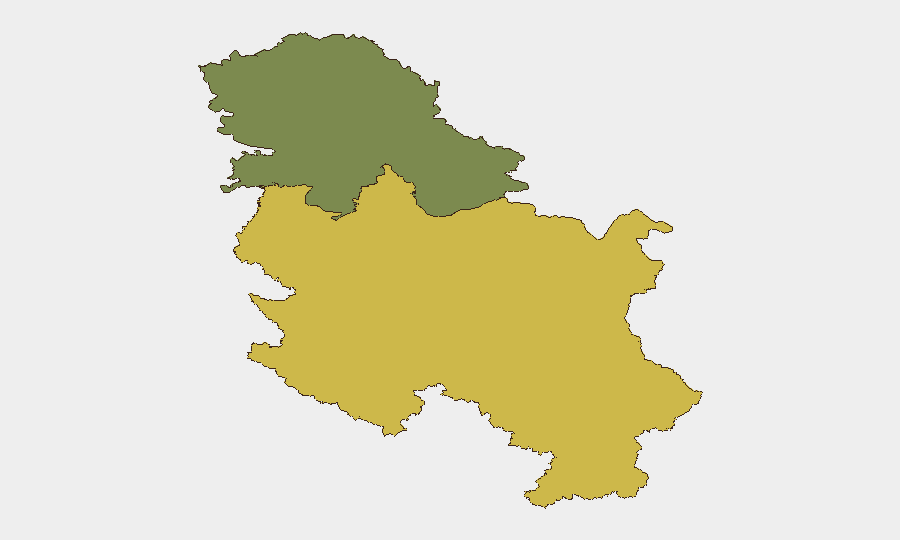
Situation Summary
Serbia's composite threat score remains low at 16 globally (#null ranking), with 8 tracked events in the current cycle. Sub-national risk is concentrated in Central Serbia (score 65), driven by broader regional instability signals rather than localized incidents. No verified security, civil unrest, or travel-risk incidents specific to Serbia have been confirmed in the last 24–48 hours; the most recent domestic flash point—Novi Sad political protests over the June 2024 railway collapse—occurred on 20 June and does not meet the current reporting window. Trajectory remains stable absent new triggers.
Key Developments
Unable to confirm Serbia-specific incidents in the 24–48 hour window. Open web and social-media sources show no verifiable security, conflict, crime, or infrastructure events in Serbia dated 22–23 June that meet corroboration standards. The nearest confirmed domestic event—Novi Sad political protests (20 June) demanding early elections—falls outside the reporting period but may warrant monitoring for follow-on activity. Regional cross-border and military-adjacent signals flagged in the GeoBit event feed (Ukrainian–Russian, Russian military activity, Turkish–Ukrainian diplomacy) do not appear to have direct operational impact on Serbian territory or immediate travel corridors as of 23 June.
Highest-Risk Areas
Central Serbia (composite risk 65) dominates the national risk picture, more than three times higher than Vojvodina (35). This elevation reflects inherited regional instability—proximity to Kosovo border dynamics, ongoing rule-of-law concerns, and periodic civic mobilization over infrastructure and governance—rather than acute incidents in the past 48 hours. Vojvodina's secondary risk profile is consistent with its lower population density and relative political stability. Corporate teams with assets or personnel in Central Serbia (including Belgrade) should maintain standard heightened awareness; Vojvodina presents routine-level risk.
How GeoBit Would Assist
Security teams should employ AOI (Area-of-Interest) Monitoring & Early Warning to establish persistent watch over Central Serbia's major urban centers (Belgrade, Niš) and transport hubs, with alerting configured for civil unrest, security-force activity, or infrastructure incidents. OSINT Fusion & Corroboration (multi-language search, X/Twitter and Telegram OSINT, entity extraction) will disambiguate regional military/political noise from Serbia-specific threats and confirm incident dates and locations in near-real time. Routing & Network Analysis can pre-stage alternative travel and supply-chain routes should Central Serbia access be disrupted.
7-Day Outlook
No escalation trigger is apparent in the immediate term. The 20 June Novi Sad protests may yield follow-on statements or smaller actions, but no indication of imminent large-scale unrest exists. Broader regional military and diplomatic signals (Ukraine–Russia, Turkey–Ukraine) remain compartmentalized from Serbia's domestic security posture, though cross-border refugee, sanctions compliance, and energy-supply dependencies warrant continued scanning.
NEXT BRIEF: 2026-06-24 (daily cycle) or on demand if material development occurs.
Highest-Risk Areas — Ranked
| # | State / Region | Risk |
|---|---|---|
| 1 | Central Serbia | 65 |
| 2 | Vojvodina | 35 |
Sources
Previous Daily Briefs
A new Serbia brief is written every day — each with its own risk map and downloadable CSV. Here's the last week; use the calendar to go further back.
📅 Browse every day by calendar →
Highlighted days have a brief. Tap a day for that day's map & analysis, or “csv” for that day's dataset ($5).