Situation Summary
Singapore remains a low-threat environment globally (rank #143, composite score 5) with 23 tracked events. Recent signal activity involving government secretariats, parliamentary rejections, and ministry disapprovals suggests routine administrative and political processes rather than security-critical incidents. No major civil unrest, infrastructure disruption, or violent crime has been verified in the last 24–48 hours.
Key Developments
- No verified security incidents in the last 24–48 hours. Web research and open-source monitoring did not surface credible, dated reports of conflict, civil unrest, cyber incidents, or crime within the requested window.
- Administrative and regulatory activity ongoing. Event signals dated 2026-06-18 to 2026-06-20 reference secretariat investigations, parliamentary rejections, and ministry disapproval—consistent with normal government operations rather than crisis-level threats.
- Cyber Security Agency leadership transition (advance notice). David Koh will retire from the Cyber Security Agency of Singapore on 1 July 2026; Gwenda Fong succeeds him. This is an announced personnel change, not an incident.
- Historical note: motorcycle theft arrests (13–14 June, outside current window). Singapore Police Force arrested five men for theft at Woodlands Close on 13 June, recovering the vehicle within 13 hours—illustrative of effective law-enforcement response but not a current development.
Highest-Risk Areas
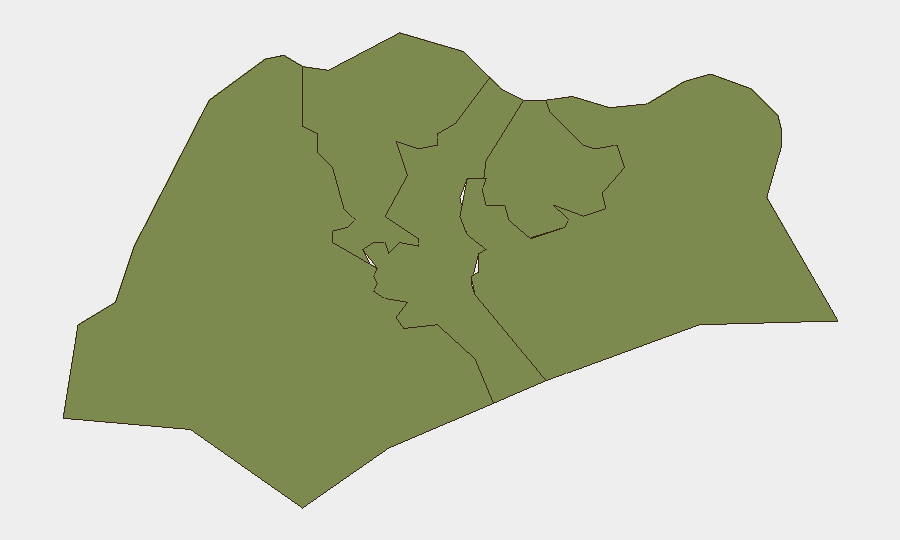
The Northwest region is significantly elevated (risk 31.4), roughly 10× the Southeast (3.1) and 15–22× the Central, Southwest, and Northeast zones. The concentration of flagged activity in Northwest warrants focused monitoring, though specific incident detail from recent event feeds is limited. Security teams with personnel or assets in the Northwest should maintain standard vigilance and establish area-of-interest monitoring for emerging indicators. The remaining regions show low and comparable risk profiles.
How GeoBit Would Assist
OSINT Fusion & Corroboration across X/Twitter, Telegram, YouTube, and multi-language open sources would sustain real-time event verification and close gaps in reporting delays. AOI Monitoring & Early Warning on the Northwest region and other high-traffic zones would provide persistent alerting for civil unrest, infrastructure failures, or crime clusters before they escalate. Entity Extraction & Network Analysis applied to government, law-enforcement, and business actors would flag policy changes or operational shifts affecting duty-of-care compliance and asset protection posture.
7-Day Outlook
No imminent security deterioration is forecast. Administrative activity and routine law-enforcement operations are expected to continue. Security teams should maintain baseline monitoring protocols and prepare for the cyber-agency leadership transition on 1 July; any change in regulatory or operational posture affecting corporate cybersecurity obligations should be flagged to relevant stakeholders by early July.
Report Confidence: Low-to-moderate on current 24–48 h developments; high on ambient threat trajectory and administrative context. GeoBit recommends enabling persistent AOI monitoring on Northwest region and subscribing to Singapore Police Force and regulatory announcements to close verification gaps.
Highest-Risk Areas — Ranked
| # | State / Region | Risk |
|---|---|---|
| 1 | Northwest | 31.4 |
| 2 | Southeast | 3.1 |
| 3 | Central | 2 |
| 4 | Southwest | 1.4 |
| 5 | Northeast | 1.4 |
Sources
Previous Daily Briefs
A new Singapore brief is written every day — each with its own risk map and downloadable CSV. Here's the last week; use the calendar to go further back.
📅 Browse every day by calendar →
Highlighted days have a brief. Tap a day for that day's map & analysis, or “csv” for that day's dataset ($5).