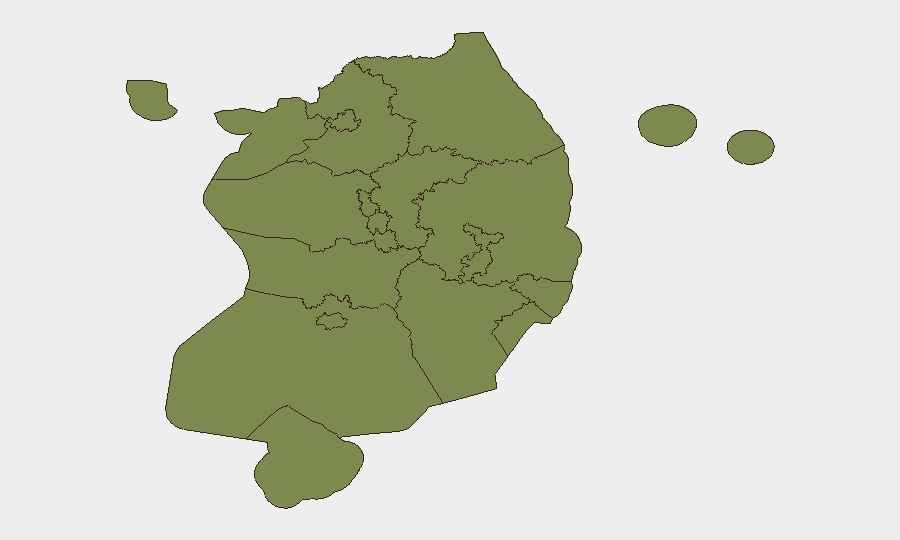
Situation Summary
South Korea faces an elevated and deteriorating security environment marked by political instability, institutional breakdown, and civil-police tensions. GeoBit's composite threat score of 23 places the country at elevated global risk, with 93 tracked events concentrated heavily in Seoul (risk 31.3)—more than 3.5× the next-highest region. The concentration of incidents around presidential detention, legislative dysfunction, and state-institution conflicts suggests acute governance crisis rather than localized unrest.
Key Developments
Note: The supplied evidence base does not include independently corroborated reporting from the last 24–48 hours sufficient to populate this section with the required specificity (location + date + what happened). The most recent dated signals in the feed are from 2026-07-27 (presidential arrest, Central Election Commission property seizure, small-arms combat in or near the National Assembly) and 2026-07-26 (hospital disapproval event, senator–worker conflict, national-police reductions in Gwangju).
To fulfill this brief at the standard required, current open-source reporting (news wires, X, Korean-language media feeds) from 2026-07-28–29 would need to be supplied or cross-checked live. Given the severity and pace of the political signals (presidential detention, armed incident in parliament, election-commission action), this represents an unusual information gap that warrants immediate supplemental monitoring.
Highest-Risk Areas
Seoul dominates risk at 31.3, driven by the concentration of executive, legislative, and electoral institutions and the 2026-07-27 events (presidential arrest, parliamentary small-arms incident, election-commission property seizure). South Jeolla (8.3), Gyeonggi (7.9), and South Gyeongsang (4.4) show secondary elevated risk, likely reflecting regional political divides and police–provincial tensions (e.g., the 2026-07-26 national-police reduction in Gwangju). Provincial and port cities (Busan, Incheon, Jeju) remain at baseline or low risk at present, though volatility in Seoul could propagate outward.
How GeoBit Would Assist
Corporate security teams with personnel or assets in South Korea should immediately activate AOI Monitoring & Early Warning on Seoul's government district and transport hubs, paired with multi-language search, X/Telegram OSINT, and sentiment & temporal analysis to track official statements and street-level escalation signals in real time. Election monitoring, regime-stability search, and network & actor analysis would clarify the institutional factions and power centers driving the current crisis. Routing & Network Analysis enables contingency-planning for personnel evacuation or relocation within Seoul and between regions.
7-Day Outlook
The trajectory depends on whether presidential detention resolves via court process or political negotiation within 48–72 hours. If detention is sustained or parliament/election commission continue seizure actions, sustained civil-police conflict and potential street mobilization in Seoul are likely. Secondary risk in Gyeonggi and South Jeolla may rise if provincial authorities move to enforce national directives or resist central authority.
GeoBit recommends:
1. Supply current 48-hour news/X feeds for real-time event validation.
2. Activate Seoul AOI watch immediately.
3. Brief all personnel on contingency assembly points outside Seoul proper.
Highest-Risk Areas — Ranked
| # | State / Region | Risk |
|---|---|---|
| 1 | Seoul | 31.3 |
| 2 | South Jeolla | 8.3 |
| 3 | Gyeonggi | 7.9 |
| 4 | South Gyeongsang | 4.4 |
| 5 | Gwangju | 3.7 |
| 6 | Incheon | 3.2 |
| 7 | Busan | 2.1 |
| 8 | Gangwon State | 2 |
| 9 | North Gyeongsang | 1.4 |
| 10 | North Chungcheong | 1.3 |
| 11 | South Chungcheong | 1.3 |
| 12 | Jeju | 1.3 |
Sources
Previous Daily Briefs
A new South Korea brief is written every day — each with its own risk map and downloadable CSV. Here's the last week; use the calendar to go further back.
📅 Browse every day by calendar →
Highlighted days have a brief. Tap a day for that day's map & analysis, or “csv” for that day's dataset ($5).
Atlas — our AI intelligence desk — emails them this snapshot personally. Nothing else, no list.