Situation Summary
Switzerland remains a low-threat environment (global rank #183, composite score 3) with no major security incidents or civil unrest reported in the past 24–48 hours. The country is hosting high-level U.S.–Iran diplomatic negotiations at Bürgenstock resort (Nidwalden canton), which remains a peaceful diplomatic engagement with no reported protest activity or infrastructure disruption. Overall security posture is stable; risk is concentrated in specific cantons rather than distributed across the country.
Key Developments
- U.S.–Iran ceasefire and nuclear negotiations ongoing at Bürgenstock resort, Nidwalden canton (June 22–23, 2026). Swiss Federal Department of Foreign Affairs confirmed "constructive progress" on initial talks; negotiating teams remain in-country to draft a 60-day interim agreement roadmap. No reports of security incidents, protests, or travel disruptions associated with the event.
- No corroborated reports of terrorism, major crime, civil unrest, or infrastructure failures in Swiss cities within the last 24–48 hours. Open-source monitoring (news, social media, official government channels) does not indicate acute political instability, violent clashes, or transport shutdowns.
- Diplomatic event does not appear to generate secondary security risks (e.g., counter-protests, extremist activity, or geopolitical spillover) as of the last 24 hours.
Highest-Risk Areas
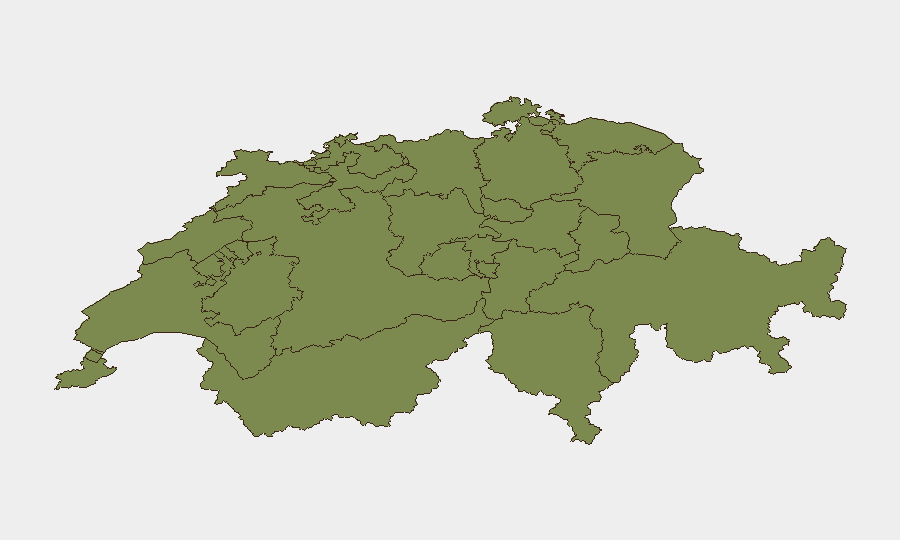
Lucerne canton significantly outranks all others (risk score 31.9), driven partly by proximity to the ongoing Bürgenstock diplomatic venue; however, this reflects diplomatic activity rather than direct threat. Bern (24.5) remains the administrative capital and naturally attracts higher baseline risk from political activity and infrastructure concentration. Nidwalden (9.3) hosts the current high-profile negotiation but shows no acute incident activity. All other cantons—including Zurich, Geneva, and Basel-City—score below 4.0, indicating minimal near-term risk and stable conditions for corporate operations and travel.
How GeoBit Would Assist
Area-of-Interest (AOI) Monitoring & Early Warning would provide persistent, real-time alerts on the Bürgenstock venue and surrounding transport corridors, flagging any unexpected protest, access disruption, or security incident before it affects corporate teams in-country. Multi-language OSINT & Social Media Intelligence (X, Telegram, YouTube) across German, French, and Italian channels would detect early signs of political backlash, labor unrest, or geopolitical tension before mainstream reporting. Routing & Network Analysis would allow duty-of-care teams to identify alternative transport and evacuation routes in high-risk cantons (Lucerne, Bern) should conditions deteriorate unexpectedly.
7-Day Outlook
Diplomatic negotiations are expected to continue through the 60-day roadmap window with minimal public disruption. No acute security triggers (protest escalation, political instability, or external conflict spillover) are forecast for Switzerland proper in the next week. Risk remains low; monitoring focus should remain on the Bürgenstock venue and any geopolitical statements that might prompt secondary activity in Swiss cities.
Highest-Risk Areas — Ranked
| # | State / Region | Risk |
|---|---|---|
| 1 | Lucerne | 31.9 |
| 2 | Bern | 24.5 |
| 3 | Nidwalden | 9.3 |
| 4 | Geneva | 4.5 |
| 5 | Schwyz | 3.3 |
| 6 | Zurich | 2.5 |
| 7 | Basel-City | 1.9 |
| 8 | Jura | 1.9 |
| 9 | Basel-Landschaft | 1.9 |
| 10 | Solothurn | 1.9 |
| 11 | Aargau | 1.9 |
| 12 | Vaud | 1.9 |
Sources
Previous Daily Briefs
A new Switzerland brief is written every day — each with its own risk map and downloadable CSV. Here's the last week; use the calendar to go further back.
📅 Browse every day by calendar →
Highlighted days have a brief. Tap a day for that day's map & analysis, or “csv” for that day's dataset ($5).