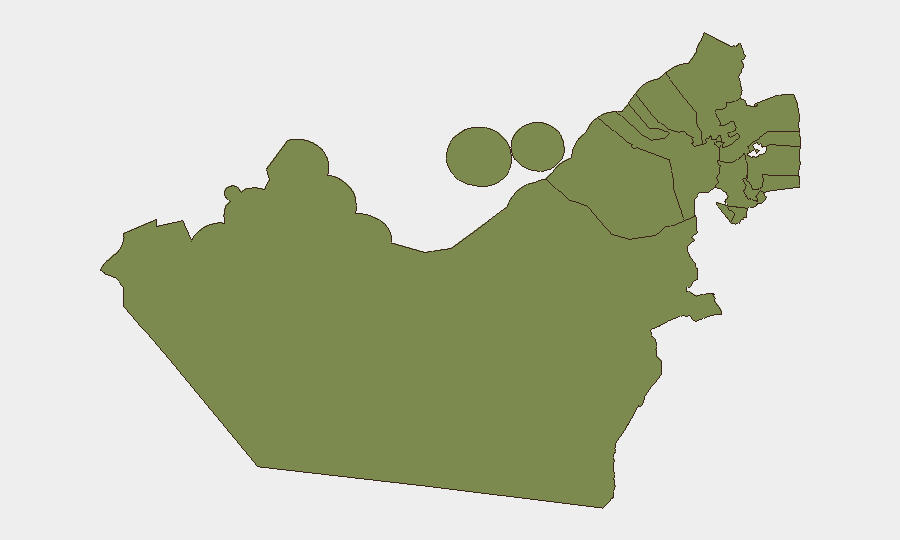
Situation Summary
The United Arab Emirates maintains a stable internal security environment with no major incidents, civil unrest, or infrastructure disruptions reported in the past 24–48 hours. However, diplomatic and rhetorical tensions with the United States, coupled with ongoing regional pressure in the Gulf and Strait of Hormuz stemming from U.S.–Iran hostilities, create a latent external risk profile. Dubai carries elevated sub-national risk relative to other emirates, though absolute threat levels remain low and airports, ports, and critical infrastructure continue normal operations.
Key Developments
- UAE-wide, 27–28 July 2026: Open-source security assessments confirm no terrorist attacks, significant crime incidents, civil unrest, or emergency movement restrictions across the country; daily life and commercial activity remain normal.
- Diplomatic signal, 28 July 2026: UAE authorities issued formal rejections of U.S. positions and made public statements indicating bilateral tension; Dubai municipal authorities similarly rejected UAE federal positions, signaling internal policy disagreement on certain matters.
- Diplomatic signal, 28 July 2026: United States issued two public statements directed at the UAE, reflecting ongoing diplomatic friction.
- Demand signal, 27 July 2026: Chicago municipal authorities issued demands toward the UAE, indicating potential trade, legal, or sanctions-related dispute.
- Military-adjacent signal, 26 July 2026: Artillery/tank activity was reported in association with UAE and Kuwait, though context and severity remain unclear from open reporting; no confirmed escalation or incursion into UAE territory.
- Airports and transport, 27–28 July 2026: Dubai International, Abu Dhabi International, and Sharjah airports reported normal operations with no flight disruptions, airspace closures, or security-related delays.
- Critical infrastructure, 27–28 July 2026: Barakah Nuclear Power Plant and other strategic energy assets show no signs of new attack, damage, or operational disruption; earlier May drone incidents remain isolated and contained.
- Regional maritime risk, 27–28 July 2026: Broader Gulf shipping lanes and Strait of Hormuz remain under residual pressure from U.S.–Iran tensions, but no fresh attacks targeting UAE vessels or ports reported.
Highest-Risk Areas
Dubai's composite risk score of 31.3 substantially exceeds all other emirates (all ranked at 1.3), reflecting its role as a major commercial, diplomatic, and logistics hub vulnerable to spillover from regional tensions, maritime incidents, or transnational crime. The concentration of foreign nationals, critical infrastructure (ports, aviation), and diplomatic presence in Dubai amplifies both the probability and consequence of disruption. The remaining six emirates show near-parity in risk, driven primarily by low baseline threat of internal instability and minor exposure to regional spillover; however, all lack the dense connectivity and international exposure that elevates Dubai's profile.
How GeoBit Would Assist
Corporate security teams should deploy AOI (Area of Interest) Monitoring & Early Warning to track Dubai's airports, ports, and diplomatic zones for emerging threats with real-time alerting. Intel Sweep and OSINT fusion across X/Twitter, Telegram, regional news, and multi-language sources will sustain continuous visibility of U.S.–UAE diplomatic friction and any signals of internal policy breakdown. Maritime & Aviation tracking combined with Network & Actor Analysis will enable early detection of spillover from Gulf hostilities or changes in threat actor targeting, informing duty-of-care decisions for personnel and asset movement.
7-Day Outlook
No major escalation of internal security risk is anticipated over the next seven days; the UAE's security apparatus and political stability remain intact. However, escalating U.S.–UAE diplomatic tension and continued regional volatility in the Gulf warrant sustained monitoring for potential changes to visa policy, financial sanctions, or maritime restrictions affecting corporate operations. Organizations with substantial exposure in Dubai should maintain heightened vigilance for second-order effects (e.g., protest activity, commercial restrictions) if bilateral friction deepens.
Highest-Risk Areas — Ranked
| # | State / Region | Risk |
|---|---|---|
| 1 | Dubai | 31.3 |
| 2 | Sharjah Emirate | 1.3 |
| 3 | Ajman Emirate | 1.3 |
| 4 | Ras al-Khaimah | 1.3 |
| 5 | Fujairah Emirate | 1.3 |
| 6 | Umm al-Quwain | 1.3 |
| 7 | Abu Dhabi Emirate | 1.3 |
Sources
Previous Daily Briefs
A new United Arab Emirates brief is written every day — each with its own risk map and downloadable CSV. Here's the last week; use the calendar to go further back.
📅 Browse every day by calendar →
Highlighted days have a brief. Tap a day for that day's map & analysis, or “csv” for that day's dataset ($5).
Atlas — our AI intelligence desk — emails them this snapshot personally. Nothing else, no list.