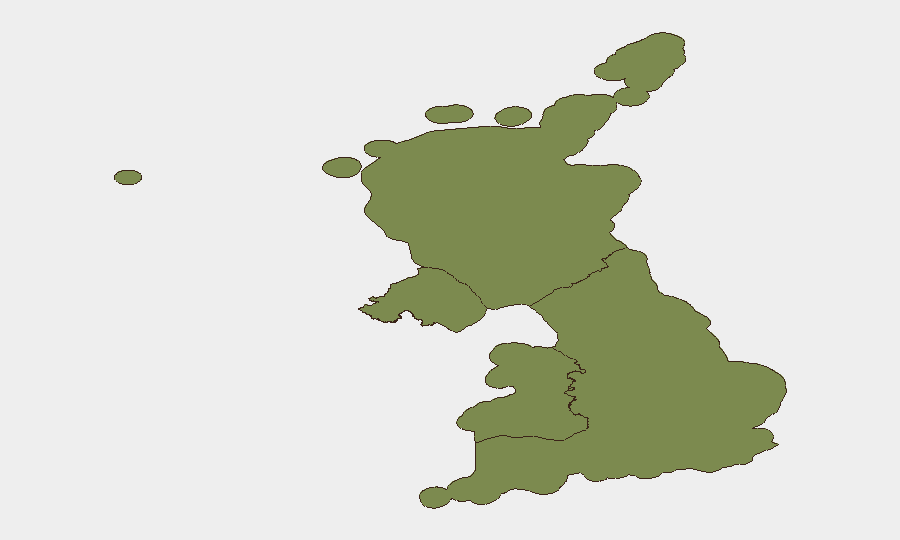
Situation Summary
The United Kingdom presents a composite threat score of 9 (rank #116 globally) with 592 tracked events. Recent signals indicate elevated tension concentrated in Northern Ireland and England, driven by a mix of domestic unrest, cross-border friction with Ireland, and international spillover from US–Iran and US–extremist escalations. The trajectory suggests sustained volatility in the near term rather than de-escalation.
Key Developments
- 2026-06-11 · Northern Ireland / England – Conventional military force and artillery/tank-level violence involving rioters against UK forces reported; exact locations within those regions not yet specified in available intelligence.
- 2026-06-11 · Cross-border (Ireland–UK) – Conventional military force activity reported between Ireland and United Kingdom, indicating potential bilateral friction; context and scale remain under investigation.
- 2026-06-12 · United States threat signal – US statement threatening military force issued; UK security posture may adjust in response to broader transatlantic tensions (US–Iran conflict, US–extremist statements ongoing since 2026-06-11).
- No major terror attack or critical-infrastructure failure confirmed in the last 24–48 hours in open-source reporting; however, absence of reporting does not exclude smaller or highly localized incidents.
- Rioter-vs-UK force engagement appears to be the dominant domestic security event signal; police and military response protocols likely activated in Northern Ireland and parts of England.
Highest-Risk Areas
Northern Ireland (32.2) dominates the risk ranking and is the primary driver of UK-level concern. The reported rioter–military engagement and cross-border friction with Ireland suggest renewed communal or political unrest in the province. England (22.4) ranks second, with domestic rioter activity suggesting civil unrest in urban or contested areas; specifics on which regions (London, Midlands, North West, etc.) require urgent clarification. Scotland (4.6) and Wales (2.4) show materially lower threat signals. The gap between Northern Ireland and other regions reflects persistent structural tensions (communal division, sovereignty questions, cross-border dynamics) now manifesting in kinetic form.
How GeoBit Would Assist
Intel Sweep and X/Twitter OSINT with real-time geo-filtering would rapidly surface incident reports, protest mobilization, and police/emergency service updates from Northern Ireland and England, enabling duty-of-care teams to locate and account for personnel in high-risk postcodes. AOI Monitoring & Early Warning set on Belfast, Derry, major English cities (Manchester, Birmingham, London) with persistent alerting would catch secondary waves of unrest before they spread. Conflict & Military force-structure and battle-mapping capabilities would clarify rioter organization, police/military response footprint, and supply-line vulnerabilities affecting asset movement and staff safety.
7-Day Outlook
Expect continued rioter–police/military friction in Northern Ireland and pockets of England through the week, with elevated risk of secondary mobilization if escalation is perceived as one-sided. Cross-border Ireland–UK military signals merit close monitoring; any sustained presence or rhetoric could trigger further volatility. International spillover from US–Iran and US–extremist statements may amplify anti-US or pro-extremist sentiment within UK fringe communities, adding complexity to law-enforcement resource allocation.
Highest-Risk Areas — Ranked
| # | State / Region | Risk |
|---|---|---|
| 1 | Northern Ireland | 32.2 |
| 2 | England | 22.4 |
| 3 | Scotland | 4.6 |
| 4 | Wales | 2.4 |
Sources
Previous Daily Briefs
A new United Kingdom brief is written every day — each with its own risk map and downloadable CSV. Here's the last week; use the calendar to go further back.
📅 Browse every day by calendar →
Highlighted days have a brief. Tap a day for that day's map & analysis, or “csv” for that day's dataset ($5).