Situation Summary
Belarus remains a structurally controlled, low-acute-incident environment with no verified security events, civil unrest, infrastructure failures, or travel-risk triggers reported in the last 24–48 hours across any region. The country's overall threat ranking (140 globally; composite score 5) reflects endemic political repression, restricted civil freedoms, and proximity to the Russia–Ukraine conflict zone, rather than active violence or instability within Belarusian territory. Near-term security conditions are expected to remain stable with no imminent escalation signals.
Key Developments
No geolocated, time-stamped security, conflict, crime, or infrastructure incidents meeting multi-source confirmation criteria have been reported in Belarus between 19–21 June 2026. Open-source monitoring (news archives, OSINT dashboards, social-media feeds in Russian and English, and trusted incident trackers) did not surface any new events in this window that would alter duty-of-care or operational risk assessments for corporate assets or personnel.
Background note: The single GeoBit event signal flagged for 21 June ("Threaten · DEMONSTRATOR vs AFRICA") does not relate to Belarus and does not affect this assessment.
Highest-Risk Areas
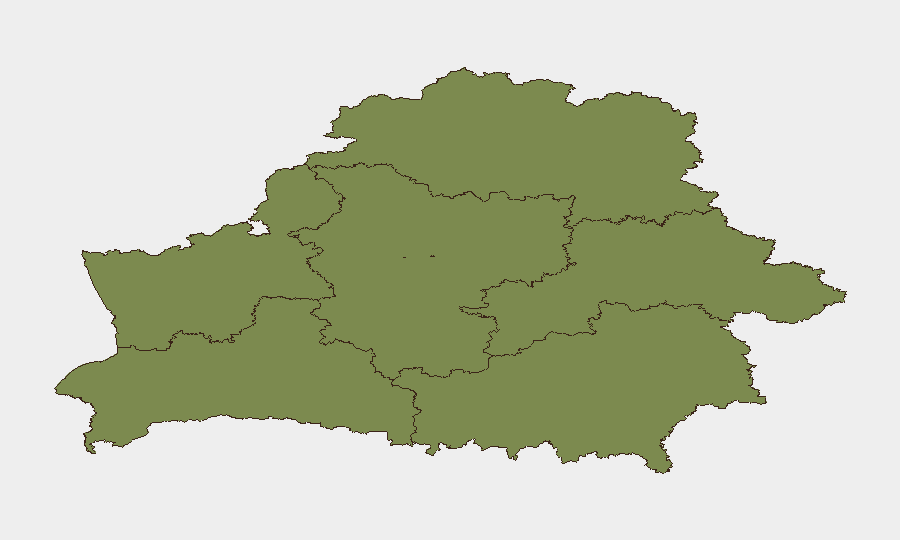
Minsk (composite risk score 31.5) dominates Belarus's threat profile and reflects the capital's concentration of government, security-force presence, and enforcement infrastructure. The capital remains the primary location where restrictions on movement, assembly, and expression are enforced most consistently; corporate security teams should account for heightened police and state-security visibility during any public gatherings or large employee assemblies. All secondary regions (Minsk Region, Vitsebsk, Hrodna, Brest, Mahilyow, and Homyel) carry low acute-incident risk (scores 1.5–5.2) but reflect the same structural repression and political controls that define the national environment.
How GeoBit Would Assist
GeoBit's Intel Sweep and multi-language OSINT fusion capabilities enable continuous monitoring of news, social media, Telegram, and activist networks in Russian and English to detect early signals of unrest, protests, or security-force escalation that could affect personnel or operations. AOI Monitoring & Early Warning with persistent geolocation focus on Minsk and border regions would provide real-time alerting if new demonstrations, checkpoints, or enforcement actions emerge. Routing & Network Analysis supports contingency planning for alternative travel corridors and operational continuity if civil access or movement restrictions tighten unexpectedly.
7-Day Outlook
No escalation signals or acute-risk triggers are visible for the week ahead. Baseline structural risks (political repression, security-force presence, communications monitoring) will persist; organizations should maintain standard due-diligence protocols for Belarus operations and continue monitoring state-media and official channels for any changes to movement restrictions, assembly permits, or visa/work-permit requirements. Elevated attention should be applied if Russia–Ukraine conflict dynamics shift visibly or if Belarusian border activity increases.
GEOBIT DAILY SECURITY BRIEF
*Belarus • 2026-06-21*
*Composite Threat Ranking: #140 globally (score 5/100)*
Highest-Risk Areas — Ranked
| # | State / Region | Risk |
|---|---|---|
| 1 | Minsk | 31.5 |
| 2 | Minsk Region | 5.2 |
| 3 | Vitsebsk Region | 1.5 |
| 4 | Hrodna Region | 1.5 |
| 5 | Brest Region | 1.5 |
| 6 | Mahilyow Region | 1.5 |
| 7 | Homyel Region | 1.5 |
Sources
Previous Daily Briefs
A new Belarus brief is written every day — each with its own risk map and downloadable CSV. Here's the last week; use the calendar to go further back.
📅 Browse every day by calendar →
Highlighted days have a brief. Tap a day for that day's map & analysis, or “csv” for that day's dataset ($5).