Situation Summary
Belgium remains at moderate composite threat level (score 31) with 34 tracked events, driven predominantly by activity concentrated in Brussels-Capital. The sub-national risk picture is heavily skewed toward the capital region (31.3), with Flanders and Wallonia at significantly lower thresholds (12.6 and 1.3 respectively). Recent signal activity—spanning diplomatic tensions, administrative sanctions, investigative action, and public statements—suggests elevated political and institutional attention, though web research has not yet confirmed corroborating incident detail from the last 24–48 hours.
Key Developments
- 2026-06-20 · Brussels-Capital – Public statement by scientist actor flagged in platform event feed; content and attribution pending corroboration.
- 2026-06-19 · Brussels – Investigation initiated (subject and scope not yet specified in available signals).
- 2026-06-19 · Brussels–EU nexus – Investigation activity involving EU institutional alignment; nature of inquiry unclear pending source verification.
- 2026-06-19 · Brussels–Ukraine relations – Threat signal recorded; diplomatic or security context requires clarification.
- 2026-06-19 · Russia relations – Reduction in diplomatic relations flagged at both Belgian and broader European institutional level; consistent with ongoing geopolitical posture.
- 2026-06-20 · Presidential level – Reduction in relations activity; scope and target pending detail.
- 2026-06-18 · Belgium-wide – Administrative sanctions action recorded; beneficiary or target entity not specified in available signals.
Note: Available event signals lack specificity on incident location, victim/target identity, and operational detail. Web research did not surface corroborating open-source reporting for the last 24–48 hours.
Highest-Risk Areas
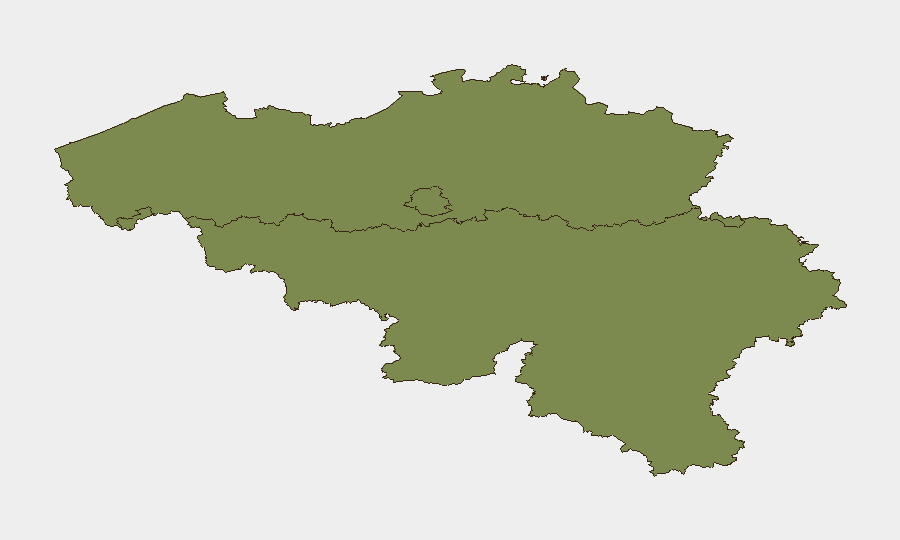
Brussels-Capital dominates the risk landscape at 31.3, reflecting the concentration of diplomatic, institutional, and investigative activity recorded in the last three days. The capital's role as seat of Belgian federal government, EU institutions, and NATO presence naturally amplifies exposure to political signaling, sanctions activity, and state-level relations shifts. Flanders (12.6) carries secondary risk; Wallonia remains at baseline (1.3). Corporate and governmental entities operating in Brussels should treat recent investigative and diplomatic signals as warrant for heightened situational awareness, pending clarification of actual incident scope.
How GeoBit Would Assist
A security team managing Belgium exposure would deploy AOI Monitoring & Early Warning on Brussels-Capital to trigger alerts on investigative, diplomatic, and sanctions activity in real time. Intel Sweep and multi-language OSINT fusion across institutional, diplomatic, and local news sources would rapidly close the gap between signal detection and operational confirmation, isolating genuine incidents from background noise. Regime-stability and entity-extraction analysis applied to recent Belgian and EU statements would map the political actors and relationships driving current tensions, enabling risk teams to anticipate secondary impacts on commerce, movement, or access.
7-Day Outlook
The next week will likely see either clarification or escalation of the investigative and diplomatic signals now active in Brussels. If the 2026-06-19 threat signal and reduction-in-relations activity reflect a specific geopolitical or security incident, corporate operations may face secondary effects through border controls, security perimeter expansion, or asset freeze action. Continuous monitoring of Belgian institutional statements and EU-Russia posture is essential to distinguish routine diplomatic tension from material operational risk.
Highest-Risk Areas — Ranked
| # | State / Region | Risk |
|---|---|---|
| 1 | Brussels-Capital | 31.3 |
| 2 | Flanders | 12.6 |
| 3 | Wallonia | 1.3 |
Sources
Previous Daily Briefs
A new Belgium brief is written every day — each with its own risk map and downloadable CSV. Here's the last week; use the calendar to go further back.
📅 Browse every day by calendar →
Highlighted days have a brief. Tap a day for that day's map & analysis, or “csv” for that day's dataset ($5).