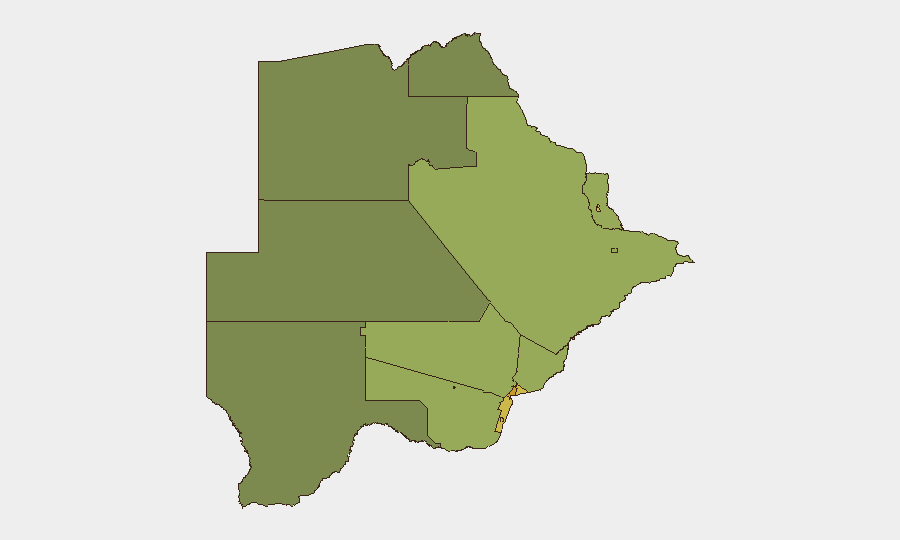
Situation Summary
Botswana remains a low-threat environment globally (ranked #165) with a composite threat score of 5. No significant security incidents, civil unrest, infrastructure disruption, or major crime events have been reported in the last 24–48 hours across monitored open-source channels, government advisories, or real-time incident platforms. The current operating environment supports routine business and travel activity, though localized crime risks persist in high-density urban centers.
Key Developments
- National – 30 June–2 July 2026: No credible reports of new protests, civil unrest, or political violence in Gaborone, Francistown, Maun, or other major centers in the last 24–48 hours; public social-media activity and news coverage remain routine and focused on standard political and social discourse.
- National – 30 June–2 July 2026: Infrastructure (electricity, water, telecom, road networks, airport operations) shows no reported disruption or shutdown activity in the last 24–48 hours; standard utility and transport operations are intact.
- National – 30 June–2 July 2026: No publicly disclosed cyberattacks, ransomware incidents targeting critical infrastructure or major private-sector entities, or terrorism-related events are documented in the last 24–48 hours on global incident-monitoring and threat-intelligence platforms.
- National – 30 June–2 July 2026: Border security and cross-border crime reporting (human trafficking, smuggling, irregular migration events) show no significant new incidents in the last 24–48 hours; standard bilateral law-enforcement coordination with South Africa, Namibia, and Zimbabwe continues.
Highest-Risk Areas
Gaborone, South-East District, and Lobatse drive the majority of composite risk, reflecting urbanization, commercial activity, transient populations, and localized property and violent crime. Francistown, Jwaneng, and Selebi Phikwe (mining centers) rank among the top six due to labor dynamics, informal settlements, and cash-intensive economies. These areas warrant heightened due-diligence protocols for corporate security teams managing personnel, supply chains, and asset protection; however, risk levels remain manageable under standard duty-of-care frameworks. Peripheral districts (North-West, Central, North-East) carry significantly lower composite scores and support lower-risk operational profiles.
How GeoBit Would Assist
Security and risk teams in Botswana benefit from AOI Monitoring & Early Warning on high-risk urban centers (Gaborone, Francistown, Lobatse) to detect emerging unrest, roadblocks, or labor disputes before operational impact. Intel Sweep and multi-language OSINT (social media, local news, Telegram networks) provide real-time detection of crime patterns, political friction, or civil-order disruptions across sub-national regions. Routing & Network Analysis enables dynamic route planning to avoid identified crime corridors and informal settlements; Satellite & Imagery analysis supports site-security assessments and monitoring of critical business infrastructure in high-risk districts.
7-Day Outlook
No significant escalation in security posture is anticipated in the next seven days based on current signals and political/economic indicators. Routine crime and localized labor disputes remain the primary operational risk; teams should maintain standard security protocols in Gaborone and mining towns. Monitoring will focus on any emergence of political messaging ahead of mid-year parliamentary or municipal activity.
Highest-Risk Areas — Ranked
| # | State / Region | Risk |
|---|---|---|
| 1 | Gaborone | 72 |
| 2 | South-East District | 68 |
| 3 | Lobatse | 65 |
| 4 | Francistown | 62 |
| 5 | Jwaneng | 61 |
| 6 | Selebi Phikwe | 58 |
| 7 | Southern District | 55 |
| 8 | Kgatleng District | 50 |
| 9 | Kweneng District | 48 |
| 10 | North-East District | 45 |
| 11 | Central District | 42 |
| 12 | North-West District | 38 |
Previous Daily Briefs
A new Botswana brief is written every day — each with its own risk map and downloadable CSV. Here's the last week; use the calendar to go further back.
📅 Browse every day by calendar →
Highlighted days have a brief. Tap a day for that day's map & analysis, or “csv” for that day's dataset ($5).