Situation Summary
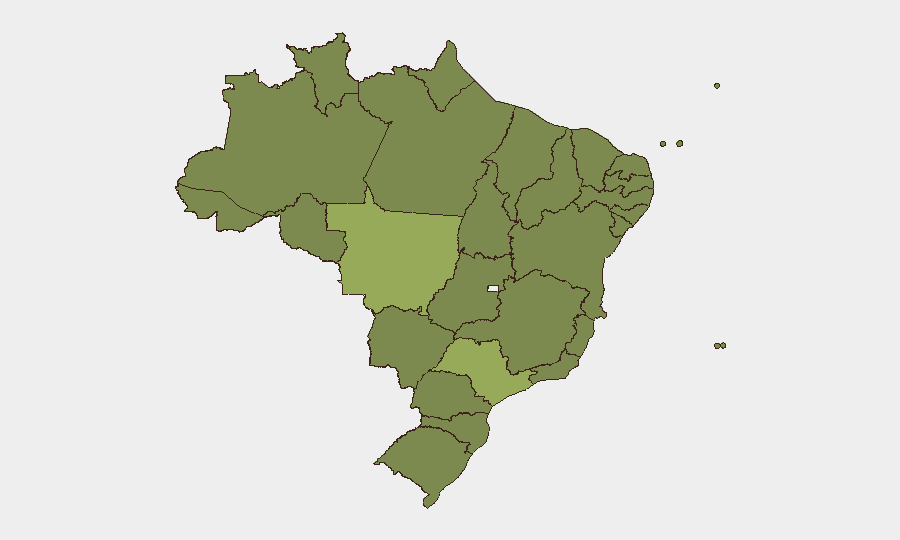
Brazil's composite threat score remains moderate (rank #48 globally, score 38), but sub-national volatility is concentrated in three states driving elevated risk: Mato Grosso (55.3), São Paulo (41.2), and Rio de Janeiro (31.6). Over the past 48 hours, security incidents have clustered around gang retaliation, police counter-narcotics operations, and infrastructure disruption from both criminality and natural disaster aftermath. The near-term trajectory reflects intensifying law-enforcement responses to organized crime, which historically correlates with cycles of retaliation in high-risk urban centers.
Key Developments
- Rio de Janeiro (Recreio dos Bandeirantes), 14 June – Two tourist helicopters collided mid-air and crashed in a populated coastal neighborhood, killing all six occupants. Emergency services cordoned the impact zone; no indication of foul play, but incident underscores aviation-sector vulnerability in congested airspace.
- Rio de Janeiro (Zona Norte and Baixada Fluminense), 14 June – Military police conducted large-scale favela operations targeting drug gangs and militia groups, resulting in arrests and weapons seizures. Sporadic gunfire exchanges prompted school closures and suspended bus routes; residents sheltered indoors during operations.
- Fortaleza (Ceará), night of 13–14 June – Series of armed attacks on businesses and public buses in peripheral neighborhoods attributed to gang retaliation against recent prison crackdowns. Burned vehicles and heavy police/military-police deployment reported; some bus lines temporarily suspended.
- São Paulo city, 14 June – Municipal and state authorities announced intensified policing following spike in armed robberies and vehicle thefts near transit hubs over the weekend. Security footage and social media indicate violent incidents prompting public advisories against poorly lit streets at night.
- Manaus (Amazonas), 14 June – Federal and state forces conducted anti-trafficking operations in riverfront districts and port outskirts, resulting in arrests and weapons seizures. Temporary traffic disruption and heightened police presence along key port-access roads reported.
- Brasília, 13–14 June – Chamber of Deputies committee approved constitutional amendment lowering criminal responsibility age from 18 to 16 (44–18 vote), triggering civil-society protests and organized opposition. Further votes required in both houses; political friction evident in capital.
- Porto Alegre (Rio Grande do Sul), 14 June – Flood-affected infrastructure and public-safety risks persist as river levels remain elevated. Police checkpoints and curfews deployed in some neighborhoods to prevent looting in partially evacuated areas.
- Cuiabá (Mato Grosso), 14 June – Authorities intercepted irregular migrants and dismantled smuggling route as part of emerging corridor toward southern border. Increased federal-police and highway-patrol checkpoints reported along key highways.
Highest-Risk Areas
Mato Grosso (55.3) drives the highest composite risk, anchored in border-smuggling activity, irregular migration flows, and environmental/resource conflicts. São Paulo (41.2) remains volatile due to gang-related armed robbery clusters in urban zones and transit-hub targeting. Rio de Janeiro (31.6), despite recent federal interventions, sustains elevated risk from favela-based drug trafficking and militia activity, compounded by police counter-operations that trigger retaliation cycles. These three states account for the majority of tracked events and warrant differentiated security postures by sector and locality.
How GeoBit Would Assist
Teams should deploy AOI Monitoring & Early Warning on high-risk favelas (Zona Norte, Baixada Fluminense) and São Paulo transit hubs to detect operational tempo changes and pre-retaliation signals. Conflict & Military mapping combined with Network & Actor Analysis enables tracking of gang faction movements and police operations to anticipate displacement of criminal activity. Routing & Network Analysis supports secure travel planning around checkpoints, curfew zones, and areas of active law-enforcement deployment.
7-Day Outlook
Police counter-narcotics and anti-gang operations are expected to continue at elevated tempo in Rio de Janeiro and Ceará, with corresponding retaliation risk in the subsequent 5–7 days. The constitutional amendment vote in Brasília will likely sustain political friction and organized demonstrations. Infrastructure vulnerabilities in Porto Alegre and border-crossing pressures in Mato Grosso remain secondary but persistent monitoring concerns.
Highest-Risk Areas — Ranked
| # | State / Region | Risk |
|---|---|---|
| 1 | Mato Grosso | 55.3 |
| 2 | São Paulo | 41.2 |
| 3 | Rio de Janeiro | 31.6 |
| 4 | Amazonas | 28.3 |
| 5 | Pernambuco | 27.9 |
| 6 | Paraná | 26.3 |
| 7 | Alagoas | 26.1 |
| 8 | Minas Gerais | 26.1 |
| 9 | Maranhão | 25.7 |
| 10 | Ceará | 25.7 |
| 11 | Piauí | 25.5 |
| 12 | Santa Catarina | 25.3 |
Previous Daily Briefs
A new Brazil brief is written every day — each with its own risk map and downloadable CSV. Here's the last week; use the calendar to go further back.
📅 Browse every day by calendar →
Highlighted days have a brief. Tap a day for that day's map & analysis, or “csv” for that day's dataset ($5).