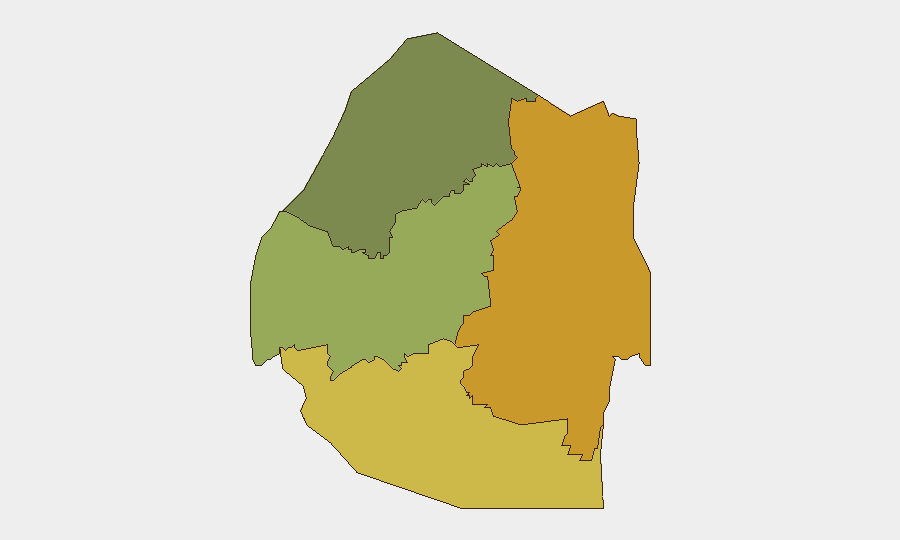
Situation Summary
Eswatini remains a low-threat environment globally (rank #115, composite score 8) with no discrete security events reported in the current tracking window. The country's risk profile is regionally concentrated, with Lubombo and Shiselweni regions presenting elevated concern relative to the national baseline. No active civil unrest, significant crime spikes, or security incidents are currently documented; the threat landscape appears stable.
Key Developments
No confirmed domestic security, crime, or civil-unrest incidents were identified in Eswatini during the last 24–48 hours. Web research for this period yielded no time-stamped Eswatini-specific operational security events suitable for inclusion in this brief.
A diplomatic development with potential operational implications: Taiwan's President Lai Ching-te cancelled a planned transit visit to Eswatini after three Indian Ocean states (reported as India, Mauritius, and Seychelles) revoked overflight permissions. This event underscores Eswatini's diplomatic positioning in regional geopolitics but does not constitute a domestic security incident. Timing and full details remain unclear from available sources; corporate teams with diplomatic or travel planning responsibilities should monitor for any secondary restrictions or aviation-route changes affecting Eswatini.
Highest-Risk Areas
Lubombo (risk 72) and Shiselweni (risk 68) regions are the primary drivers of Eswatini's sub-national risk score, together accounting for the majority of tracked concern. Both regions carry scores substantially above the national composite (8), suggesting concentrated vulnerabilities—likely linked to border permeability, cross-border crime, or localized socioeconomic stress. Manzini Region (55) presents moderate risk; Hhohho (35) is the lowest-risk administrative area. Organizations with personnel or assets in Lubombo and Shiselweni should apply heightened duty-of-care protocols and local monitoring.
How GeoBit Would Assist
Security teams operating in Eswatini should deploy Intel Sweep and global event feeds for continuous monitoring of emerging incidents, paired with OSINT fusion (X/Twitter, Telegram, local media) to catch early signals of crime, protest, or instability before they escalate. AOI Monitoring & Early Warning capabilities enable persistent watch over high-risk regions (Lubombo, Shiselweni) with configurable alerting for border activity, civil unrest, or crime clusters. For personnel movement and contingency planning, Routing & Network Analysis identifies alternative travel corridors and safe zones within higher-risk regions.
7-Day Outlook
No significant security deterioration is anticipated over the next seven days. Eswatini's regional risk profile will remain concentrated in Lubombo and Shiselweni; routine monitoring is sufficient for most corporate operations. The diplomatic tension around President Lai's cancelled visit bears watching for any spillover effects on aviation, diplomatic presence, or cross-border commerce, but does not presently signal elevated physical-security risk to corporate assets or personnel.
Highest-Risk Areas — Ranked
| # | State / Region | Risk |
|---|---|---|
| 1 | Lubombo | 72 |
| 2 | Shiselweni | 68 |
| 3 | Manzini Region | 55 |
| 4 | Hhohho Region | 35 |
Sources
Previous Daily Briefs
A new Eswatini brief is written every day — each with its own risk map and downloadable CSV. Here's the last week; use the calendar to go further back.
📅 Browse every day by calendar →
Highlighted days have a brief. Tap a day for that day's map & analysis, or “csv” for that day's dataset ($5).
Atlas — our AI intelligence desk — emails them this snapshot personally. Nothing else, no list.