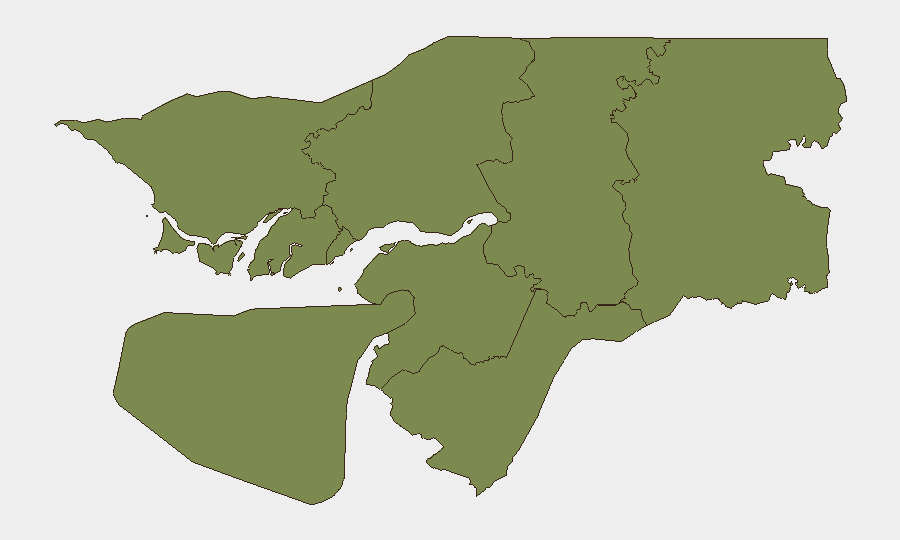
Situation Summary
Guinea-Bissau remains in the lower-risk band globally (rank #161, composite score 2.5) with no confirmed security incidents reported in the last 24–48 hours. All nine sub-national regions are rated at uniform composite risk 1.8, reflecting a relatively stable but persistently fragile operating environment. The most recent external development is a U.S. government announcement of AGOA eligibility review scheduled for July 23, 2026, which signals ongoing international scrutiny of Guinea-Bissau's political and security posture but does not indicate an acute crisis.
Key Developments
- No confirmed new security, conflict, civil-unrest, crime, political-instability, or infrastructure incidents were reported across corroborated open-source channels in the 24–48 hours prior to this brief.
- Washington, DC – June 30, 2026: The U.S. Office of the Trade Representative published a *Federal Register* notice scheduling a public hearing on AGOA country-eligibility review for July 23, 2026. Guinea-Bissau is among nations whose eligibility will be examined with regard to countering activities that undermine U.S. national security or foreign policy. This is a policy/diplomatic development, not an on-the-ground incident, but signals continued U.S. monitoring of Guinea-Bissau's institutional and security performance.
- No discrete event signals within GeoBit's current tracking window; the last 56 recorded events do not include any dated to the reporting period.
Highest-Risk Areas
All nine administrative regions carry identical sub-national risk scores (1.8), indicating risk is geographically distributed rather than concentrated in one or two zones. Bolama, Cacheu, Biombo, Bissau Autonomous Sector, Oio, Quinara, Tombali, Bafatá, and Gabu should receive uniform baseline monitoring given the lack of granular differentiation in threat signals. The uniform rating suggests that fragility drivers—institutional weakness, drug-trafficking transit vulnerability, border permeability, and historical political instability—are nation-wide rather than regional. Security teams should maintain consistent vigilance across all areas rather than over-weight resources to specific regions.
How GeoBit Would Assist
Persistent AOI Monitoring & Early Warning with real-time alerting on designated facilities, checkpoints, or personnel movements across all nine regions would provide advance notice of localized unrest, civil disorder, or security-force activity before it reaches international media. Multi-language OSINT (Portuguese, Creole, local languages) and X/Twitter/Telegram geolocation search, combined with sentiment and temporal analysis, would surface emerging tensions, protest mobilization, or institutional friction faster than Western news wires alone. Regime-stability and political-actor network analysis would contextualize the AGOA review and detect whether international pressure or domestic political competition is intensifying ahead of any electoral or succession cycles.
7-Day Outlook
No acute security deterioration is anticipated in the coming week absent new political shocks or major trafficking-related violence. The AGOA eligibility review process (hearing scheduled July 23) may trigger diplomatic messaging or internal government repositioning over the next three weeks, but this is a policy timeline rather than an operational threat vector. Continued monitoring of regional outlets, ECOWAS statements, and social-media signals for any cascade from the U.S. review or localized crime/trafficking incidents is prudent given Guinea-Bissau's structural vulnerability to rapid political and security shifts.
Highest-Risk Areas — Ranked
| # | State / Region | Risk |
|---|---|---|
| 1 | Bolama Region | 1.8 |
| 2 | Cacheu Region | 1.8 |
| 3 | Biombo Region | 1.8 |
| 4 | Bissau Autonomous Sector | 1.8 |
| 5 | Oio Region | 1.8 |
| 6 | Quinara Region | 1.8 |
| 7 | Tombali Region | 1.8 |
| 8 | Bafatá Region | 1.8 |
| 9 | Gabu Region | 1.8 |
Sources
Previous Daily Briefs
A new Guinea-Bissau brief is written every day — each with its own risk map and downloadable CSV. Here's the last week; use the calendar to go further back.
📅 Browse every day by calendar →
Highlighted days have a brief. Tap a day for that day's map & analysis, or “csv” for that day's dataset ($5).