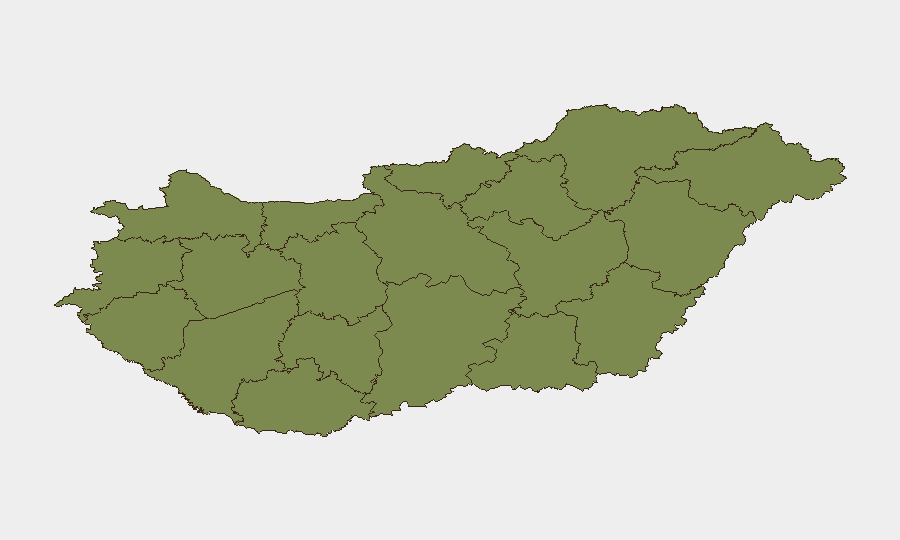
Situation Summary
Hungary remains a low-threat environment for corporate operations and personnel, ranked #73 globally with a composite threat score of 2.6. No corroborated security incidents, civil unrest, infrastructure disruption, or travel risks have been documented in the past 24–48 hours across open news, security feeds, or social media. The security posture is stable, with routine petty crime (pickpocketing, bar scams) concentrated in Budapest tourist zones and public transport representing the primary residual risk.
Key Developments
No specific security, conflict, civil-unrest, crime, or infrastructure incidents have been corroborated in Hungary during July 1–3, 2026, based on available open-source intelligence and regional security feeds. Petty crime remains endemic to Budapest and major transport hubs, but no spikes or organized activity have been flagged. Neighboring regional assessment (Slovenia, June 27–29, 2026) showed no cross-border or spillover incidents affecting Hungary. Standard traveler-safety advisories for Hungary remain unchanged: exercise situational awareness in crowded tourist districts and avoid bar-solicitation scams. No political instability, labor actions, or demonstrations with security implications have been reported in the past 48 hours.
Highest-Risk Areas
Budapest dominates the sub-national threat profile with a composite risk score of 31.8—more than 70 times higher than most other Hungarian regions. Pest county follows at 18.6, reflecting the concentration of population, tourism, critical infrastructure, and economic activity in the central corridor. All other tracked regions score 1.8–4.2, indicating highly dispersed, low-magnitude risk outside the capital metropolitan area. The Budapest–Pest disparity reflects standard urban-security dynamics: higher foot traffic, transient populations, organized petty crime networks, and greater exposure surfaces for corporate staff and assets. Regional counties present minimal incremental threat to corporate operations.
How GeoBit Would Assist
Security teams with personnel or assets in Hungary should employ AOI Monitoring & Early Warning on Budapest and Pest to detect emerging civil unrest, labor action, or crime-pattern shifts in real time. Intel Sweep and multi-language search capabilities—combined with X/Twitter & Telegram OSINT—provide continuous coverage of Hungarian-language official channels (Interior Ministry, Budapest police, local media) to surface incident alerts before they enter English-language news cycles. Network & Actor Analysis can map organized petty-crime and bar-scam networks operating in tourist zones, enabling targeted staff briefings and route-avoidance protocols. Routing & Network Analysis supports journey planning to minimize exposure to high-crime transit corridors and commercial districts known for organized theft.
7-Day Outlook
Hungary's threat environment is forecast to remain stable through mid-July, with no escalation drivers visible in the near term. Seasonal summer tourism will continue to drive petty-crime activity in central Budapest, but organized violence, political instability, or major disruption remain unlikely. Corporate security teams should maintain standard duty-of-care protocols (staff briefings on pickpocketing, secure transport in urban zones) rather than escalate to heightened alert status.
Highest-Risk Areas — Ranked
| # | State / Region | Risk |
|---|---|---|
| 1 | Budapest | 31.8 |
| 2 | Pest | 18.6 |
| 3 | Békés | 4.2 |
| 4 | Komárom-Esztergom | 1.8 |
| 5 | Fejér | 1.8 |
| 6 | Nógrád | 1.8 |
| 7 | Szabolcs-Szatmár-Bereg | 1.8 |
| 8 | Vas | 1.8 |
| 9 | Győr-Moson-Sopron | 1.8 |
| 10 | Veszprém | 1.8 |
| 11 | Zala | 1.8 |
| 12 | Somogy | 1.8 |
Sources
Previous Daily Briefs
A new Hungary brief is written every day — each with its own risk map and downloadable CSV. Here's the last week; use the calendar to go further back.
📅 Browse every day by calendar →
Highlighted days have a brief. Tap a day for that day's map & analysis, or “csv” for that day's dataset ($5).