Situation Summary
Kazakhstan faces a composite security threat score of 16 globally, with significant concentration of risk in Almaty city (31.3) relative to other sub-national areas. The past 48 hours have yielded no confirmed domestic violence, civil unrest, or targeted political attacks; however, external infrastructure disruptions—particularly affecting Kazakhstan's primary oil-export corridor through Russia—present material supply-chain risk. Diplomatic tensions with the UAE and internal administrative enforcement actions signal underlying governance friction, though these have not yet translated into widespread instability or population-level security events.
Key Developments
- 2026-07-25 · Territorial Dispute Signal – China–Kazakhstan border activity reported; nature and specific location require clarification via dedicated border & disputed-territory monitoring.
- 2026-07-25 · Military Activity Signal – Russia–Kazakhstan conventional military force activity flagged; context and location unconfirmed; warrants rapid clarification to rule out routine exercises or posturing.
- 2026-07-24 · Diplomatic Downgrade – Kazakhstan–UAE relations marked "Reduce Relations"; follows earlier Kazakhstan–Dubai downgrade on same date; underlying cause not yet detailed in available sources.
- 2026-07-24 · Administrative Enforcement – Publication-related sanctions imposed; details suggest domestic governance action rather than external threat, but sentiment/context requires deeper analysis.
- 2026-07-23 & 2026-07-24 · Civil Disapproval Signals – Blogger and unspecified domestic disapproval events logged; no violence reported; typical of low-level political friction in the region.
- Caspian Pipeline Consortium Disruption (external) – Drone attacks on CPC terminal in Novorossiysk, Russia (2026-07-23/24) have disrupted Kazakhstan's oil-export operations; this is a *supply-chain and economic risk* rather than a direct security threat inside Kazakhstan, but materially affects corporate cash flow and energy sector stability.
- Flood & Wildfire Events (recent, dates unconfirmed) – Two wildfire incidents and one flood event logged in national database; specific locations and impact scale require verification; typical seasonal risk, not security-driven.
Highest-Risk Areas
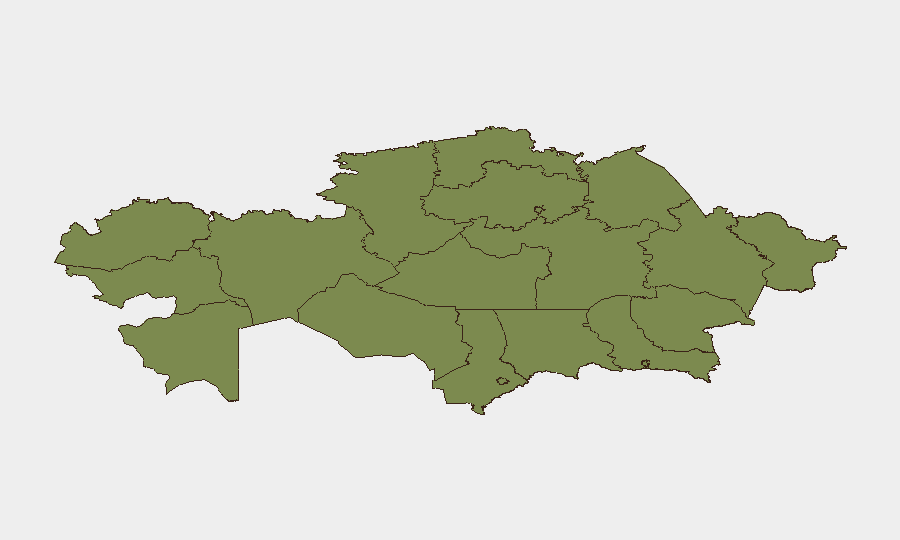
Almaty city dominates the sub-national threat profile at 31.3, approximately 2.4 times higher than Astana (13.3) and substantially above all other regions. This concentration reflects Almaty's role as Kazakhstan's largest economic and population center, making it a natural hub for political dissent, organized crime, and protest activity. All other tracked regions (Turkistan, Almaty Region, East Kazakhstan, Atyrau, Mangystau, etc.) register uniformly low scores (1.3), suggesting either genuine stability or insufficient local reporting depth. Security teams with personnel or assets in Almaty should apply heightened duty-of-care protocols; regional operations outside Almaty and Astana carry materially lower assessed risk.
How GeoBit Would Assist
Teams can deploy AOI Monitoring & Early Warning on Almaty and Astana to detect escalation in protest activity, administrative enforcement, or security-force posturing before they reach headline status. Conflict & Military tracking with entity extraction on the China–Kazakhstan and Russia–Kazakhstan signals would clarify whether these are routine border activities or indicators of tension requiring operational response. Economic & Trade analysis paired with maritime & aviation tracking would quantify ongoing impact from the CPC pipeline disruption and model alternative fuel and goods routing for corporate supply chains.
7-Day Outlook
No indicators suggest imminent large-scale civil unrest or direct security escalation inside Kazakhstan over the next week. However, the Russia–Kazakhstan and China–Kazakhstan signals, combined with UAE diplomatic downgrade, warrant close monitoring for secondary spillover effects on business permits, cross-border movement, or sanctions risk. Teams should assume CPC disruptions will persist at least 7–10 days and stress-test alternative logistics accordingly.
Highest-Risk Areas — Ranked
| # | State / Region | Risk |
|---|---|---|
| 1 | Almaty | 31.3 |
| 2 | Astana | 13.3 |
| 3 | Turkistan Region | 1.3 |
| 4 | Almaty Region | 1.3 |
| 5 | East Kazakhstan Region | 1.3 |
| 6 | Abay Region | 1.3 |
| 7 | Jetisu Region | 1.3 |
| 8 | West Kazakhstan Region | 1.3 |
| 9 | Atyrau Region | 1.3 |
| 10 | Mangystau Region | 1.3 |
| 11 | Aqtöbe region | 1.3 |
| 12 | Pavlodar Region | 1.3 |
Sources
Previous Daily Briefs
A new Kazakhstan brief is written every day — each with its own risk map and downloadable CSV. Here's the last week; use the calendar to go further back.
📅 Browse every day by calendar →
Highlighted days have a brief. Tap a day for that day's map & analysis, or “csv” for that day's dataset ($5).
Atlas — our AI intelligence desk — emails them this snapshot personally. Nothing else, no list.